Red light therapy has gone from being a secret of aesthetic clinics to a mass consumer phenomenon. It is touted as a remedy for acne, hair loss, depression, and chronic pain. Although many claims are exaggerated, science shows it has real effects by stimulating mitochondria and accelerating cellular repair. But all that glitters is not gold.
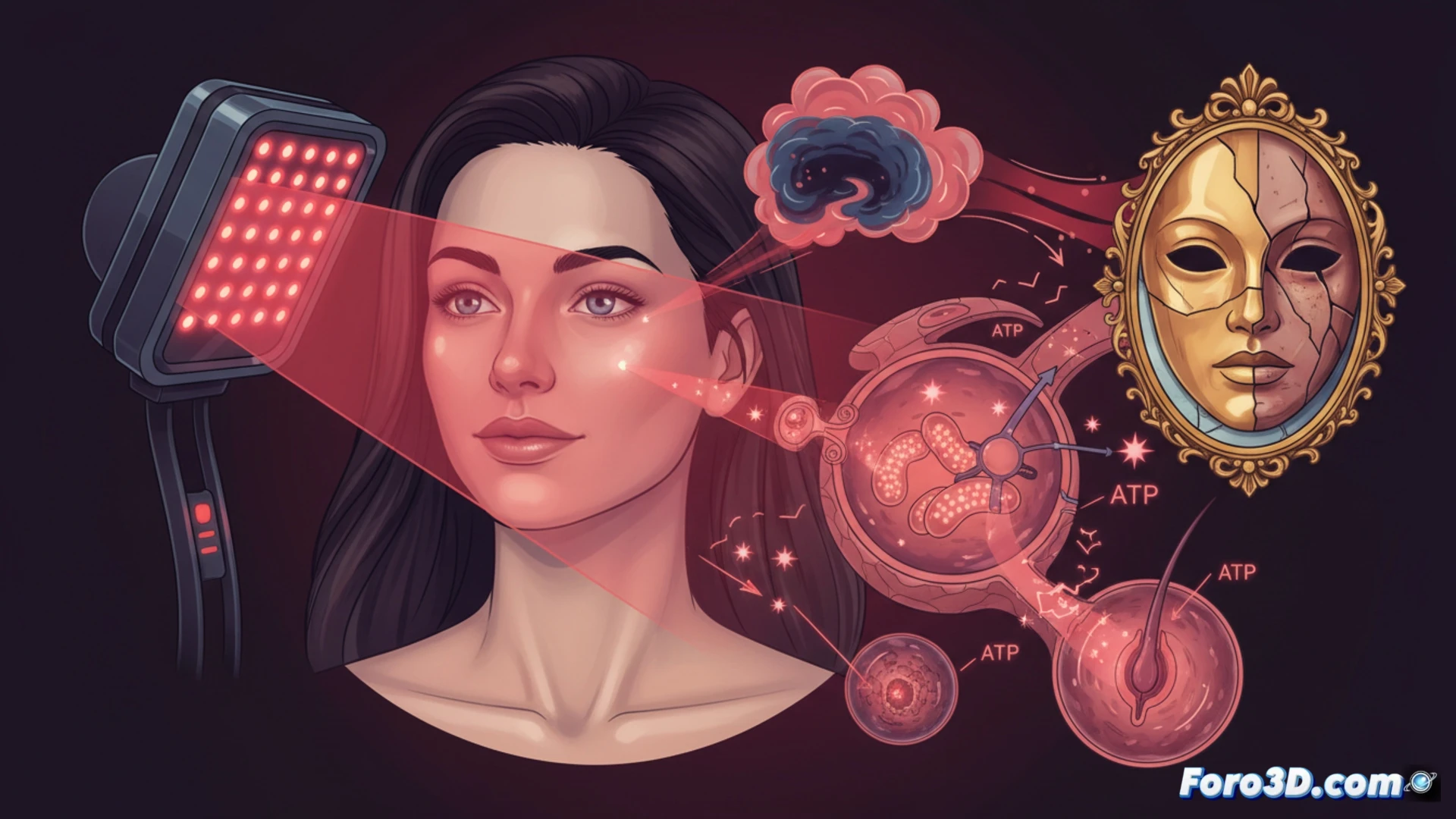
The mitochondrial mechanism that activates cellular repair 🔬
The key lies in cytochrome c oxidase, an enzyme in mitochondria that absorbs photons of red and near-infrared light (between 630 and 850 nm). This absorption increases ATP production, the cellular energy molecule. More ATP means greater capacity to repair damaged tissues and reduce local inflammation. However, the depth of penetration depends on the wavelength and power of the device. Not all consumer LEDs meet the necessary parameters to achieve a significant biological effect.
My neighbor lights up his face and now thinks he's a solar panel 😂
After two weeks using a red light mask bought online, my neighbor claims his skin shines brighter than his job prospects. He also says he now recharges his batteries just by looking at the sun. The funny thing is, although his acne hasn't disappeared, his faith in LED technology is unshakable. Perhaps the placebo effect is, in the end, the true superpower of this therapy.