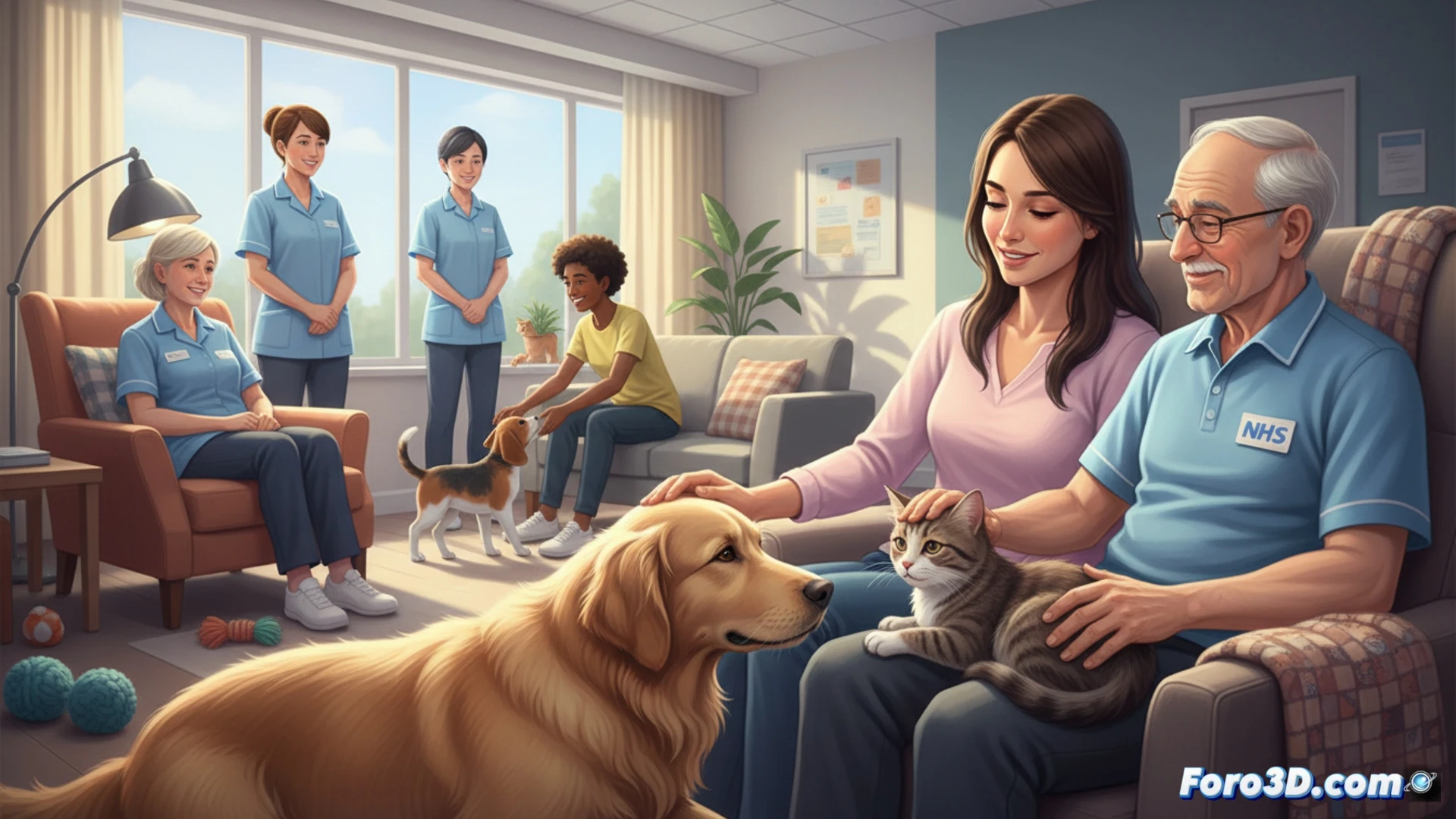
An NHS trust in London has launched an animal-assisted therapy program since 2023 for people with mental health issues. Supervised dogs, cats, and other animals help patients in 16 centers. Beneficiaries highlight that animals do not judge, which makes it easier to open up emotionally and calm panic episodes, even in those who did not respond to traditional therapies. The animals are evaluated for crowded environments.
Technical selection: how to evaluate animals for therapy in clinical settings 🐾
The implementation of the program required a rigorous selection process. Each animal is evaluated for its tolerance to crowded spaces, noise, and contact with multiple people. Those with aggressive reactions or excessive stress are discarded. The occupational therapist notes that benefits include reduced anxiety and improved communication, although some experts call for more controlled research. The protocol includes breaks for the animals and rotation to avoid overload. It is a structured alternative for those who reject conversational therapy.
When the dog listens better than the psychiatrist (and doesn't charge) 🐶
In the end, it turns out that a golden retriever can achieve what years on the couch cannot: getting a patient to talk without feeling judged. Of course, the dog doesn't give opinions, doesn't prescribe, and doesn't ask about your childhood. But it also doesn't look at its watch or tell you that time is up. If the NHS keeps this up, we'll soon see queues at canine consultations and psychiatrists asking for vacations. Just as long as they don't think of charging in kibble.