The trade of a roofer demands millimeter precision and physical endurance. 3D technology allows these professionals to plan cuts, measure slopes, and calculate materials from the ground. A clear example: scanning a roof with a drone to create a digital model avoids measurement errors and reduces the risk of falls. The necessary programs are SketchUp for basic design, Revit for detailed models, and point cloud processing software like Autodesk ReCap.
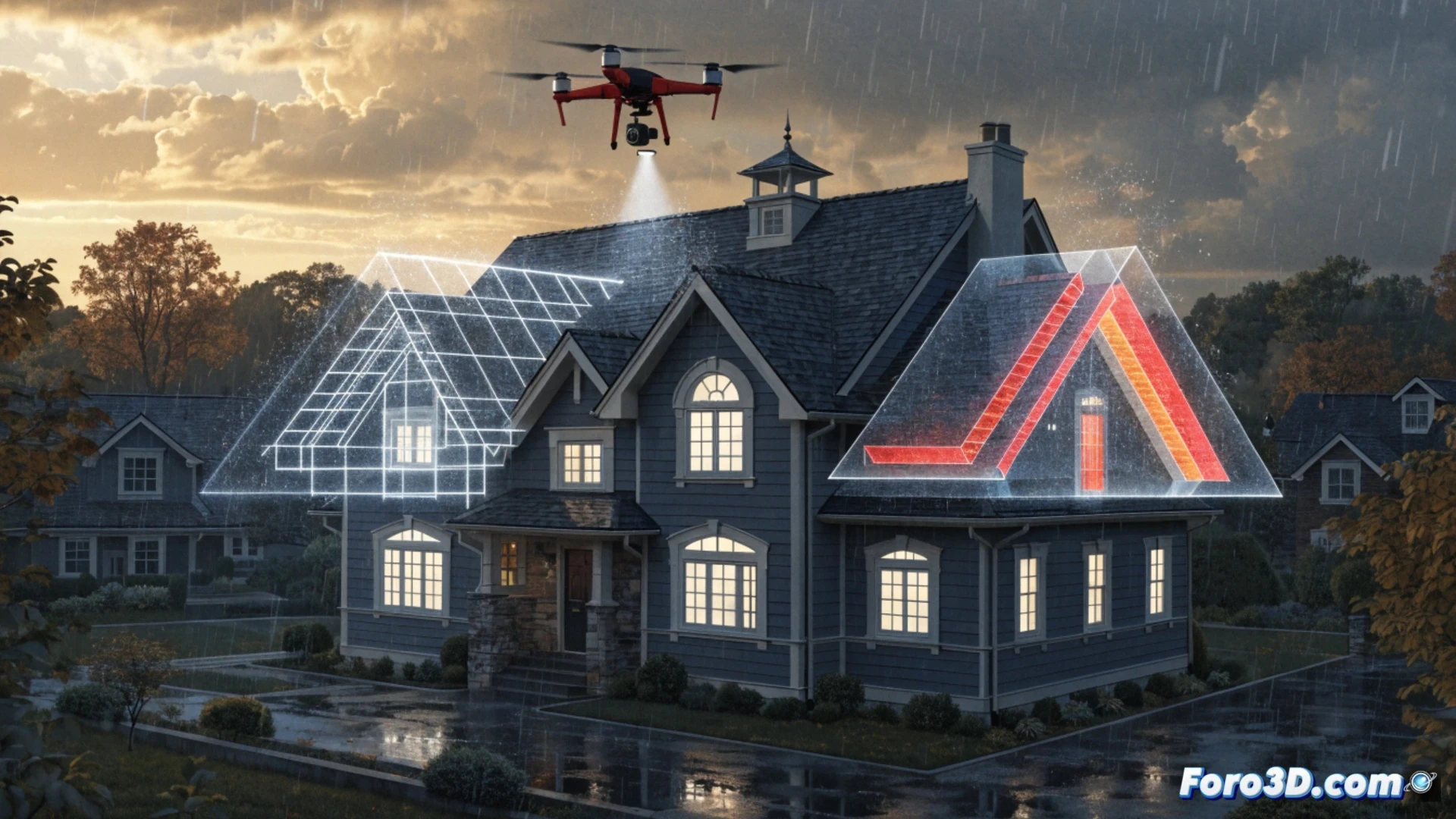
3D Modeling: from the plan to the roof without surprises 🏠
With a laser scanner or drone photogrammetry, a point cloud of the existing roof is generated. This model is imported into programs like Rhino 3D or SolidWorks to design each tile or panel piece. The advantage is clear: interferences with chimneys or skylights are detected before cutting material. Additionally, modeling allows for generating exact material lists, avoiding over- or under-ordering. The roofer arrives at the job site with everything calculated and only needs to execute the assembly.
The drone that saves you from climbing to measure (and a slip) 🚁
Before, the roofer would climb onto the roof with a tape measure and notebook, praying not to slip on a loose tile. Now, a drone does the dirty work while you have coffee. Of course, make sure the drone doesn't crash into the chimney, or you'll end up measuring the debris with a tape measure. 3D technology doesn't prevent you from getting your hands dirty with tar, but at least you reduce roof visits to the strictly necessary ones.