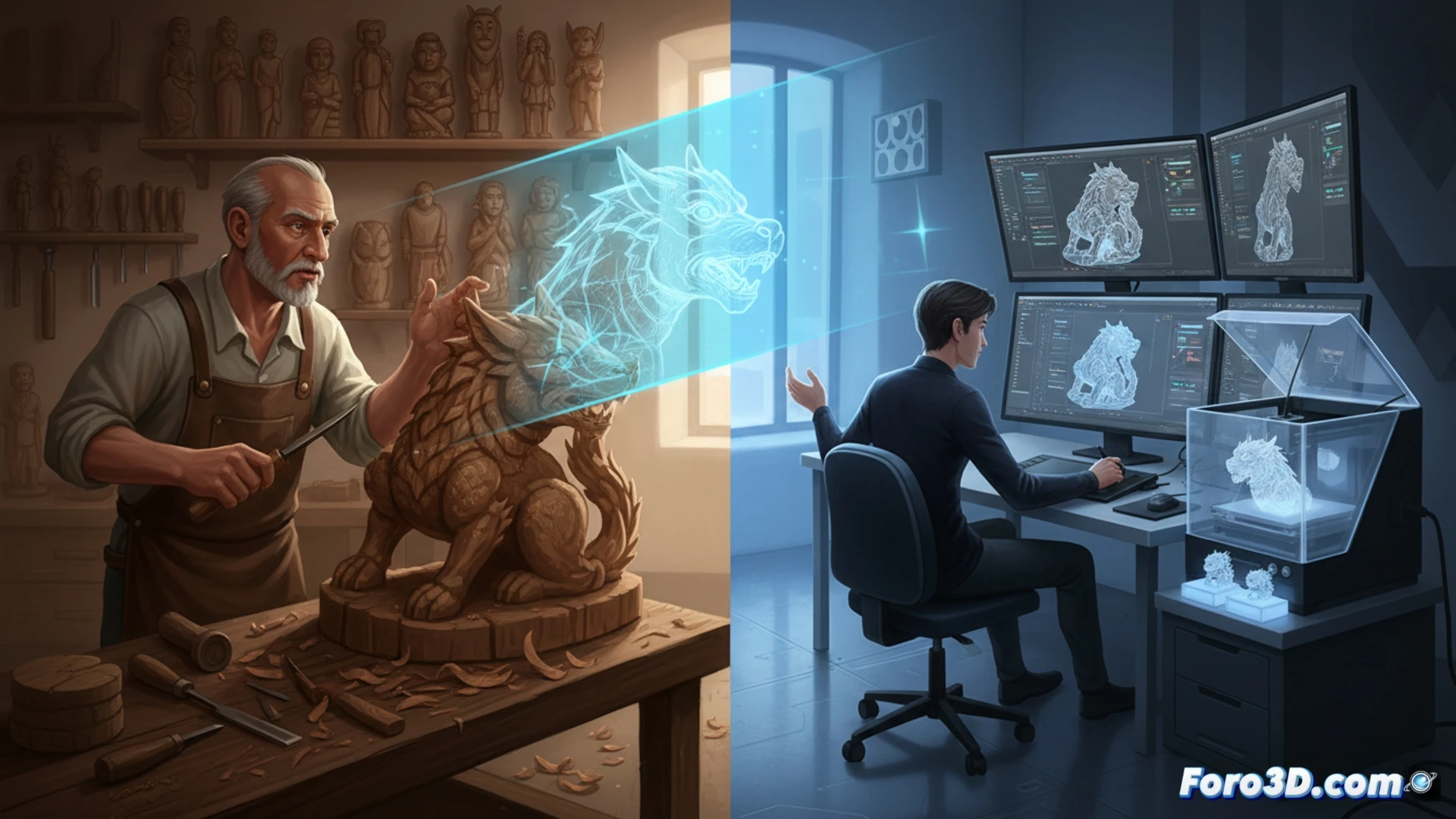
The craft of carving, traditionally linked to the chisel and gouge, finds a practical ally in 3D technology. It allows you to visualize and correct the design before touching the wood or stone, reducing errors and wasted material. A clear example is the carving of a decorative molding: it is modeled in 3D, a prototype is printed, and it is used as a physical guide for the final manual work.
Digital tools for the 21st-century workshop 🛠️
To start, programs like Blender or ZBrush allow you to sculpt models with millimeter precision. Fusion 360 helps design pieces with exact fits for assemblies. Once the model is ready, cutting software like VCarve Pro generates toolpaths for a CNC router, which can rough out the initial block. The carver then refines the details by hand, combining digital speed with the artisanal finish that no machine fully replicates.
When the computer tells you your hand is shaking ⚠️
Of course, be careful not to get carried away. Just because you can make twenty versions of an acanthus leaf in an afternoon doesn't mean the client will pay you for all of them. And watch out for the screen's mirage: a perfect 3D model can hide the fact that your real oak grain has other plans. In the end, the software saves you hours of roughing, but it doesn't spare you from having to sand by hand while cursing the dust.