The profession of nanny involves constant exposure to physical and psychosocial risks that often go unnoticed. From overexertion from lifting children to stress from responsibility, this group needs technical solutions that mitigate injuries and improve safety. 3D technology offers tools to redesign environments and prevent occupational accidents in childcare.
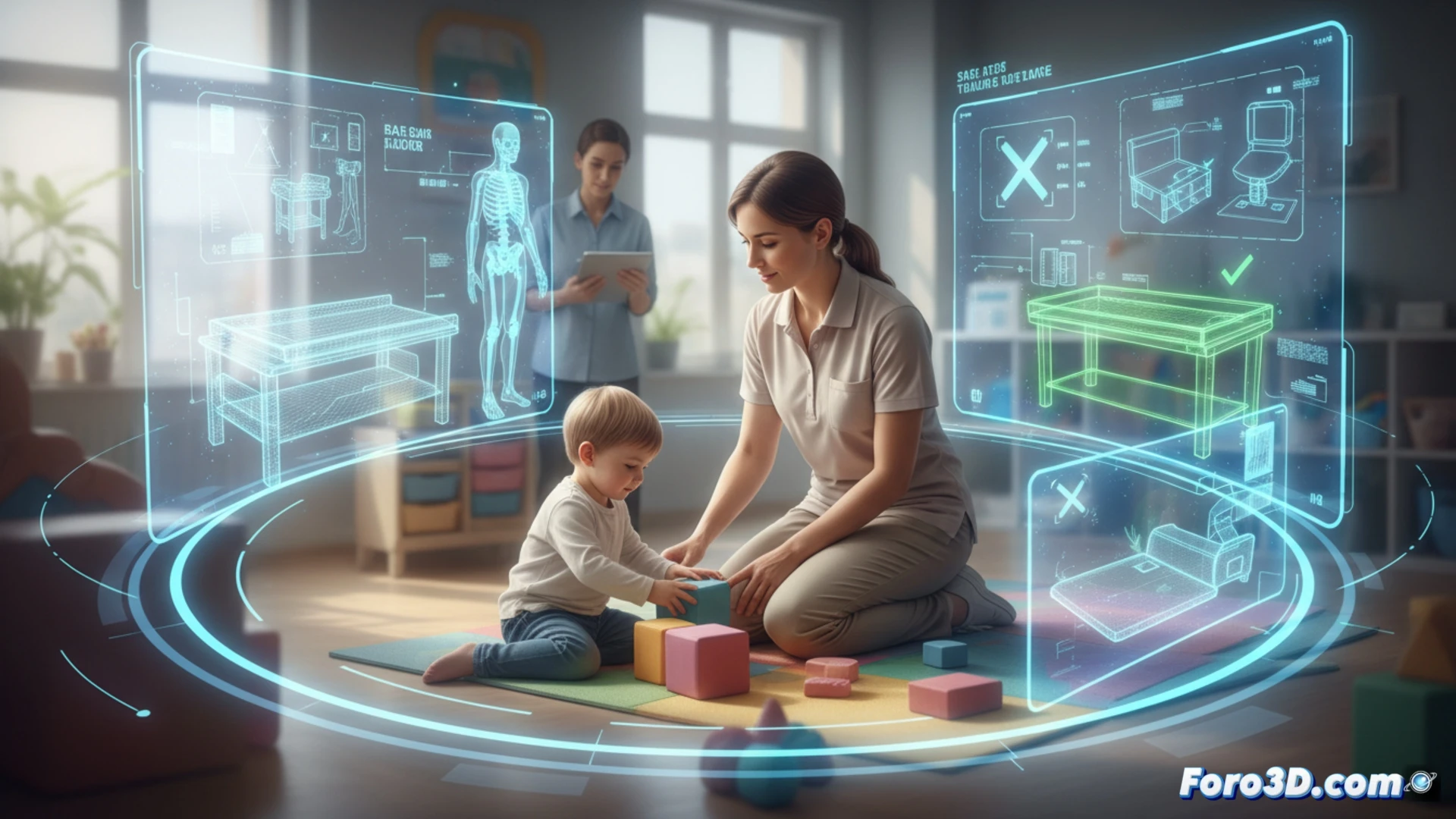
Ergonomic simulation and detection of forced postures 🛠️
3D modeling allows analyzing the forced postures that nannies adopt when bending, kneeling, or carrying babies. Through biomechanical simulations, it is possible to identify dangerous joint angles and redesign children's furniture (cribs, changing tables) to reduce lumbar strain. Additionally, 3D camera systems with computer vision can detect falls due to toys on the floor or sudden movements, alerting the caregiver before an accident occurs. This reduces the risk of musculoskeletal disorders and chronic fatigue, common in the sector.
Dual protection: caregivers and children in safe environments 🛡️
Spatial verification using 3D sensors not only protects the nanny from occasional aggression or stress but also safeguards the child. An environment designed with predictive risk analysis reduces exposure to infectious diseases by optimizing ventilation and safe distance. Integrating these technologies into homes or daycares makes caregiving a more sustainable job, where the caregiver's safety is as much a priority as the child's, a vulnerable group deserving comprehensive protection.
Just as 3D technology allows simulating psychosocial and physical risk scenarios to train nannies and caregivers without exposing them to dangerous real situations.
(PS: protecting the military is like protecting your Blender file: back it up or cry later)