If you are an entrepreneur, you know that time and money are scarce. 3D technology allows you to validate ideas without investing in expensive molds or factories. For example, a furniture designer can print a functional model of their folding chair in an afternoon. Then, they show it to investors and receive real feedback before mass production. The necessary programs are Fusion 360 for parametric modeling and Cura for slicing the files.
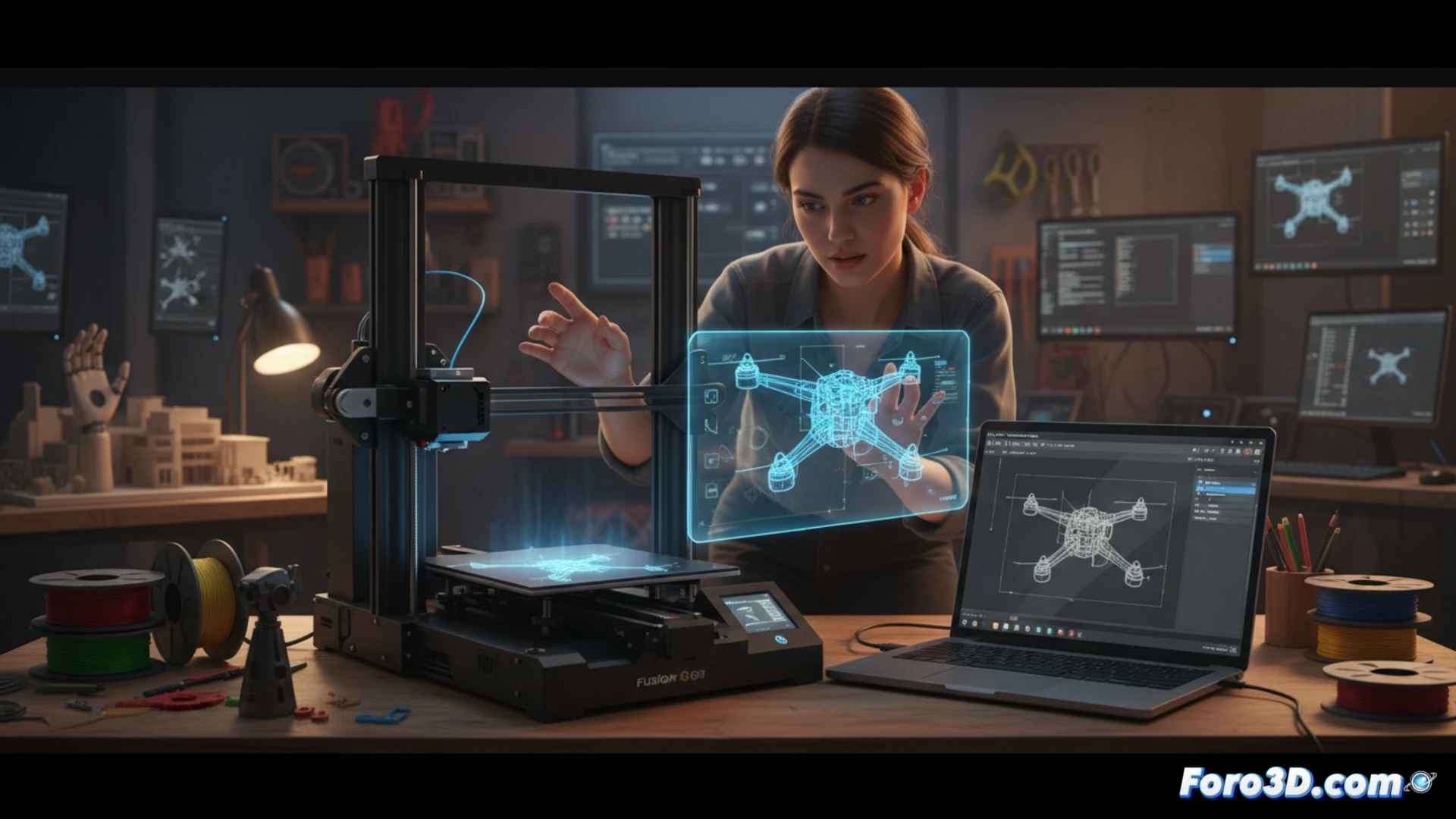
3D Modeling: from sketch to tangible object 🛠️
The workflow starts with CAD software like SolidWorks or Blender. You draw the product, adjust tolerances, and verify assemblies. Then you export to STL or 3MF. The slicer, like PrusaSlicer, calculates layers, supports, and infill. A 200-euro FDM printer can produce PLA prototypes. For fine details, use resin with an SLA printer. The result: an object you can touch, break, and redesign in hours, not weeks. This accelerates iterations and reduces manufacturing errors.
The entrepreneur and their printer: a love-hate relationship with filaments 🖨️
Your 3D printer will become your most loyal partner... until it jams. You will go from being a business visionary to a maintenance technician cursing the unleveled bed. You will print parts for your invention, but also brackets for the shelf, a pen holder, and a mini Yoda to decorate the office. The important thing is that, between one failure and another, you will learn more about manufacturing than in any course. And when you sell your first batch, you will fondly remember that smell of burnt plastic.