3D printing and digital scanning are transforming dentistry. They allow for the design and manufacture of prosthetics, crowns, or splints with millimeter precision, reducing patient waiting time. A clear example is the creation of surgical guides for implants, which improve placement and minimize errors. This requires programs like Blender, Meshmixer, or specific software such as Exocad and 3Shape.
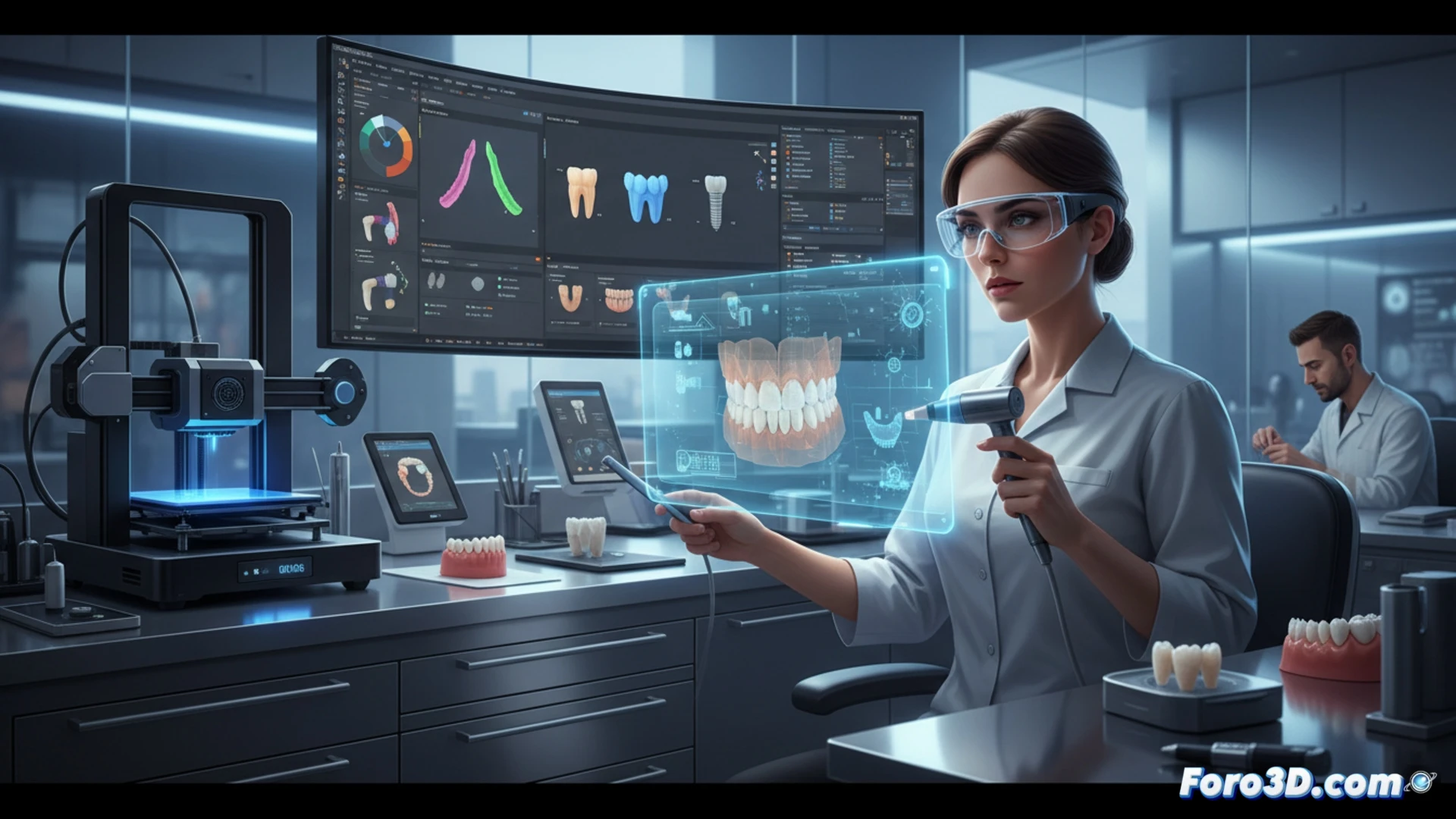
Digital workflow: from the oral scanner to the final print 🦷
The process begins with an intraoral scanner that captures the geometry of the mouth in an STL file. This model is imported into dental CAD software (Exocad, DentalCAD) to design the piece. It is then prepared in a slicer like Chitubox or PreForm for resin printers (Formlabs, Anycubic). Printing with biocompatible materials allows for obtaining study models, temporary crowns, or night guards in hours, not weeks. Final precision depends on the printer's calibration and post-processing with UV light.
The 3D dentist: when the drill gives way to the mouse 🖱️
Now the dentist can spend hours looking at a screen instead of the patient's mouth. That said, the software doesn't tolerate excuses: if you get the measurements wrong, the crown won't be a work of art but an expensive paperweight. And watch out, the printer has no sense of humor: if you don't clean the resin, it puts on a show worthy of a bad day in the lab. Good thing coffee is still just as bitter.