3D printing allows social workers to create customized technical aids for people with reduced mobility. A clear example is the manufacturing of adapted grippers for holding cutlery, designed according to the user's hand. This is achieved with 3D scanning of the affected limb and subsequent modeling in specialized software.
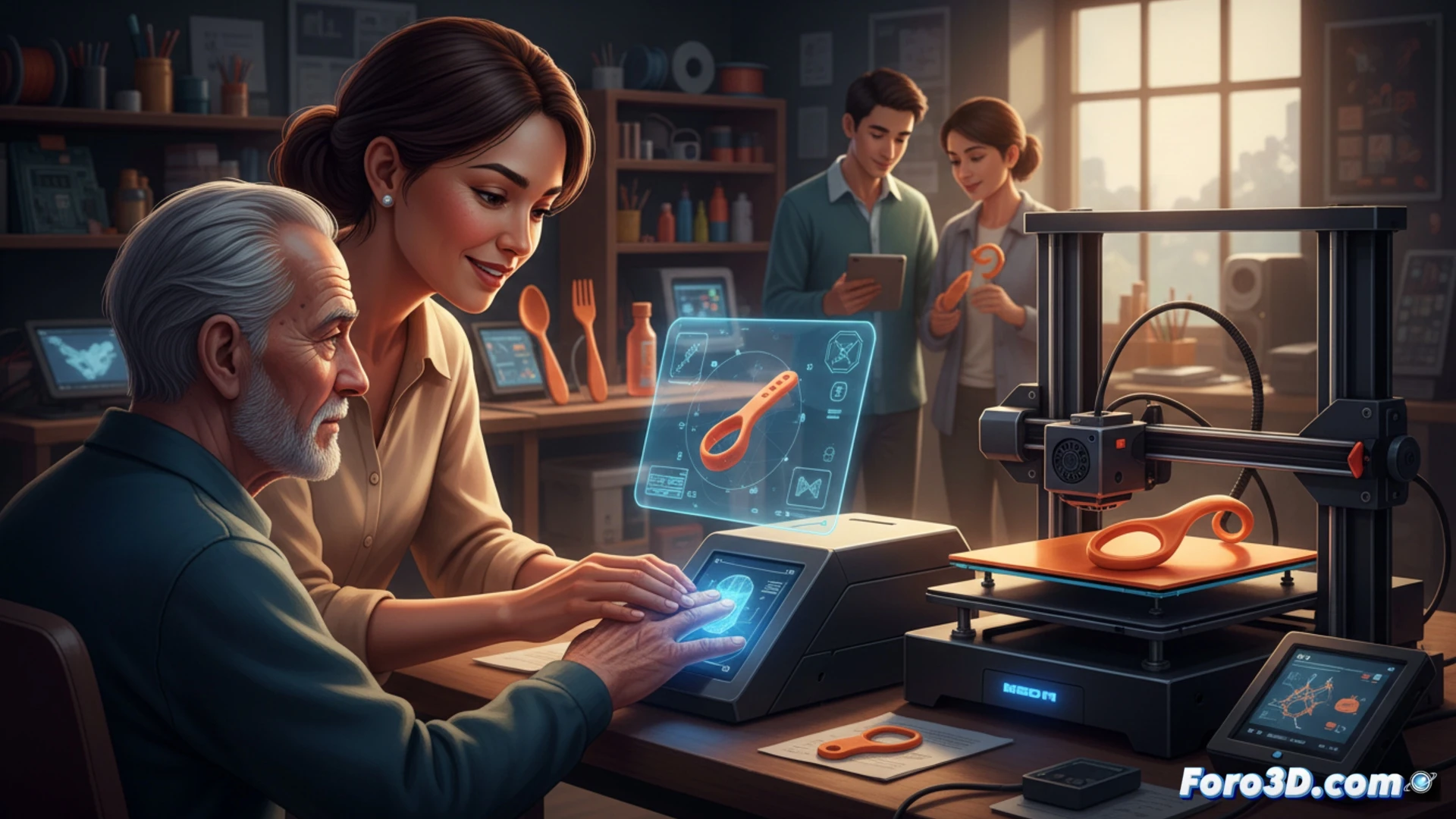
Workflow for creating customized aids 🛠️
The process begins with a handheld 3D scanner (like the EinScan H) to capture the geometry of the user's hand. Then, Blender or Fusion 360 is used to model the gripper, adjusting angles and pressures according to the therapist's instructions. Finally, it is printed in PLA or TPU with a printer like the Prusa MK4, achieving a functional device in less than 24 hours and for just a few euros of material.
When the social worker prints your prosthesis instead of your report 😅
Because, of course, nothing says I understand you and I help you like arriving at a visit with a freshly printed cutlery gripper, instead of a 40-page report. The user will think: good thing I don't need a bionic hand, because with the office printer it would take us three months to calibrate it. At least the prosthesis won't get lost in internal mail.