The artisanal craft faces challenges of precision and time. 3D technology allows for digitizing damaged pieces, creating exact molds, or replicating decorative elements without losing the manual touch. A clear example: a ceramist restoring an ancient vase can scan the missing fragment and model it in 3D to cast a silicone mold. Programs like Blender (modeling), Meshmixer (mesh repair), and Cura (print preparation) are accessible tools to get started.
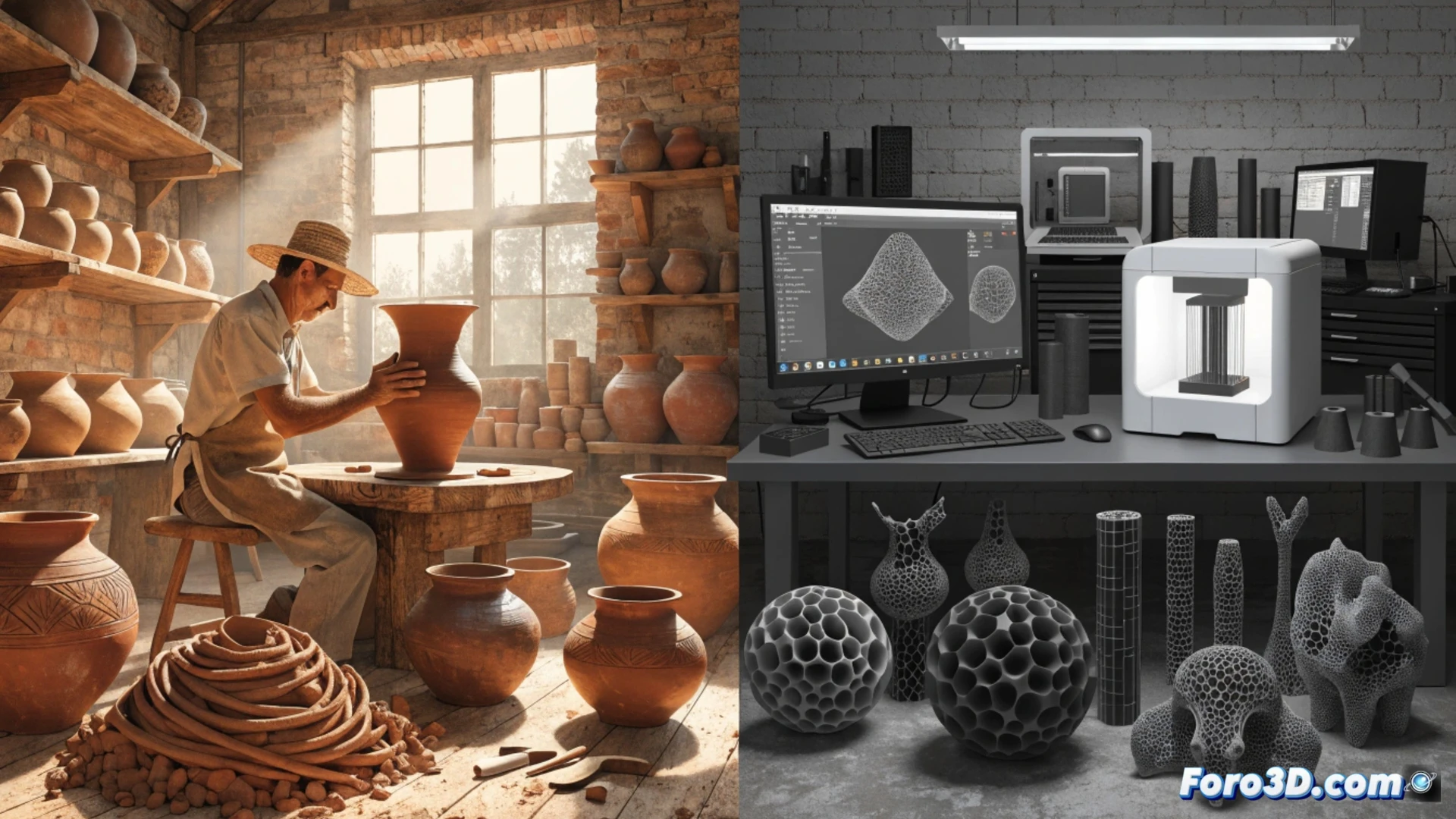
Scanning and modeling: the technical duo of the modern workshop 🛠️
The process starts with a blue light structured light 3D scanner, like the Einscan SE, which captures geometry with 0.1 mm precision. Then Blender is used to clean the mesh and Fusion 360 to adjust assembly tolerances. For organic pieces, ZBrush allows sculpting fine details. Resin printing (with machines like the Anycubic Photon) gives smooth finishes ready for the final mold. This reduces prototyping time from weeks to hours, without eliminating the manual finishing work.
When the artisan asks a printer for help ☕
Of course, nothing beats explaining to your client that the cup handle was designed by a machine while you were having coffee. The irony is that, in the end, you're still sanding by hand for two hours so it doesn't look like cheap plastic. But hey, at least the 3D scanner doesn't complain about the posture or ask for a raise. That said, when the print fails, the artisan reclaims their throne: no one fixes a resin jam like someone who knows how to make ash glaze.