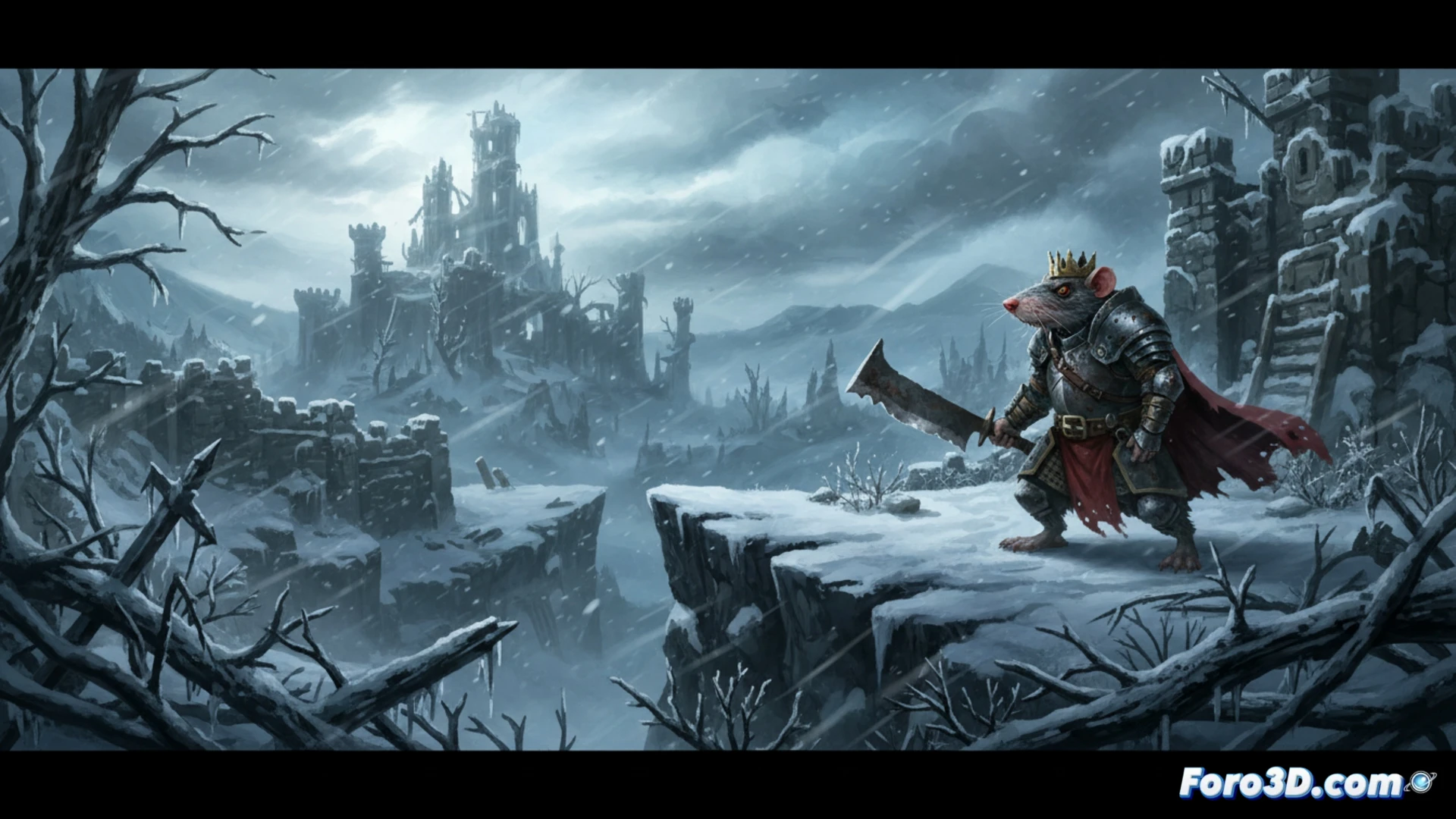
The recent release of Tails of Iron 2: Whiskers of Winter demonstrates how a small team can achieve a striking visual aesthetic by combining accessible tools. The game uses Unity as its main engine, supported by Spine for skeletal animation and Photoshop for texture creation. This combination enables an efficient pipeline that doesn't sacrifice artistic quality, achieving a grim fantasy animal world with dynamic 2D lighting that rivals higher-budget productions.
Asset pipeline and optimization for real-time 🎮
The workflow begins in Photoshop, where sprites and backgrounds are hand-drawn with a thick line style and limited color palettes to evoke a cold, hostile environment. These assets are imported into Spine to create skeletal animations, allowing body parts to be reused and reducing memory footprint. Then, in Unity, the dynamic 2D lighting system is implemented using Sprite Lights and light masks, which cast soft shadows on characters and the scenery. For depth, a multi-layer parallax effect is applied: the background is divided into planes that move at different speeds relative to the camera, generating a sense of volume without the need for 3D models. Optimization is achieved by compressing textures into lightweight formats and limiting the number of active lights per scene, maintaining stable 60 fps even on modest hardware.
Lessons for independent developers 🛠️
The case of Tails of Iron 2 reinforces the idea that technology does not determine artistic quality, but rather how it is used. Unity offers free or low-cost tools for 2D lighting, while Spine speeds up animation without requiring a massive artist team. The key is to plan a pipeline where each program fulfills a specific role: Photoshop for concept art and texturing, Spine for modular animation, and Unity for integration and visual effects. For any indie studio aiming for a dark, narrative style, this combination is a proven and effective path.
In a small team like that of Tails of Iron 2, what strategies or technical limitations in Unity were key to integrating parallax with 2D lighting without breaking the game's atmosphere?
(PS: game jams are like weddings: everyone is happy, no one sleeps, and you end up crying)