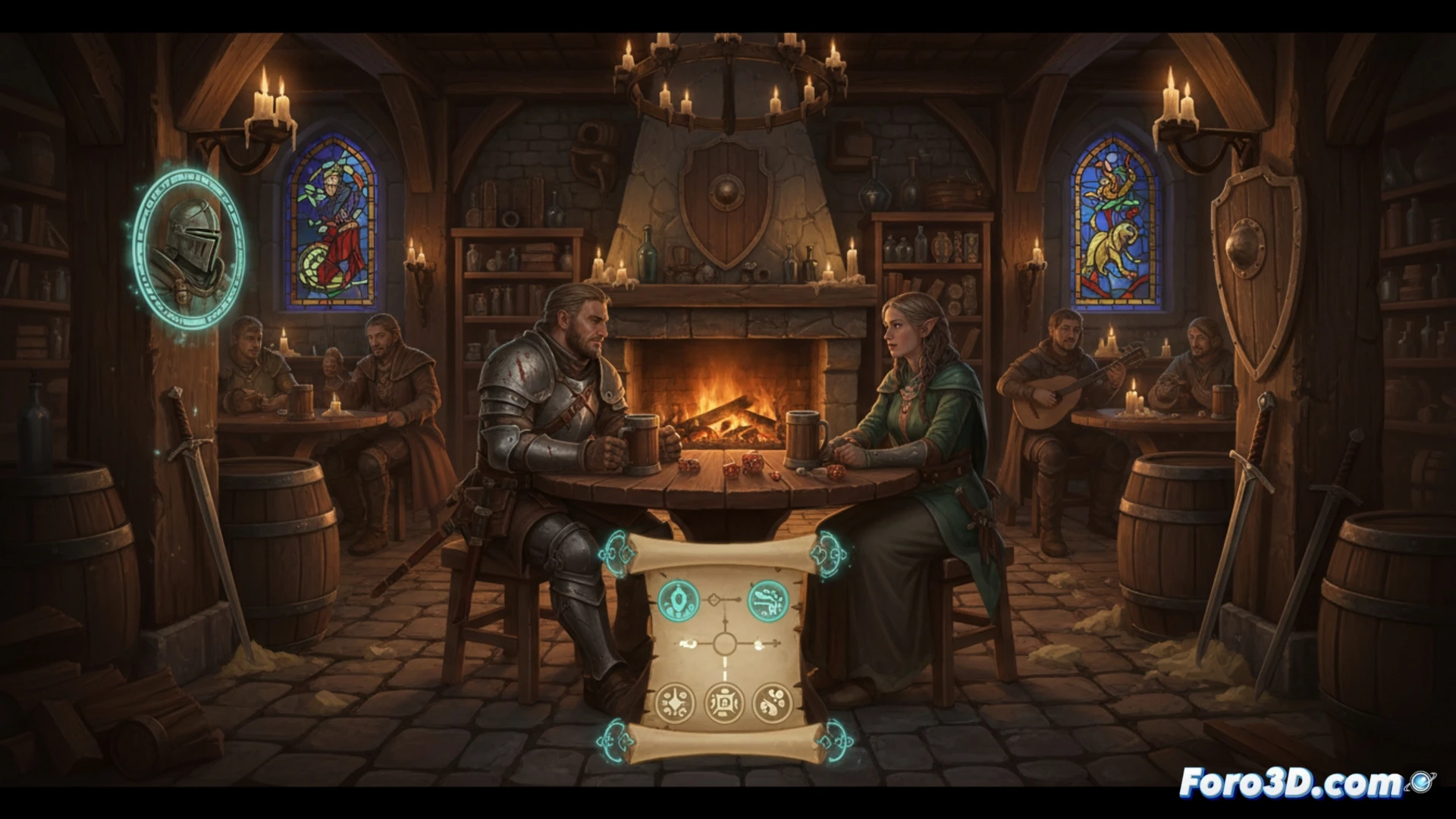
Tavern Talk, a project that blends the aesthetic of a visual novel with the essence of a D&D campaign, demonstrates how Unity can handle high-quality 2D art without sacrificing performance. The game uses Clip Studio Paint for designing colorful and diverse characters, and Adobe Photoshop for texture post-production. The key to its visual success lies in integrating the user interface (UI) directly into the game environment, avoiding floating panels and immersing the player in the tavern.
Technical Workflow: From Clip Studio Paint to Unity 🎨
To optimize 2D assets in real-time, the Tavern Talk team employs a sprite technique with texture atlases. Characters are drawn in Clip Studio Paint at 300 DPI, exported as PNGs with separate layers (body, clothing, accessories), and compressed in Photoshop by reducing the color palette to 256 colors per channel. In Unity, the Sprite Renderer is used with ASTC compression for mobile or ETC2 for desktop. The immersive UI is achieved using Canvas in World Space mode, anchoring dialogues and buttons to 3D objects within the scene, allowing the interface to react to the dynamic lighting of the tavern environment. It is recommended to use Unity's 2D Animation package to skeletonize characters without losing the quality of the original art.
Lessons for Indie Developers: Immersion over Complexity 🎲
Tavern Talk demonstrates that a cutting-edge graphics engine is not needed to create an immersive experience. By prioritizing UI integration into the environment and maintaining a coherent art style inspired by D&D, the project makes the player feel part of the role-playing table. For indie developers, the lesson is clear: invest time in sprite optimization (atlasing and compression) and in designing an interface that does not break the fourth wall. The result is a visual novel that breathes authenticity and technical fluidity.
What integration techniques between 2D art and the immersive interface in Unity allow maintaining the atmosphere of a D&D campaign without breaking the player's immersion in a visual novel like Tavern Talk?
(PS: a game developer is someone who spends 1000 hours making a game that people complete in 2)