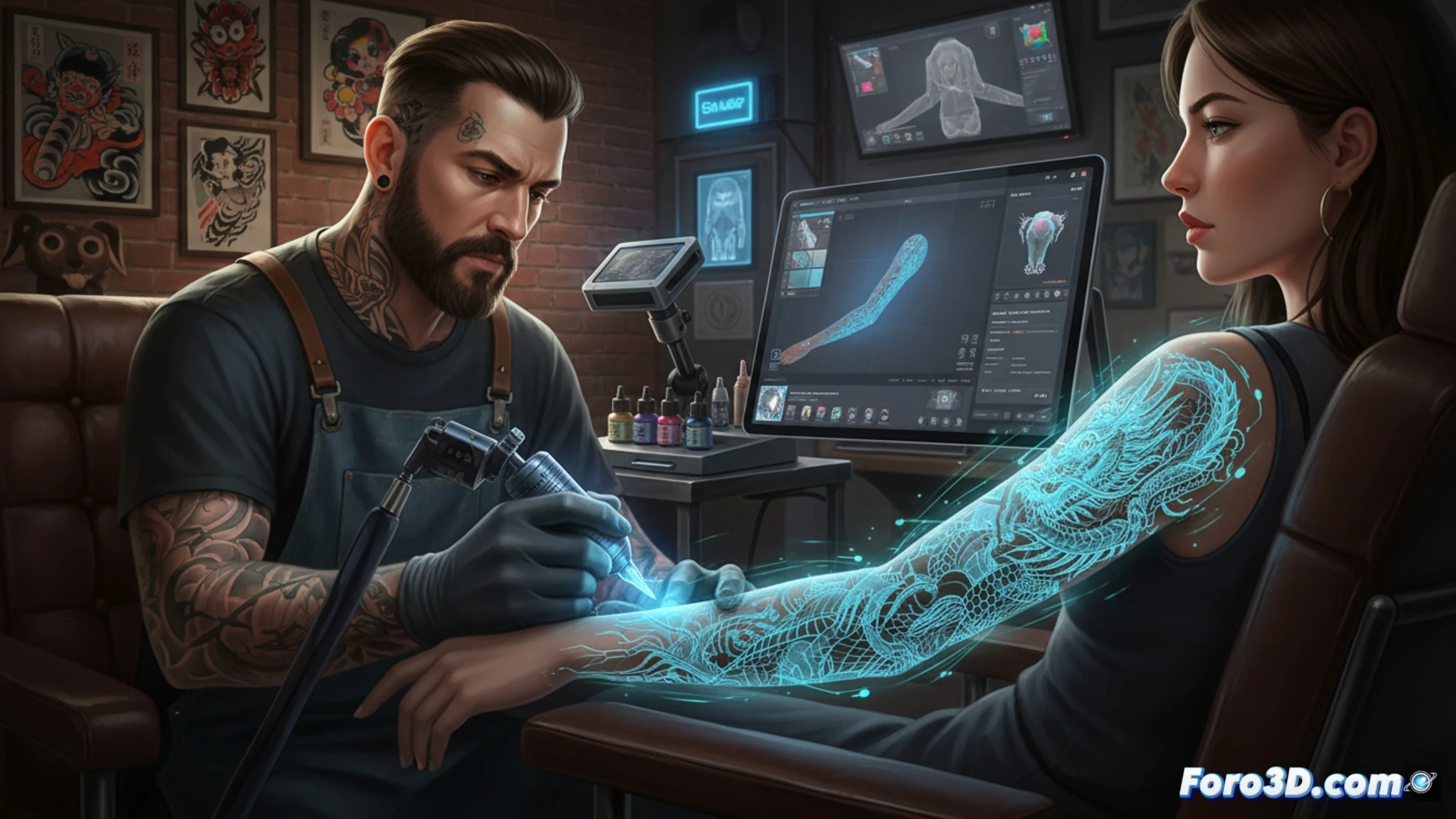
3D technology is transforming the tattoo artist's craft, allowing them to visualize the design on the client's skin before applying the needle. With a body scanner and modeling software, proportion errors are avoided and time is saved on corrections. For example, a tattoo artist can project a full arm in 3D and adjust the design to the muscle's curvature, achieving a more precise and professional result.
Key programs for the digital tattoo artist 🖥️
To start, you need a 3D scanner like Structure Sensor or mobile apps like Scandy Pro. Then, modeling software like Blender (free) or ZBrush to sculpt designs on the body model. Augmented reality tools like InkHunter allow the client to see the tattoo in real-time. Additionally, programs like Adobe Illustrator or Procreate are used to draw the base design before moving it to 3D. All of this reduces the margin of error and speeds up the approval process.
The tattoo artist who doesn't know how to use Blender (and cries) 😅
Of course, there's always the tattoo artist who refuses to learn technology because they prefer to do it by eye. Then they're surprised when the client asks for a dragon that covers the entire forearm and it ends up looking like a lizard with wings. While they're looking for a magic eraser, their digital colleagues already have the design approved and are drinking coffee. Technology doesn't paint better, but at least it prevents the client from ending up with a tribute to their ex on their back.