Tatsuya Oishi, visual architect at Shaft, transformed Monogatari into an aesthetic phenomenon. His style draws from Nouvelle Vague cinema, combining live-action footage, aggressive typography, and fragmented editing. He doesn't seek fluidity, but rather a visceral experience that disorients and captivates the viewer from the very first frame.
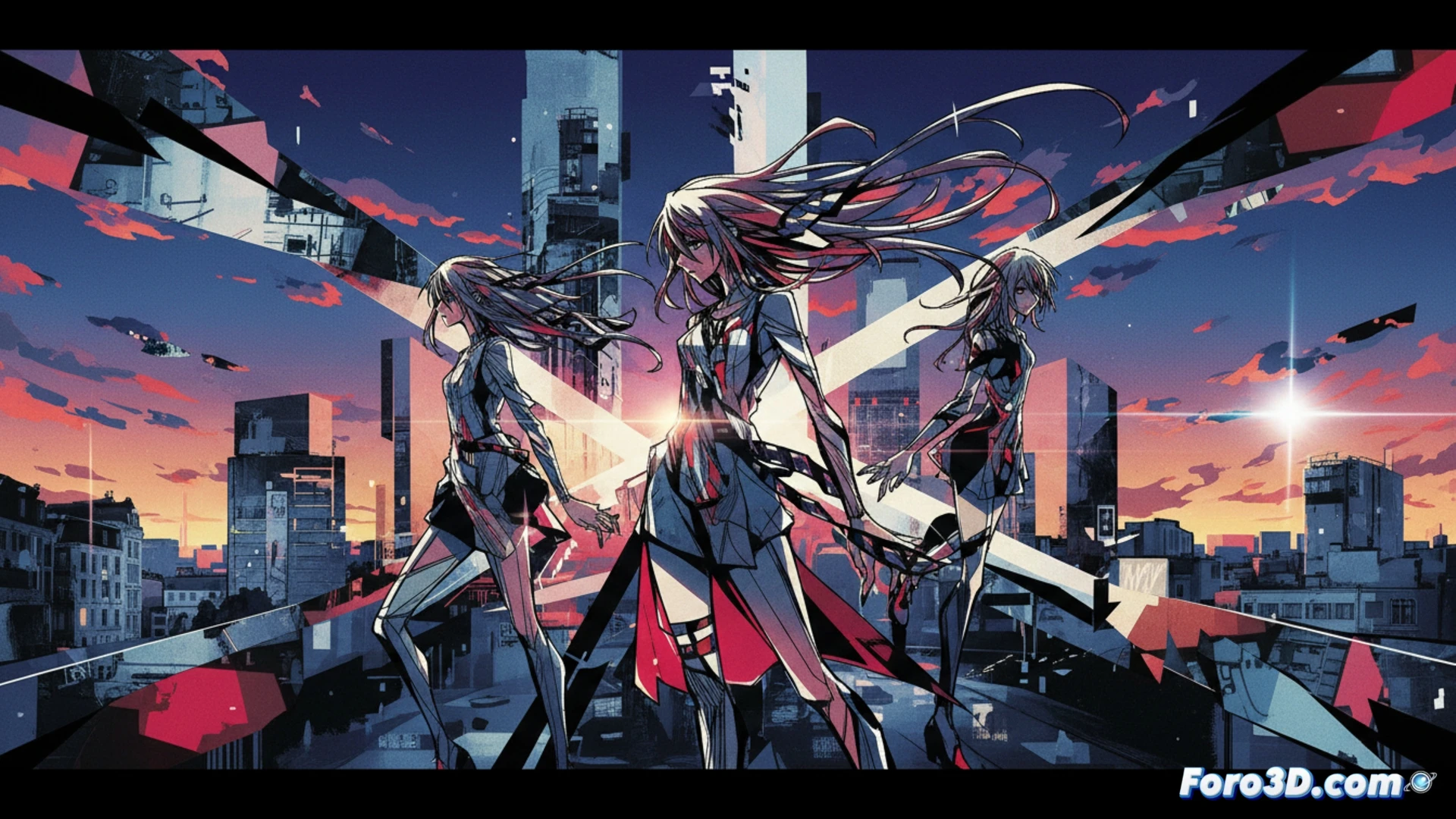
Fragmented editing and typography as narrative engine 🎬
Oishi uses editing as a weapon. His abrupt cuts and changes in visual texture break traditional continuity, forcing the viewer to reconstruct the scene. The typography doesn't decorate: it's part of the dialogue, appearing and disappearing at machine-gun pace. In Kizumonogatari, the use of real backgrounds over animation creates a deliberate contrast, a clash that reinforces the medium's artificiality. Every shot is calculated to generate an immediate reaction.
When the storyboard looks like a controlled epileptic seizure 🤯
Watching an Oishi work is like trying to read a book while someone rapidly flips TV channels. If in Bakemonogatari you got lost among 0.5-second cuts and psychedelic backgrounds, in Kizumonogatari it directly throws you into a vampire fight with papier-mâché textures. There's no middle ground: either you get into his rhythm or you end up with a headache. But hey, at least you won't get bored.