The German company TANIOBIS is advancing its AMtrinsic powder range for additive manufacturing of medical implants, presenting tantalum and niobium alloys as an alternative to titanium. Currently, titanium Ti-6Al-4V accounts for more than 90% of orthopedic and dental implants, but in one in five patients it releases aluminum and vanadium ions, causing cytotoxic reactions and inflammation.
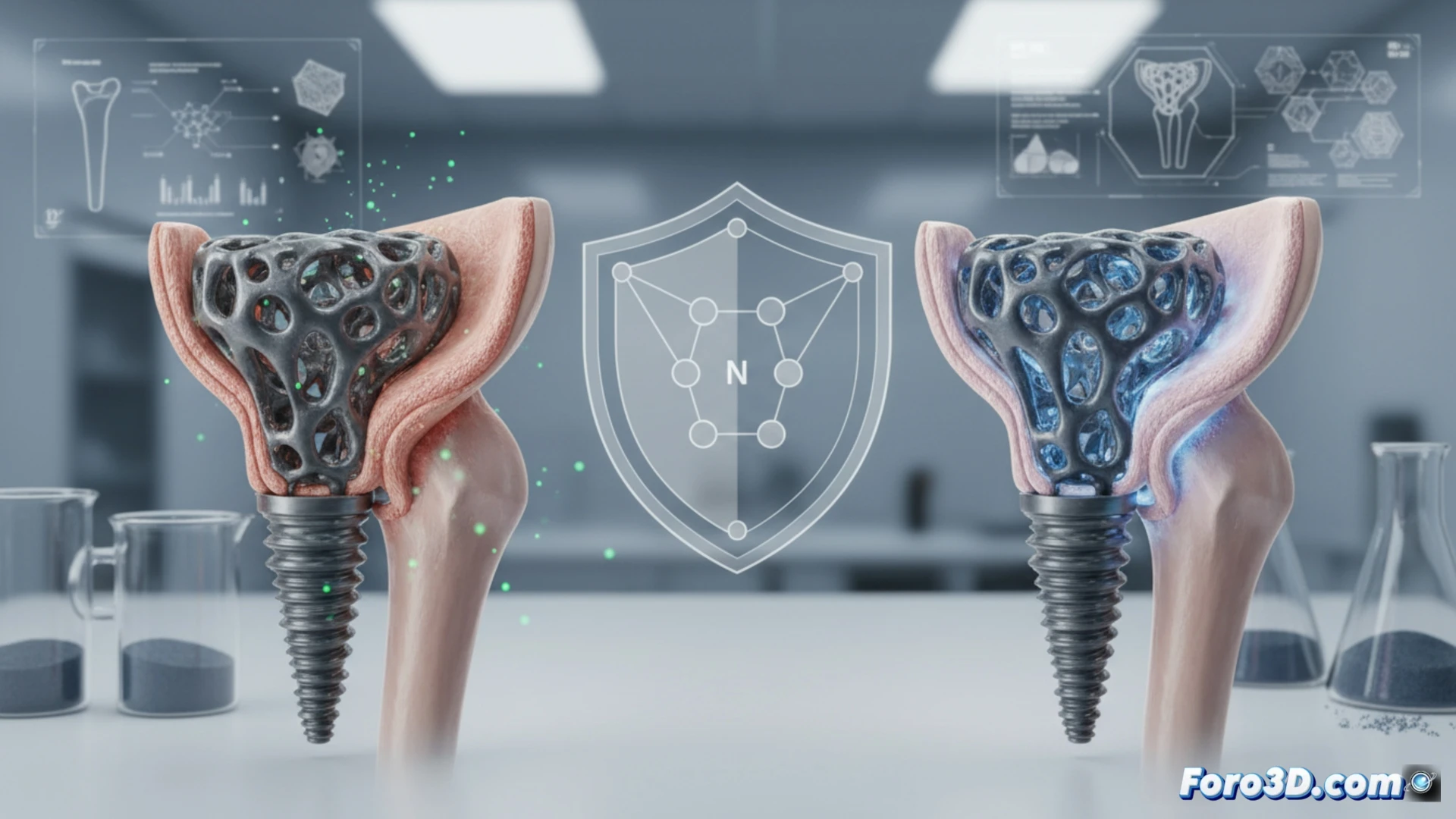
The chemistry of AMtrinsic powders in additive manufacturing 🧪
AMtrinsic powders are based on mechanical alloying and atomization processes that ensure purity and flowability in 3D printing. Tantalum and niobium alloys offer corrosion resistance and biocompatibility without the side effects of vanadium and aluminum. TANIOBIS optimizes particle morphology to improve sintering, reducing defects in final parts. This enables the manufacture of implants with complex geometries, such as porous structures for osseointegration, without resorting to the cytotoxic risks of Ti-6Al-4V.
Titanium isn't so pretty when it releases ions on you 😬
Titanium Ti-6Al-4V has been the king of implants for years, but it turns out that one in five patients gets an extra dose of aluminum and vanadium without asking for it. It's like your new knee comes with a subscription service to chronic inflammation. TANIOBIS arrives with tantalum and niobium, which at least don't have the bad habit of releasing toxic metals when no one is looking. Maybe it's time to retire titanium, before the patient's body calls it quits.