Thanatopraxy, an essential profession in postmortem management, exposes professionals to a silent cocktail of hazards. Formaldehyde, methanol, and phenol not only preserve tissues but also become vectors of chronic toxicity, occupational cancer, and severe dermatitis. Added to this is the biological threat: human fluids and tissues carrying hepatitis B/C, HIV, and tuberculosis, along with mechanical risks such as needlestick injuries and overexertion. This article proposes a 3D epidemiological visualization to gauge the real impact on public health.
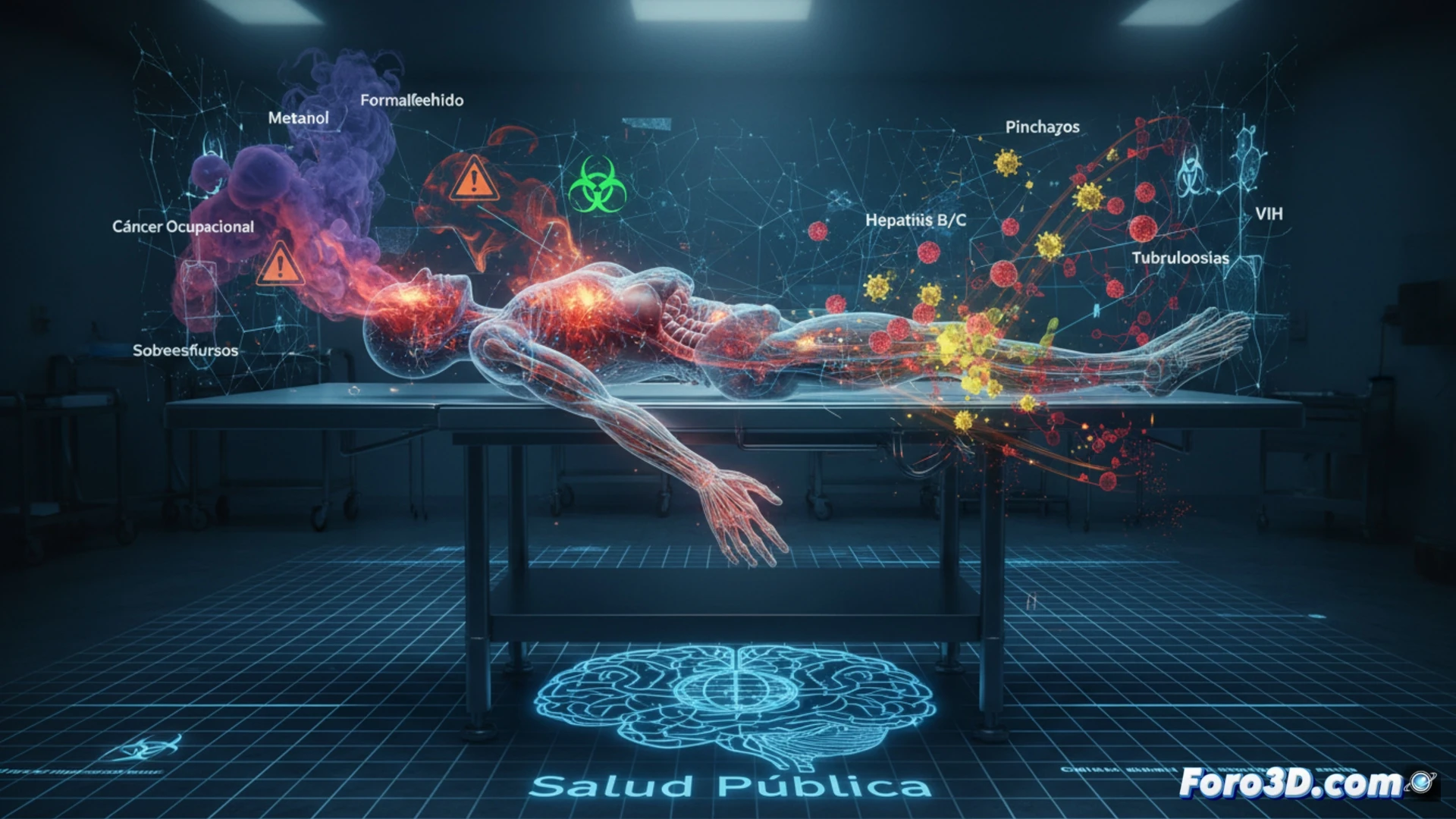
3D Epidemiological Visualization Methodology 🧬
We propose an interactive infographic that cross-references data on the incidence of occupational diseases in thanatopractors with records from other healthcare professions, such as nursing or forensic pathology. The 3D anatomical model will highlight the entry routes of toxins: nasal inhalation of formaldehyde vapors, dermal absorption of phenol on hands and arms, and percutaneous inoculation from needlestick injuries. Temporal evolution graphs will show risk peaks following prolonged embalming procedures. Georeferenced heat maps will be used to identify regions with a higher incidence of occupational hepatitis, contrasting with data from controlled exposure in clinical laboratories.
The Invisible Burden of Technical Grief 💔
Beyond the numbers, the thanatopractor carries a unique emotional stress: the constant handling of others' deaths, combined with the awareness of their own vital risk. This psychosocial burden, difficult to quantify, is added to forced postures and falls in wet rooms. Visualizing this data in 3D not only educates the healthcare community but also forces a rethinking of safety protocols. Prevention cannot be a luxury in a profession that literally works with the remains of our vulnerability.
Considering that formaldehyde is a known human carcinogen, how could a real-time 3D mapping system, integrated with chemical and biological exposure sensors, modify current safety protocols in thanatopraxy rooms to prevent the silent accumulation of invisible risks in the workspace?
(PS: the 3D incidence maps look so good they almost make being sick enjoyable)