The dictatorship of size zero on runways and in magazines is not an aesthetic whim; it is a public health problem. By imposing a canon of extreme and unattainable thinness, the media generate social pressure that distorts young people's body perception. This constant comparison with unrealistic images triggers dangerous eating behaviors, such as anorexia, which is already reaching alarming rates among adolescents.
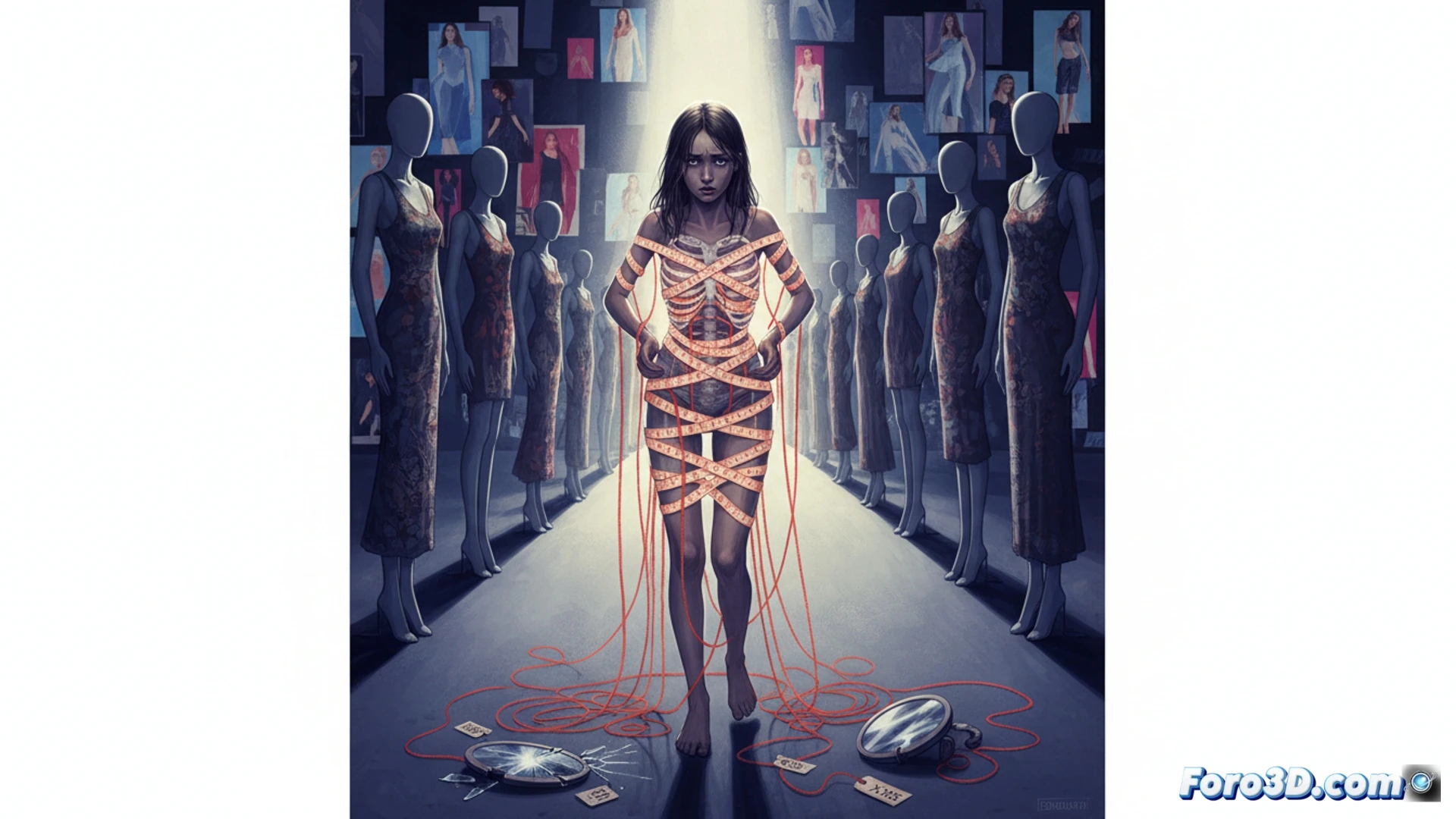
The role of AI in the visual distortion of bodies 🤖
Digital retouching technology and artificial intelligence filters have perfected the creation of impossible bodies. Editing algorithms modify waists, lengthen legs, and smooth curves with millimeter precision, normalizing a silhouette that does not exist in nature. These tools, used without critical context, amplify the gap between biological reality and the virtual ideal, turning adolescents into victims of a code-generated standard.
The one-size-fits-all: the myth that doesn't even fit in Photoshop 👗
That a model wears a size 0 is not fashion; it's a file compression trick. While brands insist that clothes fit well, in the real world women still have bones, organs, and horrors, muscles. The only outfit that fits these unrealistic sizes perfectly is the one of unreality. Perhaps the next step will be selling clothes for holograms; at least they wouldn't complain that they don't fit.