Takayuki Hirao, former director at Madhouse and regular at Ufotable, is one of those creators who understands anime as a pure audiovisual medium. His style is based on rhythmic editing and a metanarrative that explores the creative process itself. Works like Pompo: The Cinéphile or Paradox Spiral are clear examples of his obsession with cinema within cinema.
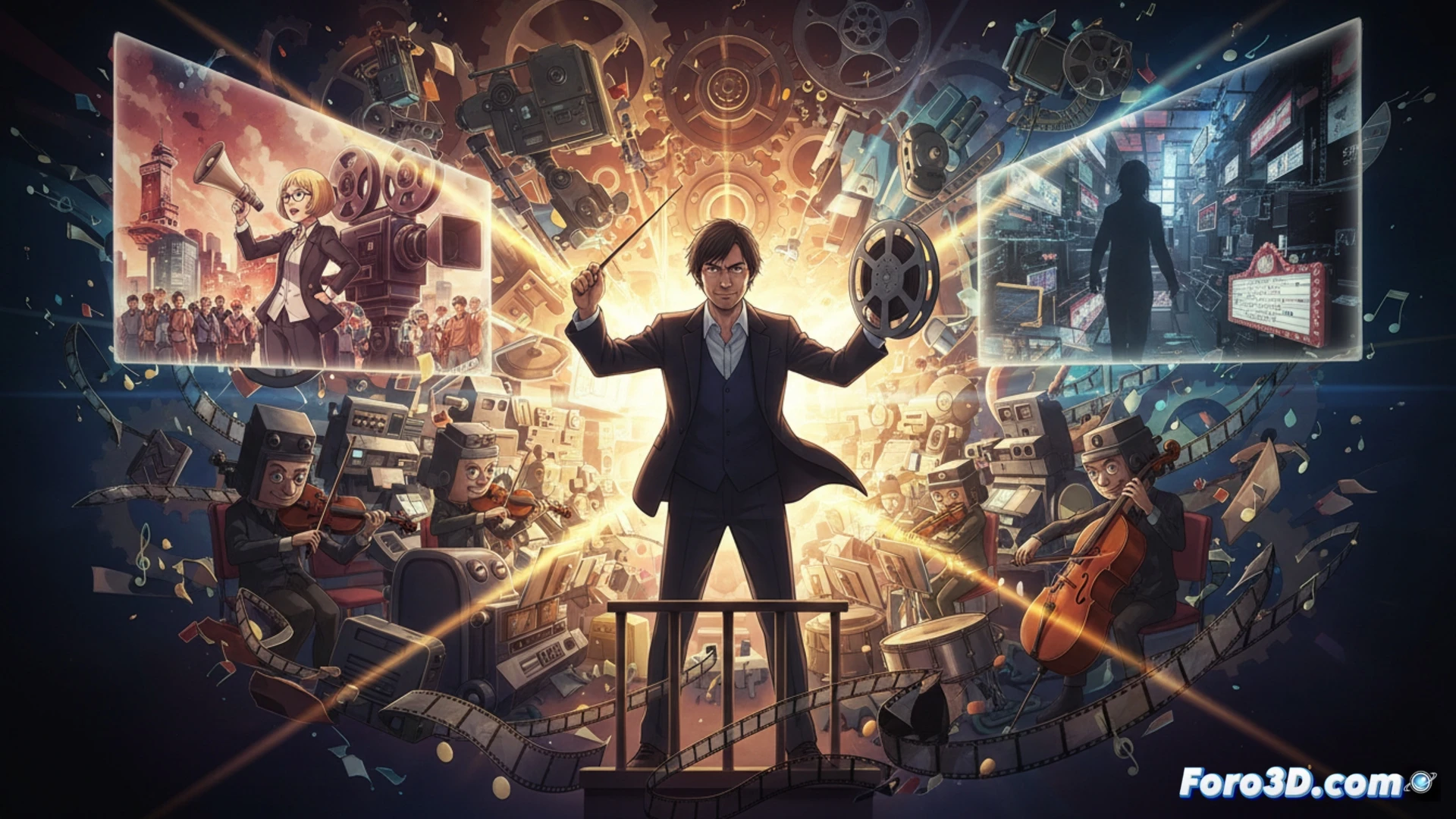
Rhythmic Editing and Cinematic Montage in Digital Animation 🎬
Hirao applies techniques from live-action cinema to animation, such as syncopated cuts, speed changes, and forced framing. In The Garden of Sinners: Paradox Spiral, he uses accelerated editing that breaks temporal continuity to reflect narrative chaos. In God Eater, the camera moves as if it were a virtual steadicam. His work demonstrates that animation can benefit from the principles of cinematic montage without losing its drawn essence.
When Your Favorite Character Is More of a Cinephile Than You 🎥
In Pompo: The Cinéphile, Hirao creates a protagonist who produces movies like someone collecting trading cards. The film is a love letter to cinema, but also a mirror where the director laughs at himself. Watching a character argue about sequence shots while you just want to see the action scene is the kind of irony only a music lover with a Tarantino complex can offer.