Takashi Watanabe is a name that resonates strongly among fans of 90s anime. His career as a director spans decades, but his mark was indelibly made with series like Slayers and Shakugan no Shana. His ability to balance humor and epic storytelling made him a benchmark for the fantasy genre in Japanese animation.
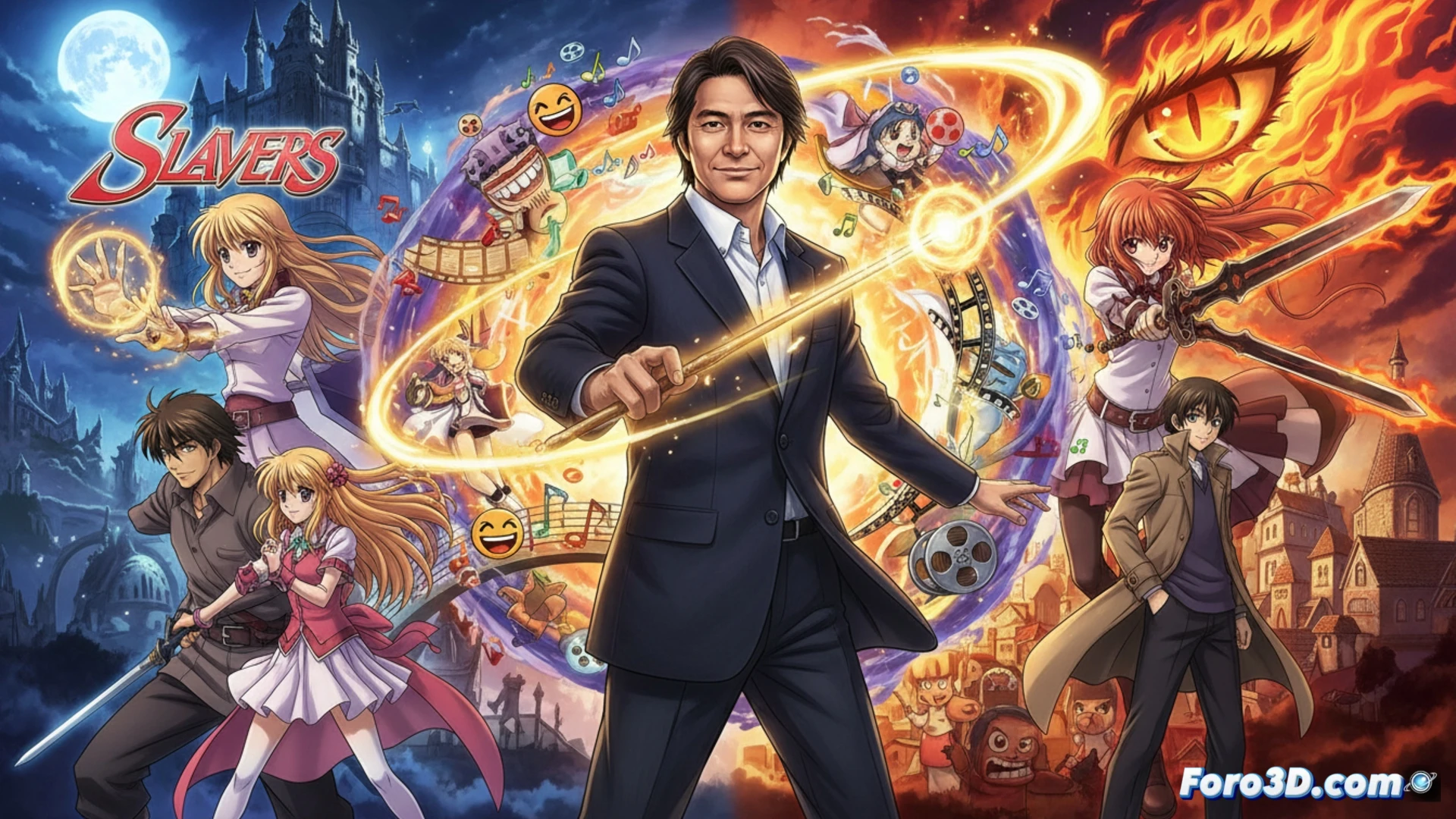
The engine of animation: how Watanabe balances action and visual gags 🎬
Watanabe employs editing techniques that alternate close-ups in combat with wide shots for physical gags. In Slayers, the choreography of spells syncs with the characters' comedic reactions, maintaining a steady rhythm. In Freezing, dramatic tension is broken by interludes of absurd humor, a device that prevents viewer fatigue. His mastery of narrative pacing ensures that high-energy scenes don't become tiresome.
And then came Hidan no Aria: when the director said enough with the magic 🔫
Because yes, after so many guilds of wizards and flaming swords, Watanabe decided it was time to bring in schoolgirls with guns and miniskirts. Hidan no Aria is his most chaotic work: a mix of detectives, non-stop action, and fanservice that feels like an animated anything goes. It's as if he said: I've directed serious fantasy, now I want to see a Japanese high school blow up. And it worked.