Tactical Breach Wizards proves that a turn-based tactical game can shine with an efficient technical approach. Developed in Unity, the title uses stylized low-poly modeling created in Maya, combined with a particle system for spells that avoids graphical overload. This article analyzes the workflow behind its isometric views and offers guidelines for indie studios looking to optimize resources without sacrificing visual identity.
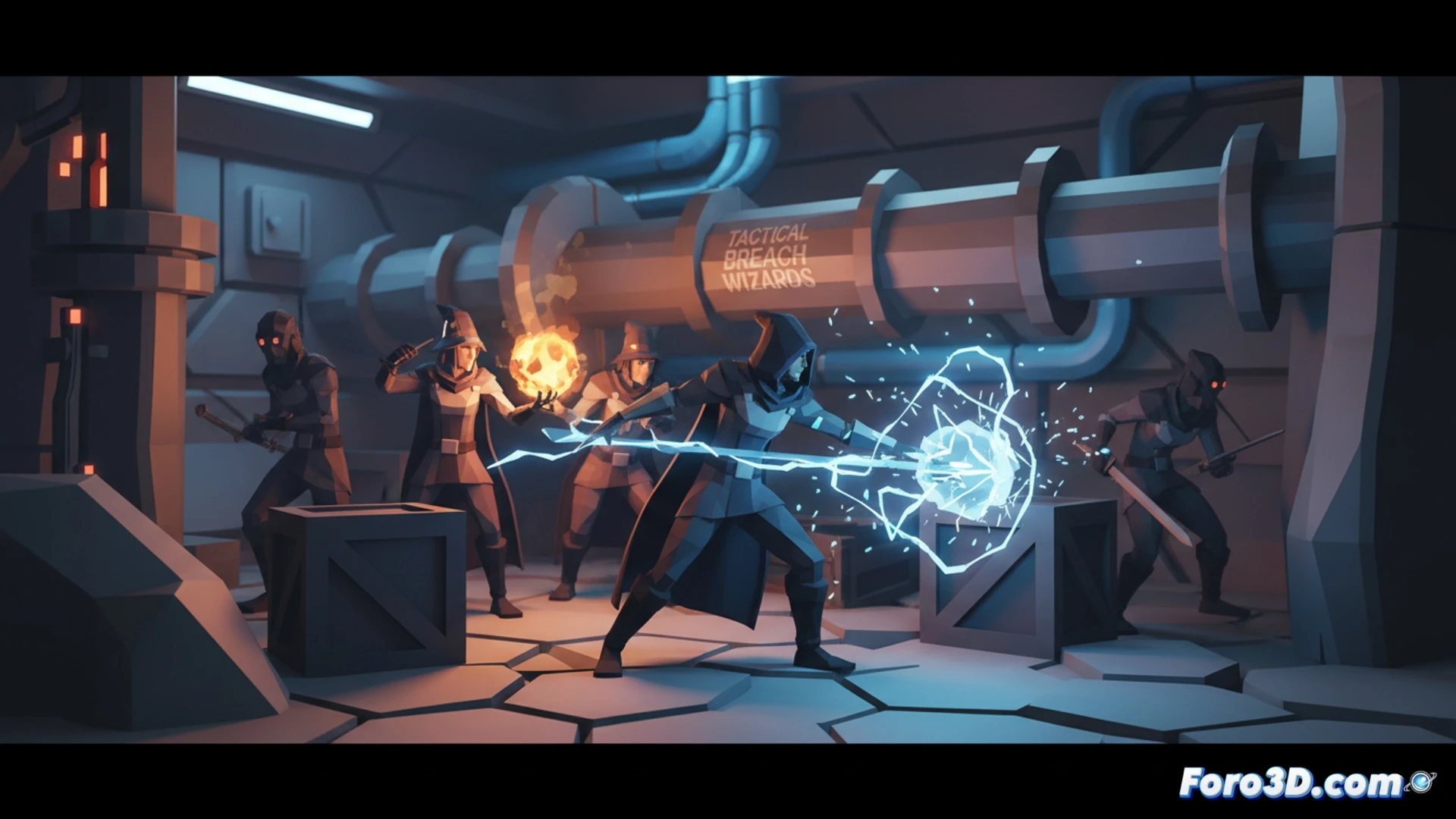
Low-Poly Modeling and Particle Optimization in Unity 🎮
The pipeline begins in Maya, where characters and environments are modeled with simple geometry and flat textures, prioritizing readability in a fixed isometric camera. When exporting to Unity, it is recommended to use the FBX format with mesh compression and texture atlases to reduce draw calls. For spell effects, the game uses Unity's Shuriken particle system, limiting the number of emitters per scene and using sprite textures instead of 3D models. A good practice is to pre-load particle systems into an object pool to avoid performance spikes during attack animations. Additionally, baked lighting in Unity allows maintaining static shadows that reinforce tactical depth without consuming CPU in real-time. Developers should configure the culling mask so that particles are not rendered in views where they are not visible, saving memory on mid-range devices.
Lessons for Indies: Simplicity and Tactical Scalability 🧠
Tactical Breach Wizards demonstrates that low-poly is not a limitation, but a strategic decision. By reducing polygonal detail, the team was able to focus on tactical gameplay and visual clarity, essential in a title with spells and positioning. For indies, the key lesson is to prioritize a pipeline that allows for fast iteration: Maya for blocking out base shapes, Unity for testing mechanics immediately, and particles as the final polishing layer. Do not underestimate the power of a coherent color palette and flat textures; in isometric view, the character's silhouette is more important than fine details. Finally, use Unity's Layer system to separate interactive objects from the background, facilitating tactical level design without technical complications.
What was the biggest technical challenge when integrating the low-poly pipeline between Unity and Maya to maintain visual coherence and performance in Tactical Breach Wizards?
(PS: shaders are like mayonnaise: if they break, you start all over again)