In 1924, a chance discovery in a field in Glozel, France, sparked one of the most enduring controversies in modern archaeology. Hundreds of clay tablets, engraved with an indecipherable script, along with tools and vessels, were unearthed. Since then, the debate over their authenticity and dating has divided experts. The scientific community faces a dilemma: are they the remains of an unknown Neolithic civilization or an elaborate forgery. The answer might lie in digital technology.
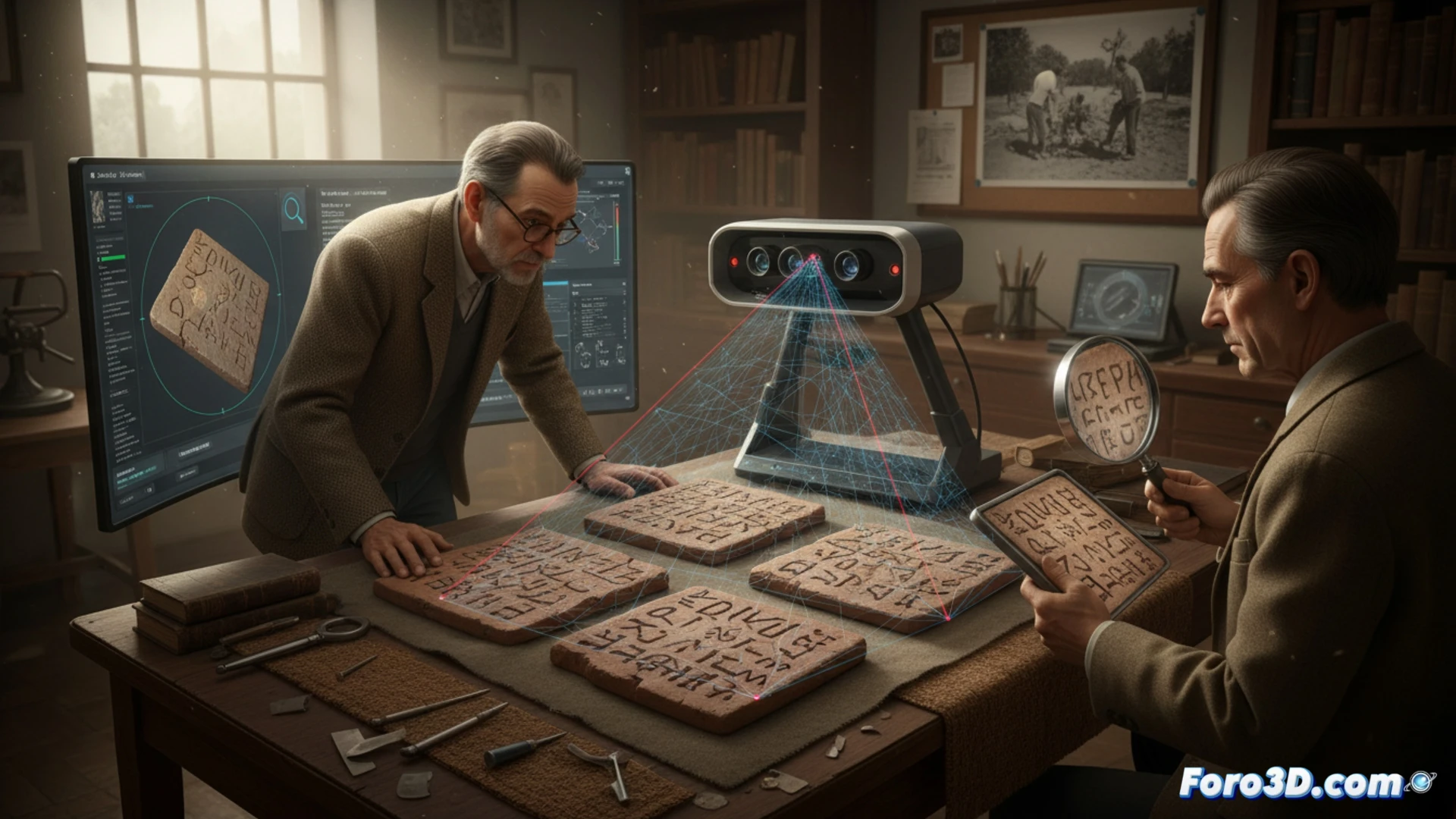
Photogrammetry and scanning: the digital dossier of Glozel 🏺
3D digitization techniques offer an objective way to analyze these artifacts without risk of damage. Using high-resolution photogrammetry, three-dimensional models of each tablet can be generated, capturing even the microtopography of the grooves. This allows researchers to virtually examine tool marks to distinguish between ancient wear and modern erosion. Multispectral scanning, for its part, can reveal traces of pigments or thermal alterations in the clay. By comparing these models with databases of ancient scripts and manufacturing techniques, artificial intelligence could help verify the internal consistency of the Glozel corpus, providing quantitative data that transcends subjective interpretations.
The truth buried in the pixels 🔍
The Glozel case is a reminder that archaeology excavates not only earth, but also prejudices. A digital model does not solve the mystery by itself, but it democratizes access to the evidence, allowing any scientist in the world to analyze the original data. If the tablets are authentic, virtual reconstruction could be the key to translating their message. If they are forgeries, the analysis of digital tools could expose the forger's techniques. In either case, digital archaeology becomes the most impartial judge this case has ever had.
Since thermoluminescence dating of the Glozel tablets yielded contradictory results in the past, in what specific way can 3D photogrammetry and digital microwear analysis help resolve the debate over their authenticity by revealing marks from modern or ancient tools?
(PS: and remember: if you can't find a bone, you can always model it yourself)