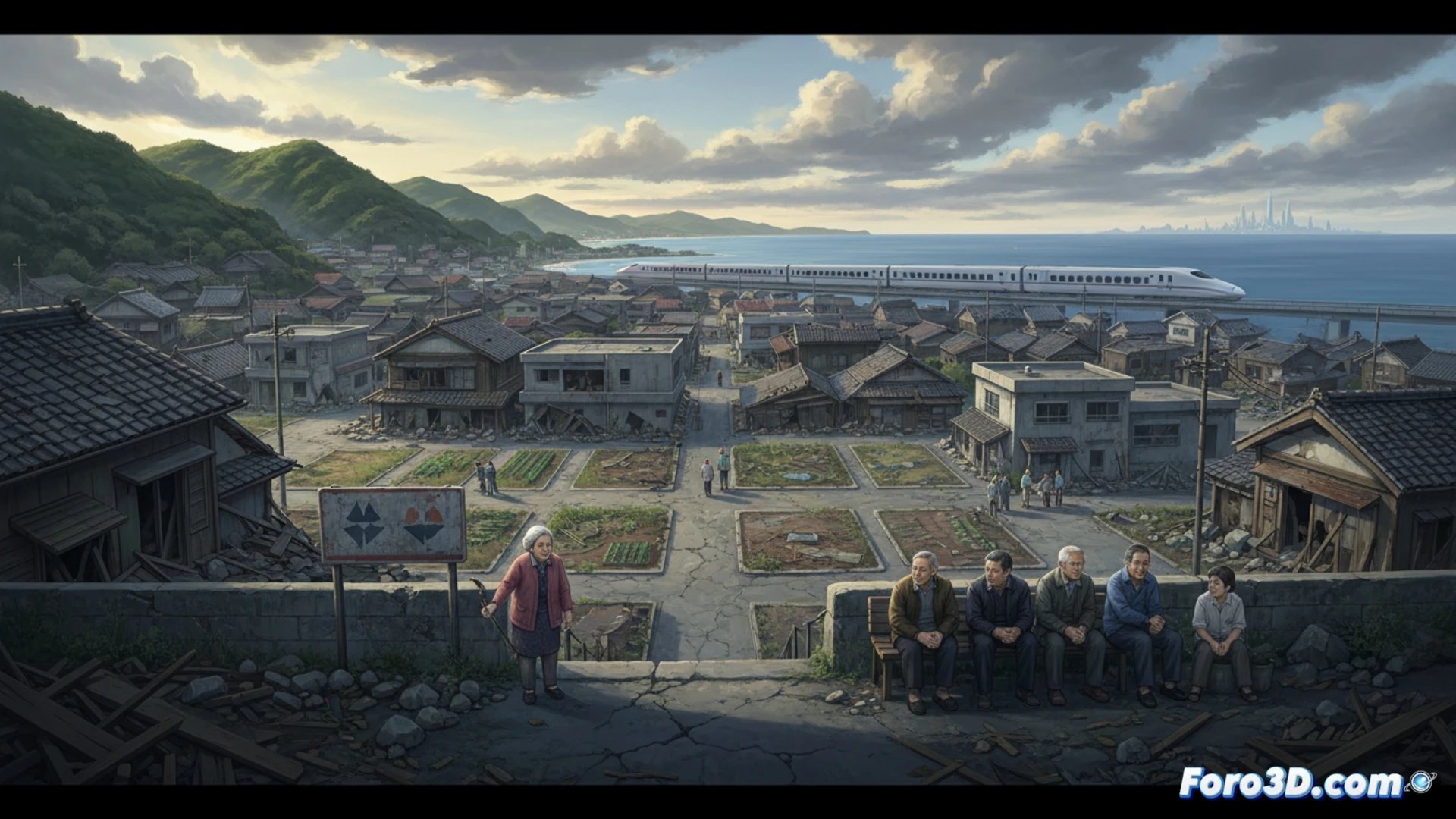
The city of Suzu, on the Noto Peninsula, has seen its population drop by 34% after the 2024 earthquake, leaving it with 8,528 inhabitants. This collapse accelerates aging and depopulation, painting a scenario that could foreshadow what awaits all of Japan if no measures are taken.
Smart cities: from the digital promise to managing the void 🤖
Technology is presented as a solution, with IoT sensors to monitor infrastructure and drones to deliver supplies to isolated areas. But in Suzu, the fiber optic network has more ghost users than real ones. Algorithms predict the decline but do not reverse it. Without an active population base, autonomous systems end up managing the silence of streets that were once bustling.
The master plan: robotizing the few who remain 🦾
The local administration is considering installing companion robots so the elderly don't feel lonely, but the only problem is that robots also need maintenance and no one knows who will repair them. It is rumored that the next census will include androids as official inhabitants, so at least the statistics will stop falling. Meanwhile, stray cats have already formed a union to demand voting rights.