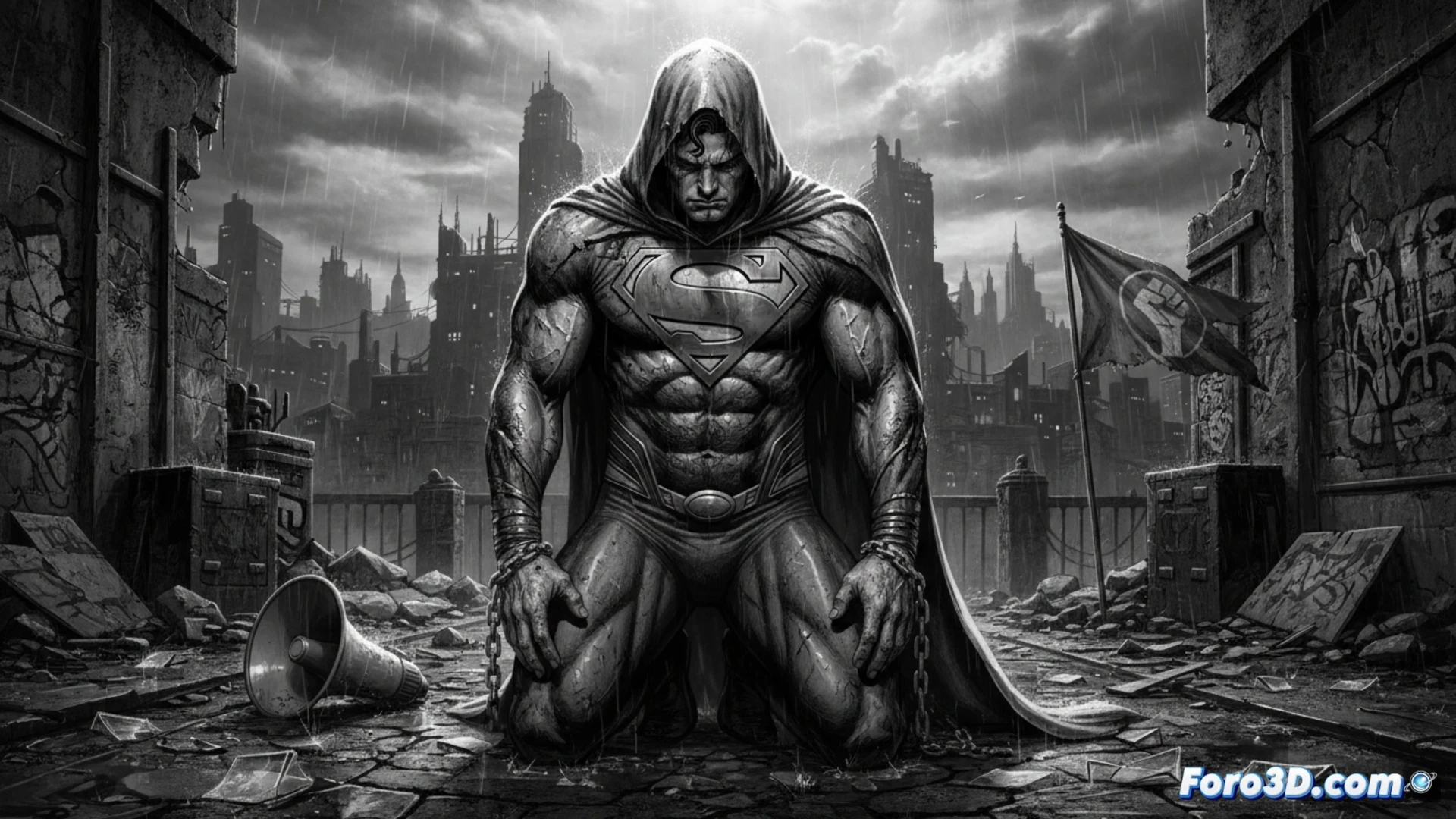
The universe of Batman: White Knight expands with a visual bombshell. Sean Murphy has introduced a young Superman, in his twenties, with curly black hair and a color palette that evokes classic origins but with an unprecedented digital rawness. This design is not a simple redesign; it is a declaration of aesthetic and narrative principles. Murphy uses 3D illustration tools to strip the Man of Steel of his usual polish, presenting him as a more human, grounded, and therefore more vulnerable being.
Digital Deconstruction: Design as Subversion 🎨
Murphy's process is a case study in digital art applied to narrative activism. By rendering Superman with rougher textures and modeling that emphasizes youth and imperfection, the artist breaks the archetype of the invincible hero. The curly, disheveled hair, far from the classic slicked-back look, suggests untamed energy and an identity not subjected to DC's corporate standards. The color choice (red, blue, and yellow) remains, but the digital lighting tilts it towards a dirtier, more realistic tone. This act of design is a direct critique of the clean and often alienating iconography of the traditional superhero.
The Hidden Message in the Render 🔍
Beyond the pixel, Murphy speaks to us of a generational need: to humanize the symbol. This twenty-year-old Superman is not the father of the Justice League; he is a potential activist, a young man who could challenge the system from within. By showing him in a state of visual formation, the artist suggests that true strength lies in doubt and growth, not perfection. In the digital age, where image is everything, Murphy demonstrates that a simple render can be a political and artistic manifesto, claiming the right to reinterpret myths from a more critical and accessible perspective.
Is Sean Murphy's aesthetic decision to present Superman in black and white a strategy of visual activism that seeks to strip the character of his commercial iconography to focus the political message on youth and social justice, or simply a narrative device to differentiate his White Knight universe?
(PS: political digital art is like an NFT: everyone talks about it but nobody really knows what it is)