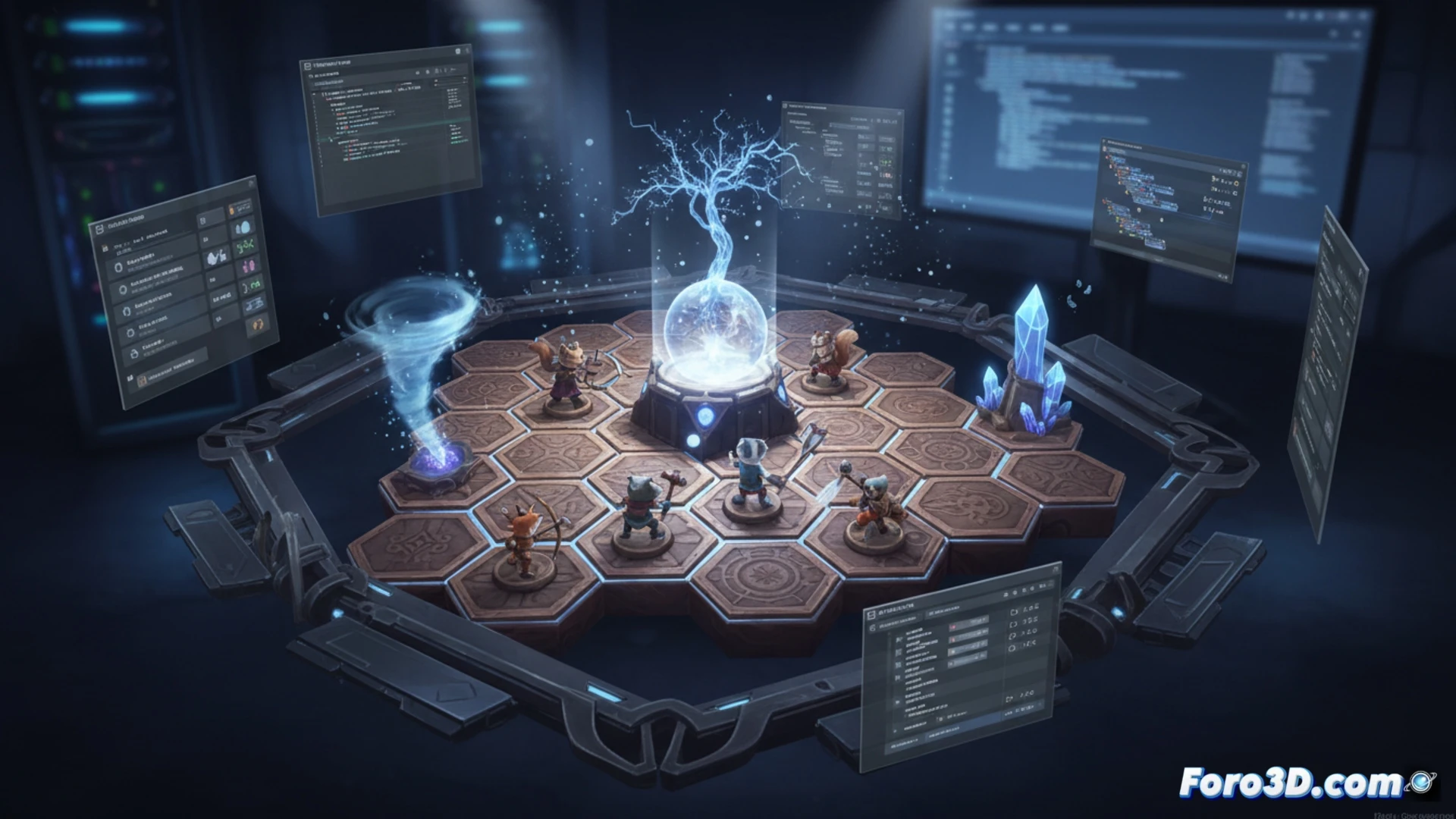
Sunderfolk presents itself as a fascinating case study in video game development, demonstrating how Unreal Engine 5 can be used to create a living board game aesthetic. The project combines a rigorous pipeline of stylized assets, modeled in Maya, with the real-time rendering power of UE5. The result is a tactile world where animal characters come to life on a digital board, merging the craftsmanship of 3D modeling with the dynamic lighting and particle systems of the game engine.
Production Pipeline: From Maya to the Game Board 🎲
The workflow begins in Maya, where animal characters are modeled with a focus on clean silhouettes and topology optimized for animation. These assets are exported to Unreal Engine 5, where stylized materials are applied, avoiding photorealism to maintain consistency with the board game theme. Lighting is configured using Lumen to achieve soft light bounces that simulate a studio-like ambient light source, while tactical effects, such as rolling dice or sliding tokens, are implemented via Niagara. Optimization is key: low-resolution textures and aggressive Level of Detail (LOD) are employed to ensure the scene, though rich in detail, remains smooth in real-time without sacrificing the visual readability of the board.
Lessons for Developers: The Magic of the Tactile ✨
Sunderfolk reminds us that cutting-edge technology should not always seek hyper-realism. By adopting a living board game aesthetic, the team demonstrates that UE5 can be a tool for telling unique visual stories. For developers, the lesson is clear: a project's success lies in the disciplined integration of tools like Maya and Photoshop into the engine, prioritizing artistic coherence over raw power. The combination of stylized assets with real-time tactile effects not only defines Sunderfolk's identity but sets a new standard for games seeking to break the barrier between the digital and the tangible.
How does Sunderfolk manage to emulate the physicality and tactile interaction of a traditional board game using Unreal Engine 5 tools to maintain immersion without losing accessibility?
(PS: a game developer is someone who spends 1000 hours making a game that people complete in 2)