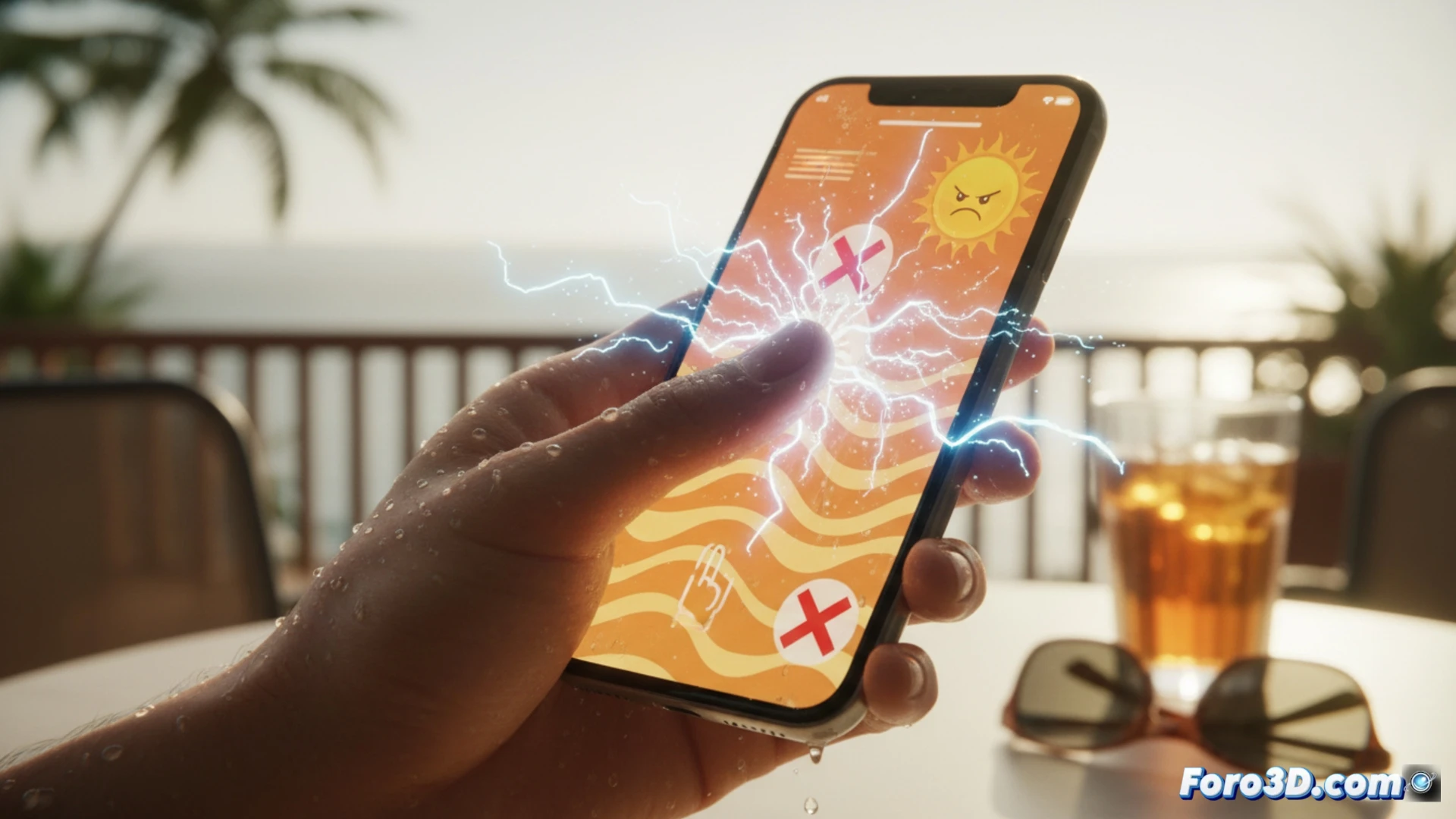
It's summer, your hands are sweaty, and that message you can't ignore just arrived. You try to unlock your phone, but the screen doesn't respond. You swipe your finger once, twice, three times, and nothing. Sweat acts as an unwanted insulator, interrupting the electric field your finger must generate for the phone to understand your touch. An everyday drama with a technical explanation.
How conductivity fails with humidity 🧠
Capacitive screens detect the electrical charge of your skin. Sweat, rich in salts and water, is conductive, but its presence on the surface creates multiple false touch points. The system becomes erratic: it registers touches where there are none or ignores real ones. Engineers design algorithms to filter out droplets, but with a thick layer of perspiration, the finger loses its unique electrical signature. The result is a battle between your urgency and physics.
The slippery finger and vengeful technology 😅
The phone seems to have a memory and chooses the worst moment to get back at you. When you most need to send a yes, I'm coming, the screen turns into a jelly slide. Your finger slips, opens random apps, and even calls your ex. The worst part is that when you dry your finger on your shirt, the screen detects the fabric's moisture and goes crazy. It's Murphy's law of touchscreens: sweat and haste are sworn enemies.