If you've ever wondered why human skin doesn't look like plastic in 3D, the answer lies in Subsurface Scattering (SSS). This effect simulates how light penetrates the surface, scatters, and exits at another point, giving that translucent and realistic appearance to materials like wax, leaves, or ears lit from behind. Without SSS, your characters will look like mannequins.
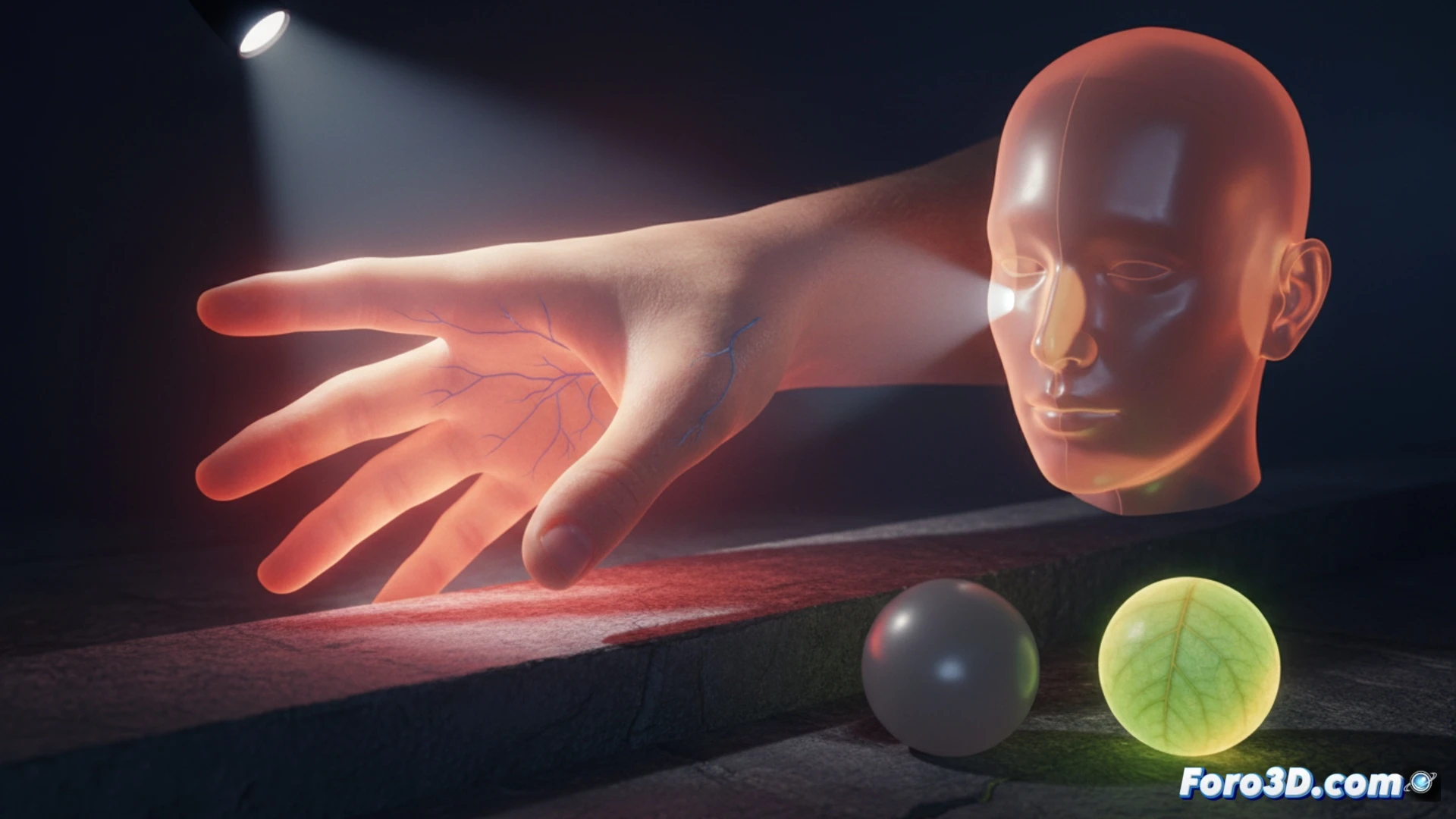
How scattering works in render engines 🎨
Technically, SSS is based on the light transport equation. The engine calculates the distance light travels beneath the surface before exiting. Key parameters are the scatter color and the mean free path. In engines like Cycles or Arnold, you can use volume nodes or texture maps to control areas like the nose or earlobes. Adjust the scale according to your model: small values give a waxy appearance, large values look like marble.
The drama of translucent ears 👂
Everyone starts with SSS and gets obsessed with ears. You put a light behind them and they look like emergency lanterns. Then you discover that without SSS, ears are opaque like bricks, and with poorly configured SSS, they look like strawberry jelly. The key is not to overdo it: a bit of translucency brings life, too much turns your character into a rubber alien. Moderate, because not everything is about shining.