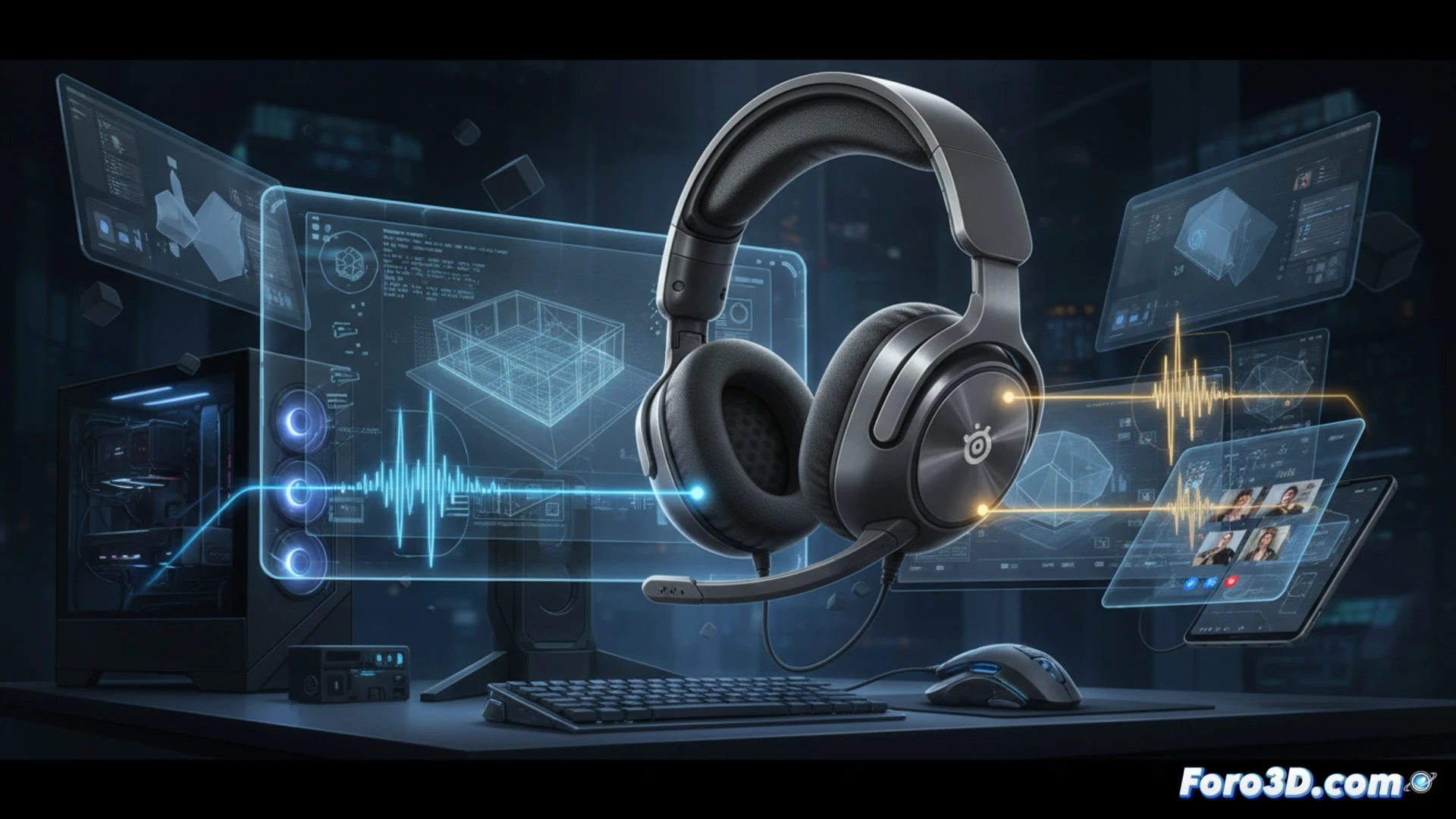
The SteelSeries Arctis Nova 7 Wireless enters the peripherals market with a proposition that transcends gaming: simultaneous 2.4GHz and Bluetooth connectivity. For a 3D professional, this capability means being able to maintain a coordination call with the team while listening to the effects of a real-time simulation, or attending a technical podcast while rendering a complex model, all without interruptions or loss of quality.
Latency and audio quality analysis in production environments 🎧
In the context of a modeling or animation studio, latency is critical. The 2.4GHz connection offers transmission without appreciable compression, ideal for monitoring audio tracks synchronized with animations or for detecting minor flaws in physical simulations. Bluetooth, on the other hand, handles secondary communication (calls or ambient music) without interfering with the main channel. The 40 mm neodymium magnetic drivers offer a flat response that, while not reaching mastering studio levels, is more than sufficient for extended editing sessions. The 38-hour battery ensures that a nighttime render is not interrupted due to lack of charge.
Comfort and ergonomics for long workdays 💺
The adjustable headband and memory foam ear cushions with AirWeave fabric are a plus for those who spend more than eight hours in front of the screen. The lightweight design (337 grams) prevents neck fatigue, a common issue when alternating between modeling and project reviews. While there are headphones with more precise equalization for audio mixing, such as those from the Beyerdynamic DT series, the Arctis Nova 7 wins in versatility thanks to its hybrid connectivity, becoming a practical tool for the digital creator who values multitasking without sacrificing immersion in their work.
How does the dual wireless audio latency of the SteelSeries Arctis Nova 7 affect real-time synchronization during 3D model review in software like Blender or ZBrush?
(PS: Your CPU runs hotter than the Blender vs. Maya debate)