On May 23, 2026, SpaceX launched the twelfth test flight of the Starship V3 megaship from Texas. Although the ship lost an engine during ascent, it completed its planned trajectory. The booster fell into the Gulf of Mexico and the ship crashed into the Atlantic, all as planned. A firm step toward Starlink, the ISS, Artemis, and Mars. 🚀
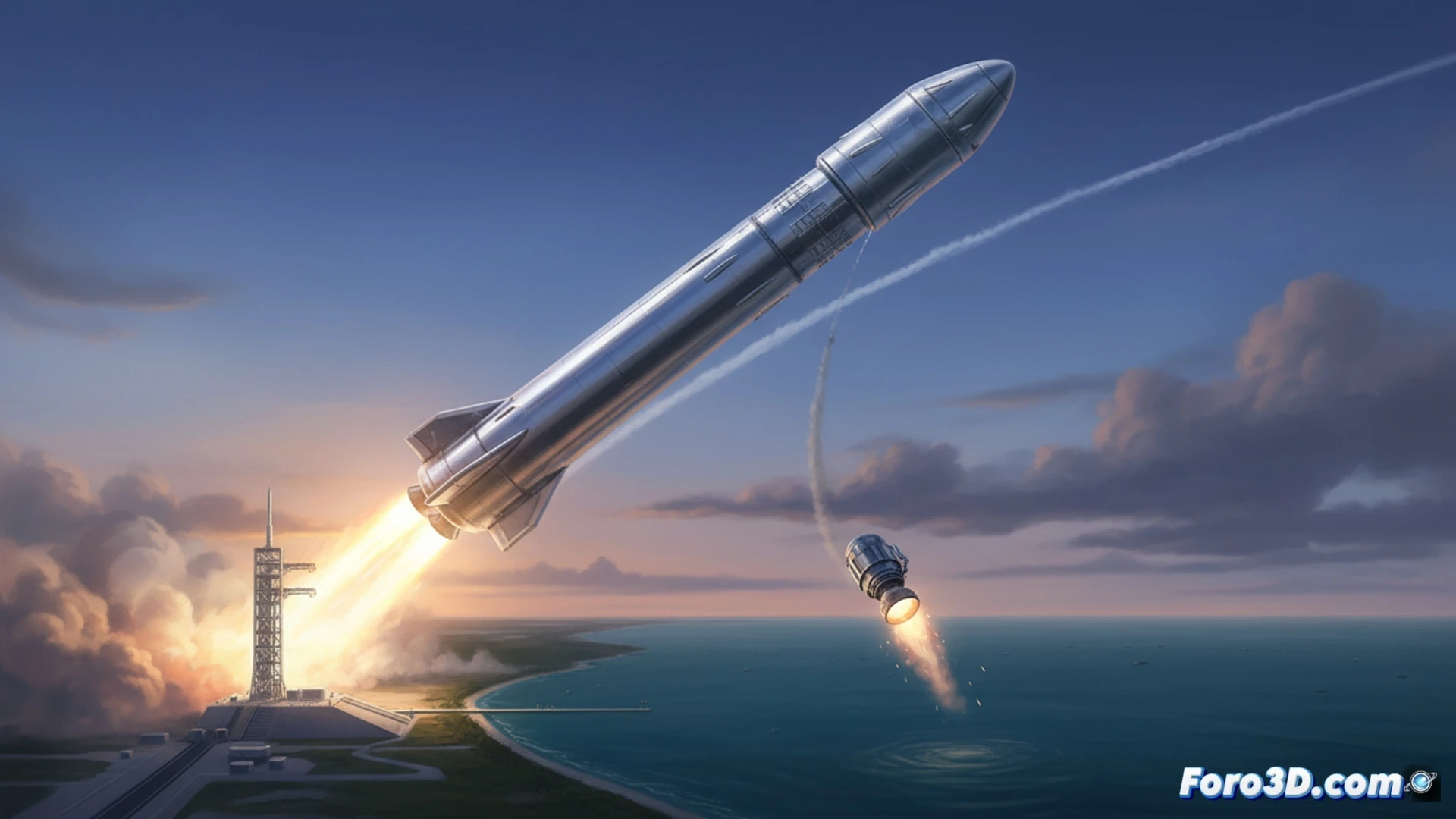
Interstage ring integrated into the booster to reduce weight and costs ⚙️
The technical novelty of the flight was the interstage ring integrated directly into the booster. This modification eliminates separate components, reducing structural weight and manufacturing costs. The ship reached the expected altitude and speed despite the engine failure. SpaceX is accumulating data to simplify the design and increase reliability. Each test brings the system closer to commercial operations with real payloads.
The ship loses an engine but not the drive to reach Mars 🔴
Losing an engine sounds like a disaster, but at SpaceX it's almost a normal day at the office. The Starship kept flying as if nothing happened, making it clear that having 33 engines gives some margin for one to decide to take a break. Of course, if this happens on a flight with passengers, we'll have to warn that it's not a problem, it's a design feature.