Phantom Brave: The Lost Hero represents a fascinating case study for tactical RPG developers. Nippon Ichi Software is betting on a proprietary engine to combine high-resolution 2D sprites with three-dimensional environments. This technical decision allows the studio to maintain its visual identity, offering HD textures without sacrificing real-time performance, a key challenge in the creation of turn-based strategy games.
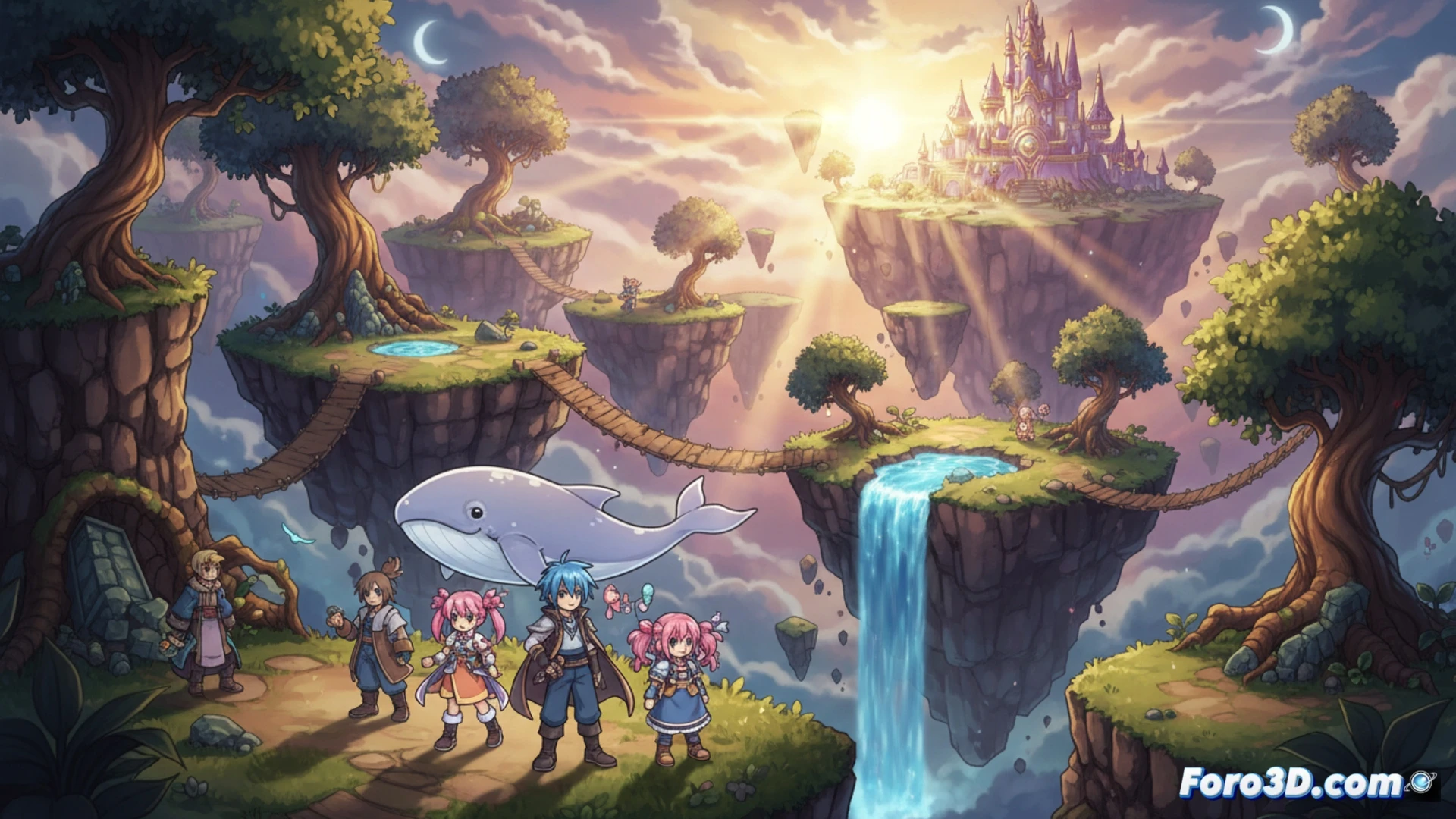
Technical advantages of the proprietary engine over commercial engines 🎮
By developing with their own tools, NIS avoids the limitations of generic engines like Unity or Unreal. Their pipeline is optimized to render 2D sprites with dynamic lighting and volumetric shadows without the need for intermediate conversions. The proprietary engine allows granular control over asset loading, crucial for scenarios with multiple animated units. Additionally, integration with custom shaders facilitates the depth of field and motion blur effects, elements that in commercial engines would require third-party plugins. This flexibility reduces compilation time and allows for rapid iterations during level design.
Optimization for real-time and artistic workflow ⚙️
The combination of 2D sprites and 3D environments presents an optimization challenge. NIS solves this through an LOD (level of detail) system that reduces sprite resolution based on camera distance, maintaining stable 60 fps on consoles. The artistic workflow benefits from an engine that treats sprites as billboards with interpolation-based animations, eliminating the need for complex polygonal models. This speeds up character production and allows the team to focus on the expressiveness of animations, a hallmark of the studio.
As a tactical RPG programmer, how does Phantom Brave's proprietary engine optimize the interaction between 2D sprites and 3D environments without sacrificing strategic depth or performance on current-generation consoles?
(PS: 90% of development time is polishing, the other 90% is fixing bugs)