Limbus Company, the latest title from Project Moon, proves that you don't need a cutting-edge graphics engine to create a striking visual identity. By combining 2D sprites animated with Spine 2D and three-dimensional effects in Unity, the studio achieves a dark, theatrical aesthetic that enhances the game's narrative. This hybrid approach not only defines the visual style but also optimizes combat performance, offering a valuable lesson for any indie developer. 🎨
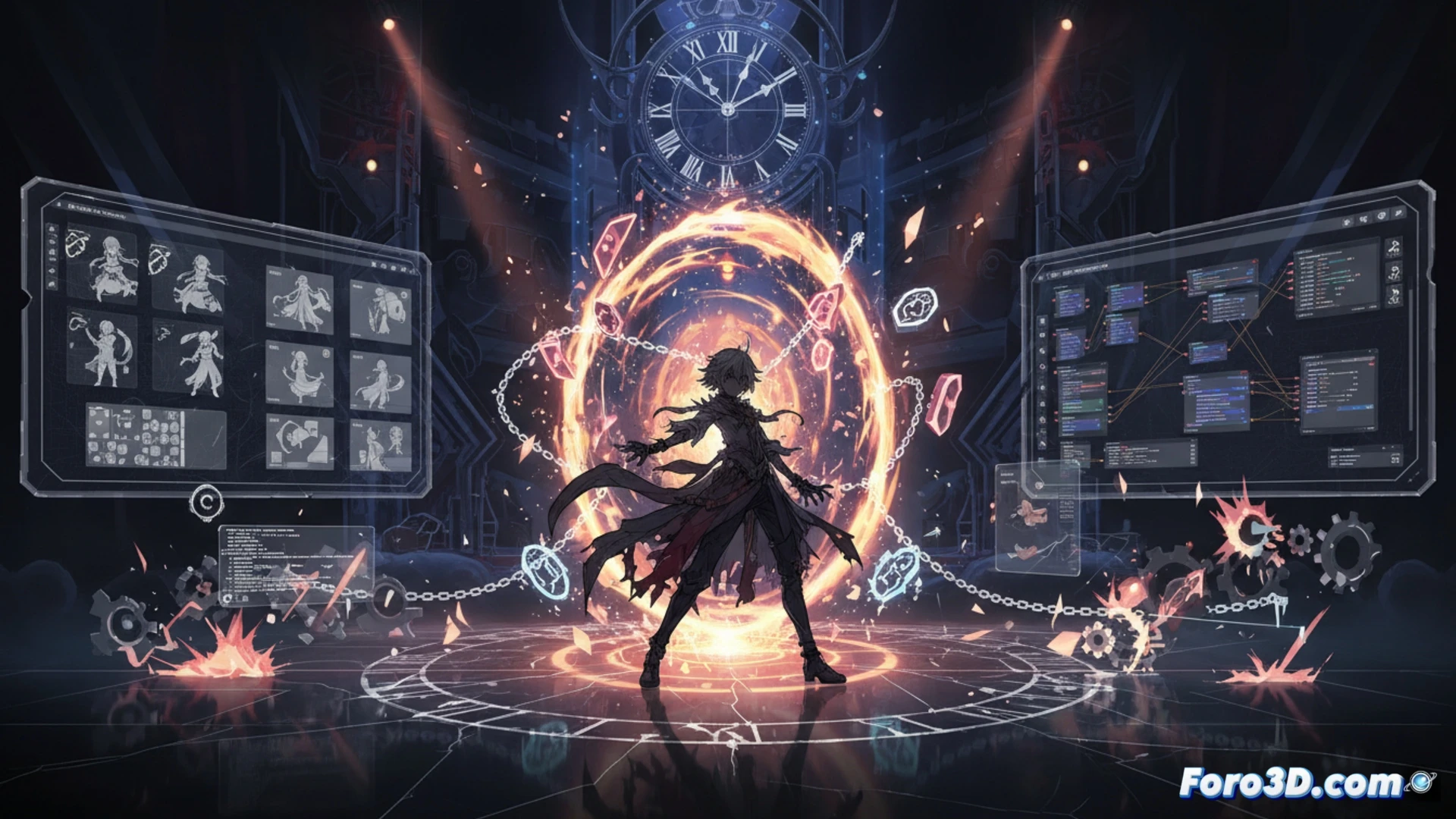
Artistic Pipeline: From Photoshop to Spine and Unity 🛠️
The workflow begins in Photoshop, where character and enemy sprites are designed with a high level of detail and manual shading. Then, these assets move to Spine 2D, a bone animation tool that allows for fluid movements without needing to draw each frame. The trick lies in how Unity integrates these sprites: Project Moon overlays 3D particles, volumetric lights, and dynamic shadows onto the 2D characters. This creates a deceptive visual depth, as if the characters inhabit a three-dimensional space, but without the computational cost of a full 3D model. In combat, sprites rotate and scale in real-time, while hit effects and screen distortions are rendered in 3D, achieving a visual impact that maintains a stable framerate even on mobile devices.
Lessons for Indies: Visual Identity Without Photorealism 💡
Project Moon's strategy demonstrates that aesthetic coherence outweighs polygons. For a small studio, investing in quality 2D animation with Spine and enhancing it with targeted 3D effects in Unity is a cost-effective path. Not only do you reduce production time, but you also create an instantly recognizable style. If you want your game to stand out in a saturated market, this hybrid approach allows you to tell complex visual stories without needing a 3D modeling team. The darkness of Limbus Company lies not in its shadows, but in the intelligence of its pipeline.
How does Limbus Company manage to combine 2D sprites with 3D lighting and shadows in Unity without sacrificing the visual identity of flat art?
(PS: a game developer is someone who spends 1000 hours making a game that people complete in 2)