The new series Star Trek: Strange New Worlds has divided the audience by presenting a more vulnerable Spock conflicted with his emotions. For some, this contradicts the Vulcan logic established in the original series. However, a deeper analysis reveals that this characterization is not a whim, but the culmination of a character arc that began in the original pilot The Cage and developed in the forgotten Short Treks.
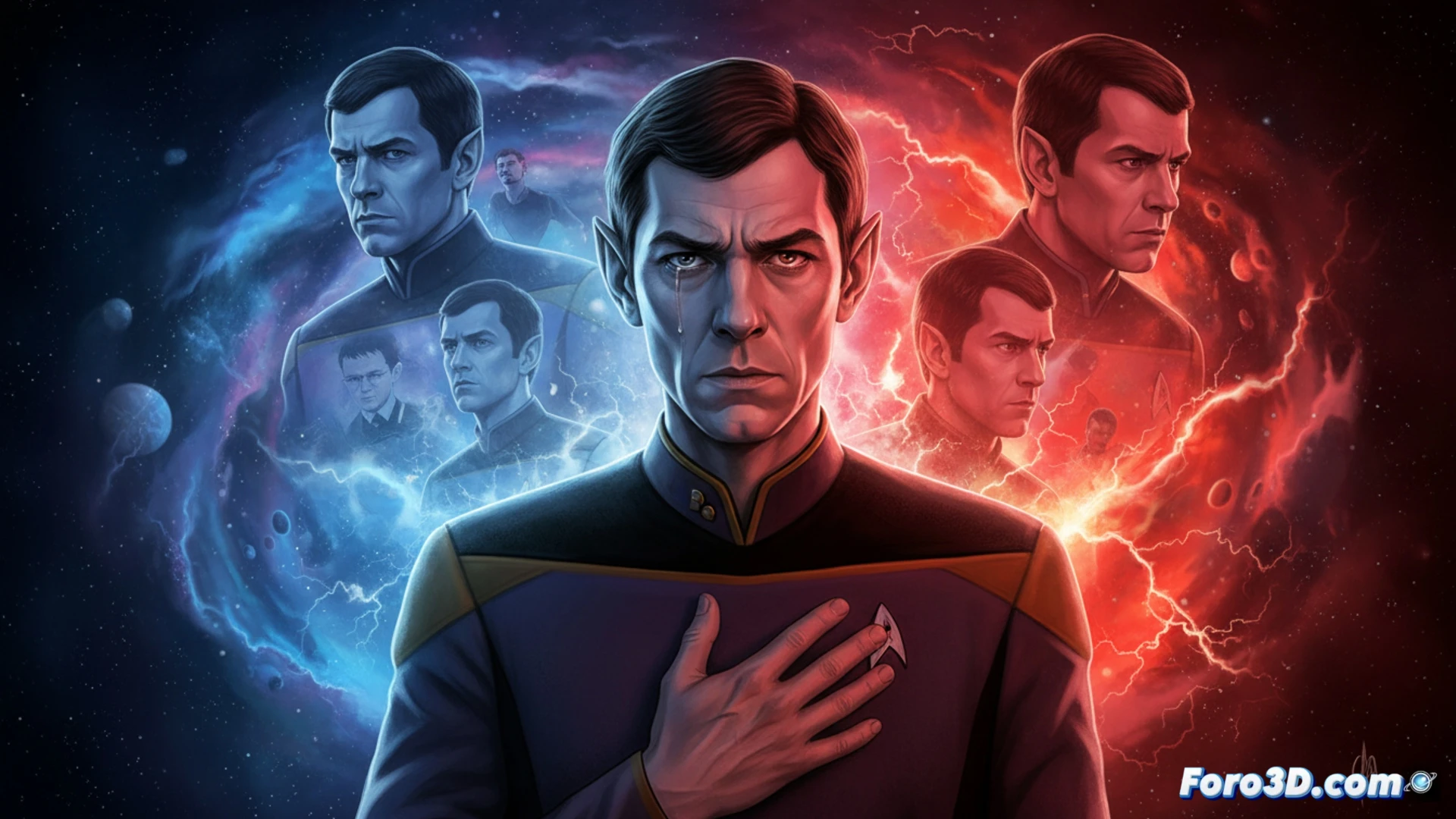
The lost data protocol: reconstructing the arc from Short Treks 🖖
The Q&A episode of Short Treks functions as a key technical file. It shows Spock's first encounter with Number One on the Enterprise, where their dialogue already hints at the internal struggle between Vulcan logic and his human heritage. This scene, along with the sequences from The Cage, establishes a behavior pattern that Strange New Worlds does not invent, but expands upon. The current series acts as a development module that completes the emotional programming that was always latent in the character, from his first day on board.
The imperfect Vulcan manual: when logic takes a coffee break ☕
It seems Spock decided that, after 50 years of repression, it was time to order a cup of emotions with milk. The curious thing is that canon purists tear their hair out, forgetting that Spock himself showed more feelings in The Cage than a Klingon at a wedding. If Vulcan logic fails, at least the series gives us a Spock who, finally, admits that being half-human is not a software error, but a necessary update.