The craft of a sound technician demands precision, but also faces practical problems: broken microphones, inaccurate mounts, or equipment parts that are no longer manufactured. 3D technology allows for the design and rapid fabrication of custom solutions, avoiding dependence on distributors or waiting weeks for a replacement part. A clear example is custom adapters for mounting microphones in irregular spaces, such as vehicle interiors or complex sets.
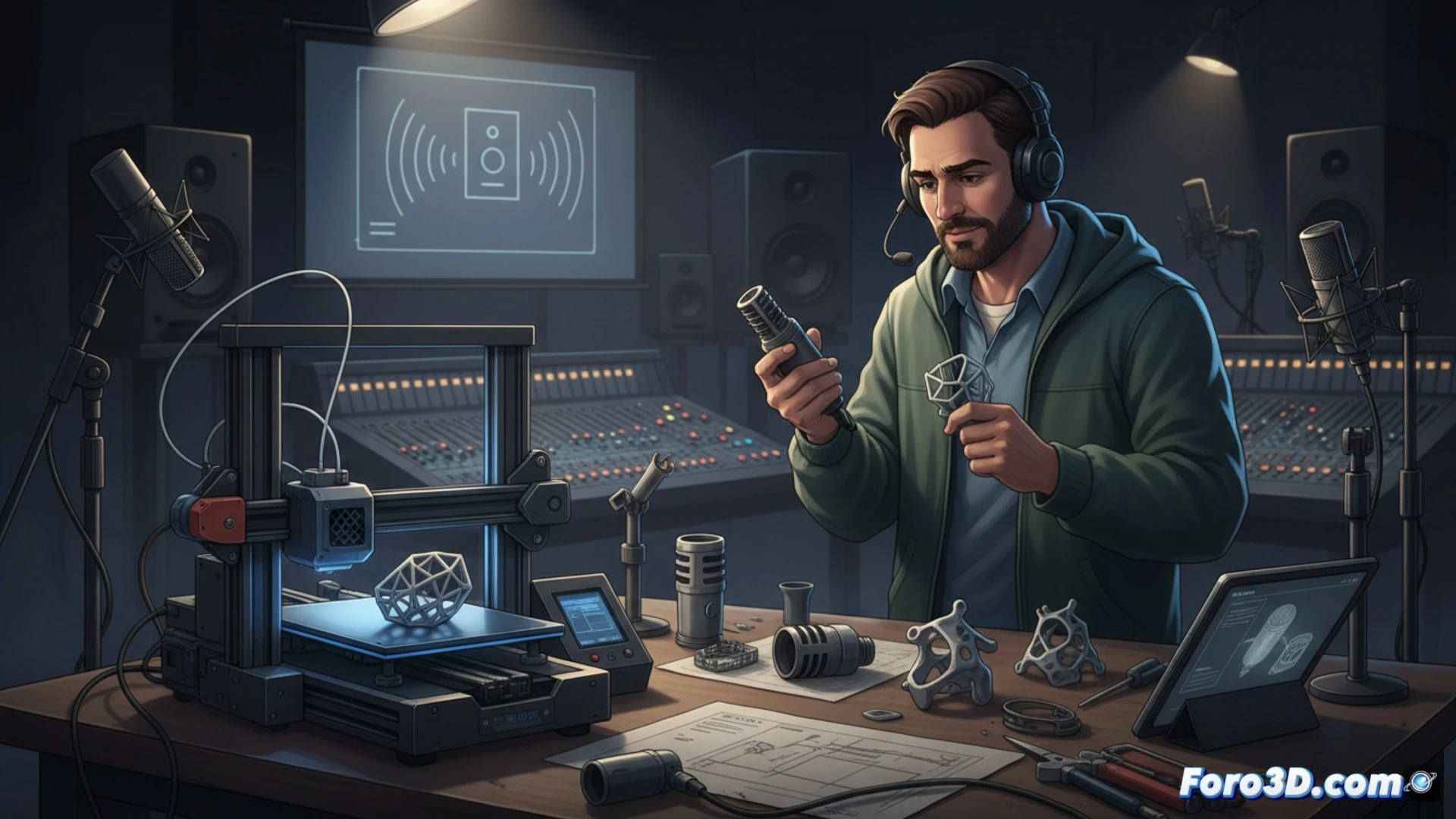
From idea to chassis: 3D design for audio equipment 🎧
If you need a shock mount for a shotgun microphone on a non-standard rod, you can model it in Fusion 360 or Blender and print it in PLA or PETG in hours. Programs like Tinkercad work for simple parts, while FreeCAD allows tight tolerances for tripod threads. Housings for portable mixers or protectors for XLR connectors are also printed, reducing repair costs. The result is equipment tailored exactly to your workflow, with no compromises.
When sound fails, plastic rules 🛠️
Because, of course, nothing says professional sound technician like having to print a mount for the microphone you dropped right before the take. Forget duct tape and rubber grommets: now you can design a part that fails with the same dignity, but with better aesthetics. And if the PLA melts in the sun, you can always blame the 3D modeling instead of admitting you glued it with superglue. Of course, the electrical hum will still be the cheap cable's fault.