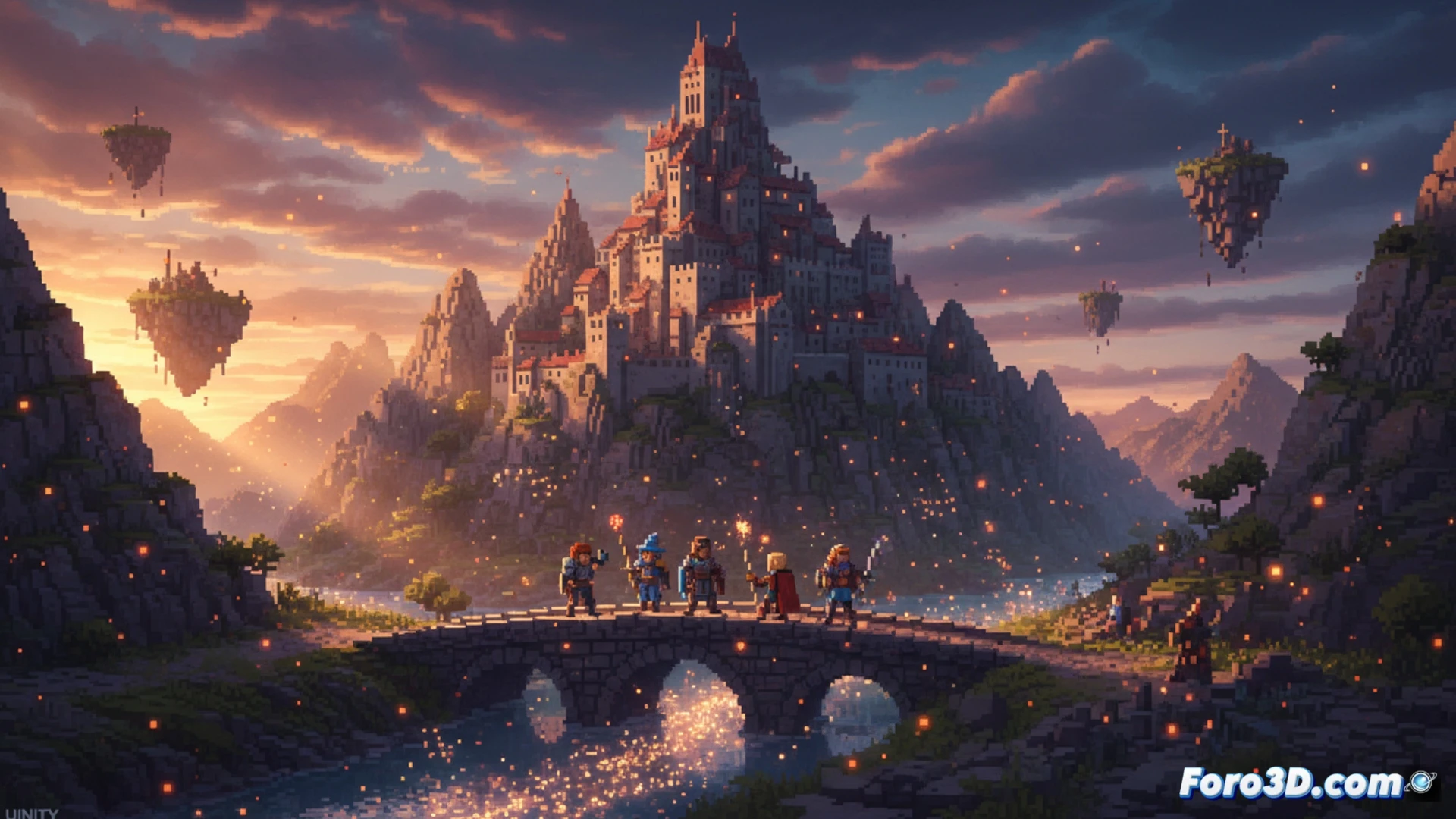
Songs of Conquest proves that pixel art isn't dead, it just needs a layer of modernity. The game achieves its 2.5D aesthetic by combining traditional sprites drawn in Aseprite with environments that possess real depth, dynamic lighting, and fluid particles in Unity. The result is a look that evokes the great strategy titles of the 90s, but with a clean, contemporary visual finish that appeals to both nostalgic players and new audiences.
Technical workflow: from Aseprite to Unity with shaders and post-processing 🎨
The artistic pipeline is divided into three key stages. First, artists create unit and building sprites in Aseprite, maintaining a limited palette and low resolution to preserve the retro essence. Second, these pieces are imported into Adobe Photoshop to generate higher resolution textures for scenarios and backgrounds, ensuring that the 2D elements visually fit with the 3D environments. Finally, in Unity, the team applies custom shaders that add directional lighting, specular reflections on water, and a particle system for effects like fog, sparks, and dust. Post-processing (anti-aliasing and soft bloom) unifies everything, giving the illusion that flat sprites exist within a world with volume and real light.
Why does this technique work better than pure pixel art? 🧠
The key to Songs of Conquest's success is not just nostalgia, but intelligent contrast. By keeping the sprites in pure 2D and surrounding them with 3D lighting, the human eye perceives the clarity of classic art without feeling it is outdated. This technique avoids the titanic work of animating full 3D sprites, reducing production costs, yet offers visual quality that competes with modern titles. For any indie developer, this workflow demonstrates that great graphical impact can be achieved without abandoning the lightweight tools and artistic style that define their studio.
How does Songs of Conquest manage to implement 2.5D pixel art in Unity to evoke 90s nostalgia without sacrificing performance or on-screen readability?
(PS: a game developer is someone who spends 1000 hours making a game that people complete in 2)