3D technology is transforming the welder's trade, enabling everything from simulating weld beads in virtual environments to preparing complex parts without wasting material. It's not about replacing a steady hand, but about providing tools to plan, measure, and avoid errors before striking the arc. A clear example is process simulation for risk-free training without consumables.
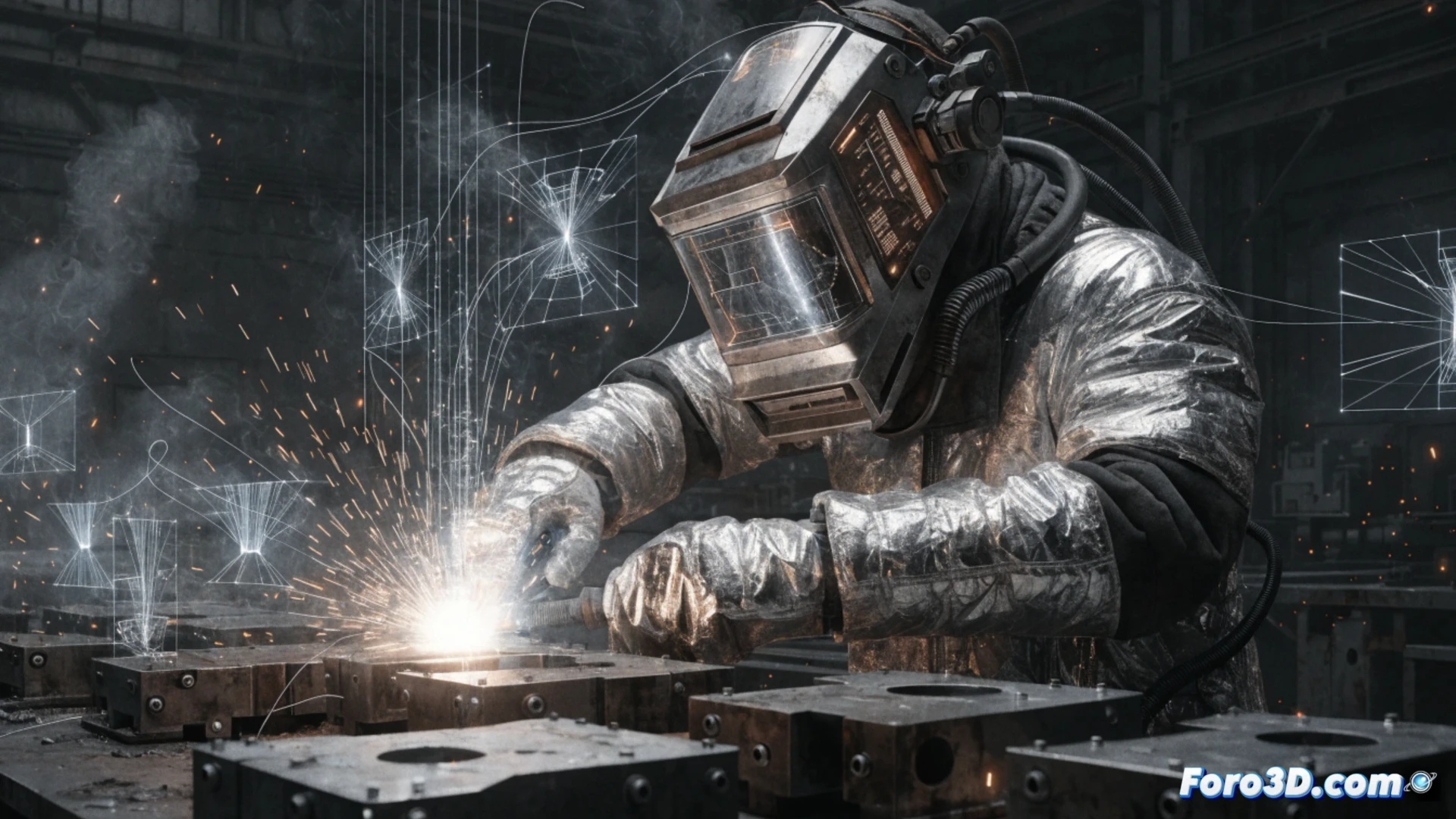
Virtual planning with 3D simulation software 🔧
Programs like SolidWorks or Autodesk Inventor allow you to design joints and calculate bead penetration before touching the metal. With simulation tools like Simufact Welding or the MSC Software welding module, thermal deformations and residual stresses can be predicted. This saves time on adjustments and reduces waste of electrodes and gas. For day-to-day work, a welder can use a portable 3D scanner to verify that the part matches the CAD design before welding.
The welder who is now also a designer (and doesn't get paid extra) 😅
Sure, now on top of carrying the helmet, gloves, and torch, you have to learn how to use 3D software. Because yes, before it was enough to smell like burnt metal and have a steady hand, but now the boss asks you to model the part in SolidWorks and, while you're at it, run a thermal simulation. The good thing is, when the program fails, at least you have the perfect excuse to say it was a finite element mesh error, not your own fault.