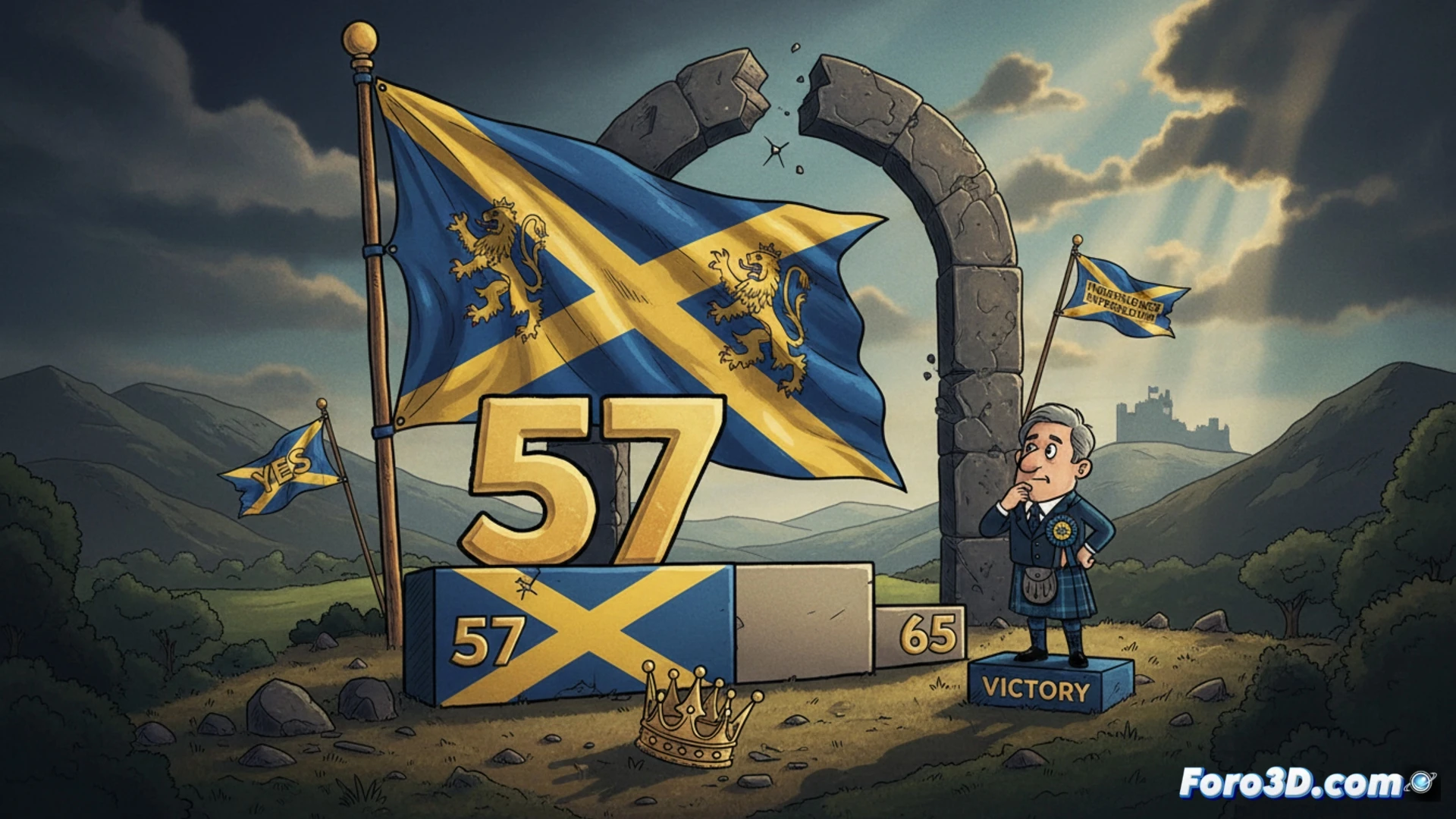
The Scottish National Party has secured its fifth consecutive victory in the regional elections, winning 57 seats out of 129. First Minister John Swinney was seeking the 65 seats needed for an absolute majority to push for a new independence referendum, but the result did not grant him that.
An electoral system that defies binary logic 🗳️
The Scottish Parliament uses a mixed system of proportional representation. Voters cast two votes: one to elect a candidate by district (first-past-the-post system) and another for a regional list (proportional system). This design seeks to balance local representation with overall proportionality, but it often fragments the vote. The SNP, with 48% of the district vote, only secured 44% of the total seats, highlighting how electoral engineering can dilute majorities.
The majority that slipped through the coffee filter ☕
The SNP has fallen eight seats short of an absolute majority. Eight. That's fewer than the fingers on one hand to play the bagpipes. Swinney must already be reviewing math manuals to see if someone ate a vote or if the seat allocation system works with the algorithm of a Scottish coffee machine: it always comes out a bit watery and never fills the cup completely.