Ubisoft's Snowdrop engine, known for its ability to render photorealistic environments in titles like The Division, demonstrates impressive versatility in Mario + Rabbids Sparks of Hope. In this installment, the engine adapts to a high-end animation aesthetic, prioritizing a vibrant color palette and cartoonish shapes. The key to its visual success lies in the implementation of pre-calculated global illumination, which allows for simulating soft light bounces and coherent shadows without sacrificing real-time gameplay fluidity.
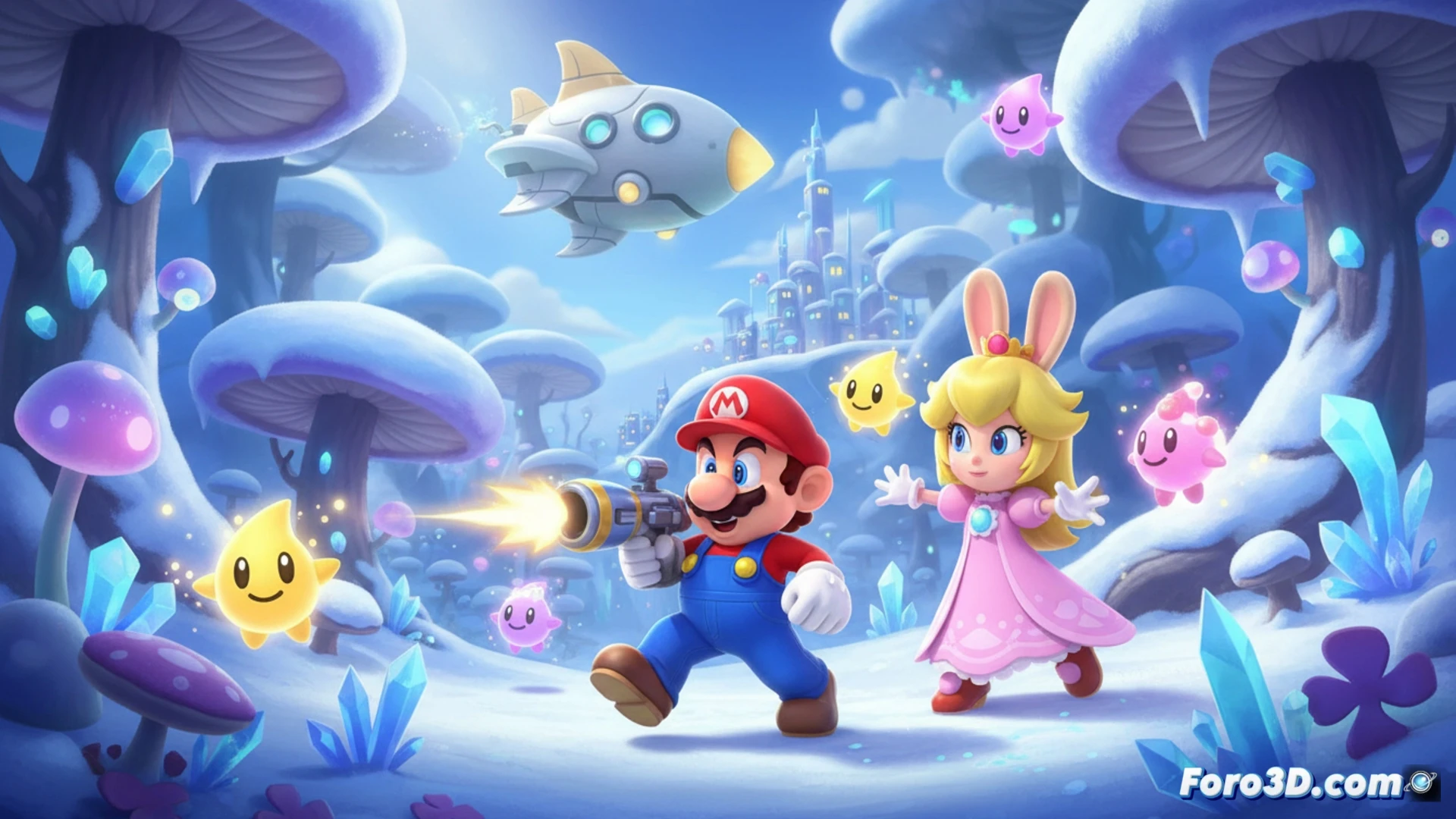
Workflow: Maya, Substance Painter, and volumetric lighting 🎨
The artistic pipeline relies on two fundamental pillars. On one hand, Autodesk Maya is responsible for bringing characters to life through exaggerated and expressive animations, essential for the Rabbids' charisma. On the other hand, Substance Painter is used to texture the models, achieving that plastic yet highly detailed finish that characterizes the characters. The visual magic, however, is completed with volumetric particle effects. These particles, managed by the Snowdrop engine, are crucial for representing the characters' magical abilities, creating trails, explosions, and energy fields that possess a density and depth that captivate the player.
Optimization and visual coherence in real-time ⚡
The biggest technical challenge in Sparks of Hope is maintaining a stable frame rate while processing multiple particle effects and complex lighting. Ubisoft's solution is clever: by pre-calculating global illumination, processing power is freed up to allocate resources to dynamic effects. This allows tactical battles, filled with explosions and special abilities, to feel chaotic and spectacular without performance suffering. It is a perfect example of how a powerful engine can adapt to a non-realistic artistic style, prioritizing visual clarity and fun over absolute graphical fidelity.
How does Snowdrop manage to combine its photorealistic capability with the cartoon artistic style and dynamic lighting of Mario + Rabbids: Sparks of Hope without sacrificing real-time performance?
(PS: shaders are like mayonnaise: if they break, you have to start all over again)