Smørrebrød is a dish that goes beyond buttered bread. Each layer is built with precision: dark rye, quality butter, herring or salmon, and a garnish that adds texture and acidity. It is not an ordinary sandwich; it is a calculated balance of flavor, color, and presentation. In Denmark, this dish is served as lunch and eaten with a knife and fork, because the structure demands it. Its success lies in the selection of fresh ingredients and the harmony of each component.
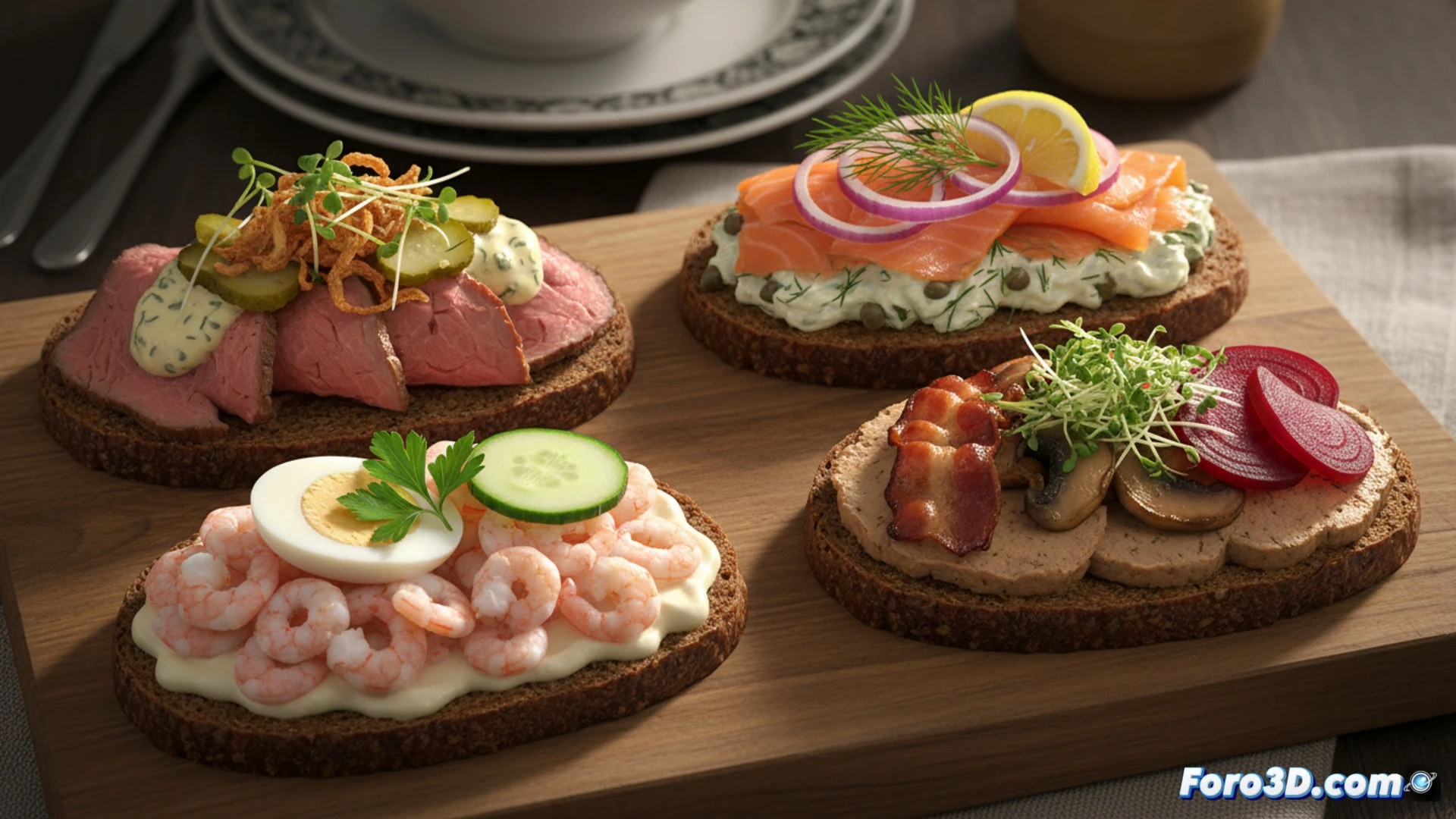
The architecture of smørrebrød as a modular system 🏗️
From a technical perspective, smørrebrød functions as a system of modular layers. The rye bread base offers a density that supports the weight of the ingredients without becoming soggy. On top, the butter acts as a moisture barrier. Then the protein (cured fish, roast meat, or pâté) is added, and it is topped with fresh elements like radishes, cucumber, or dill. Each layer serves a function: texture, flavor, acidity, or visual contrast. The result is a stable, balanced, and reproducible product.
When your sandwich is more complex than your code 🐛
Trying to assemble a smørrebrød is like debugging a program without knowing which line is failing. First you put the herring, then the onion, and suddenly the bread tilts and everything slides onto the plate like an uncaught exception. And no, you can't fix it with a toothpick. Danes master it because they have been practicing for centuries. The rest of us try to eat it without it ending up on our shirt. In the end, the only thing that overflows faster than the herring is our patience.