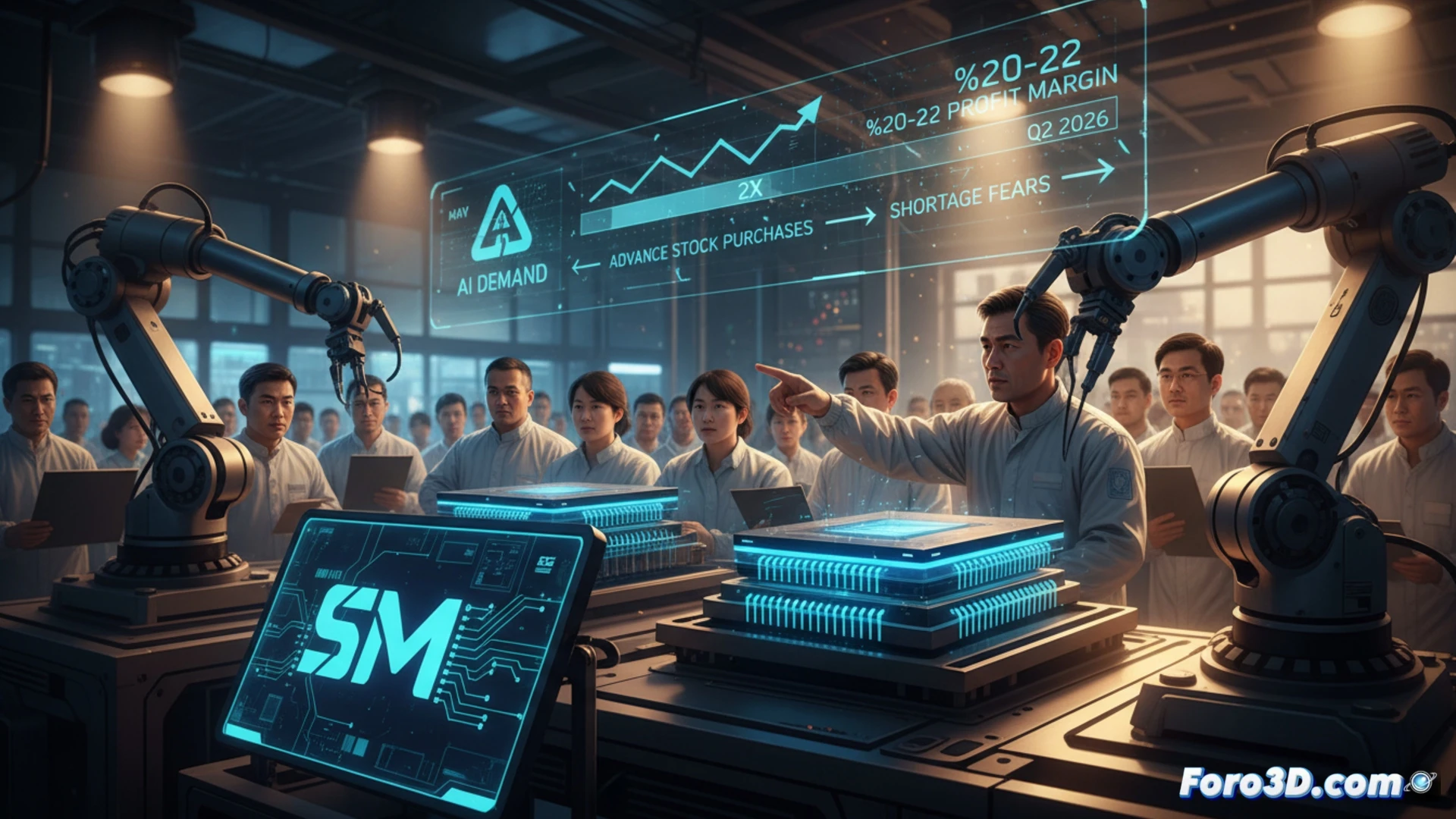
The high demand for artificial intelligence is moving the pieces on the semiconductor board. Chinese manufacturers, led by SMIC, have begun to adjust their tariffs upward. In May, the occupancy of their production lines doubled, and the company already projects a profit margin of 20 to 22% for the second quarter of 2026. Customers, anticipating shortages, are buying stock in advance.
The technical impact on the supply chain 🔧
This increase is not just a hallway rumor. The price hike directly affects components for AI infrastructure and power electronics. Chips, from the simplest to the most complex, are becoming more expensive. This puts pressure on the manufacturing costs of servers, cooling systems, and power supplies. The result is a chain that passes the increase on to the final price of the devices and services we use daily, from virtual assistants to data centers.
The customer who bought two batches of chips just in case 😅
While manufacturers are rubbing their hands together with their new margins, some customers have decided to play warehouse manager. The strategy of buying ahead to secure supply has become a classic. Now, instead of having a cupboard full of canned goods, people are stockpiling silicon wafers. Soon we'll see someone selling a batch of expired transistors on Wallapop. At least, if AI goes crazy, we'll have spare parts to build an emergency server.