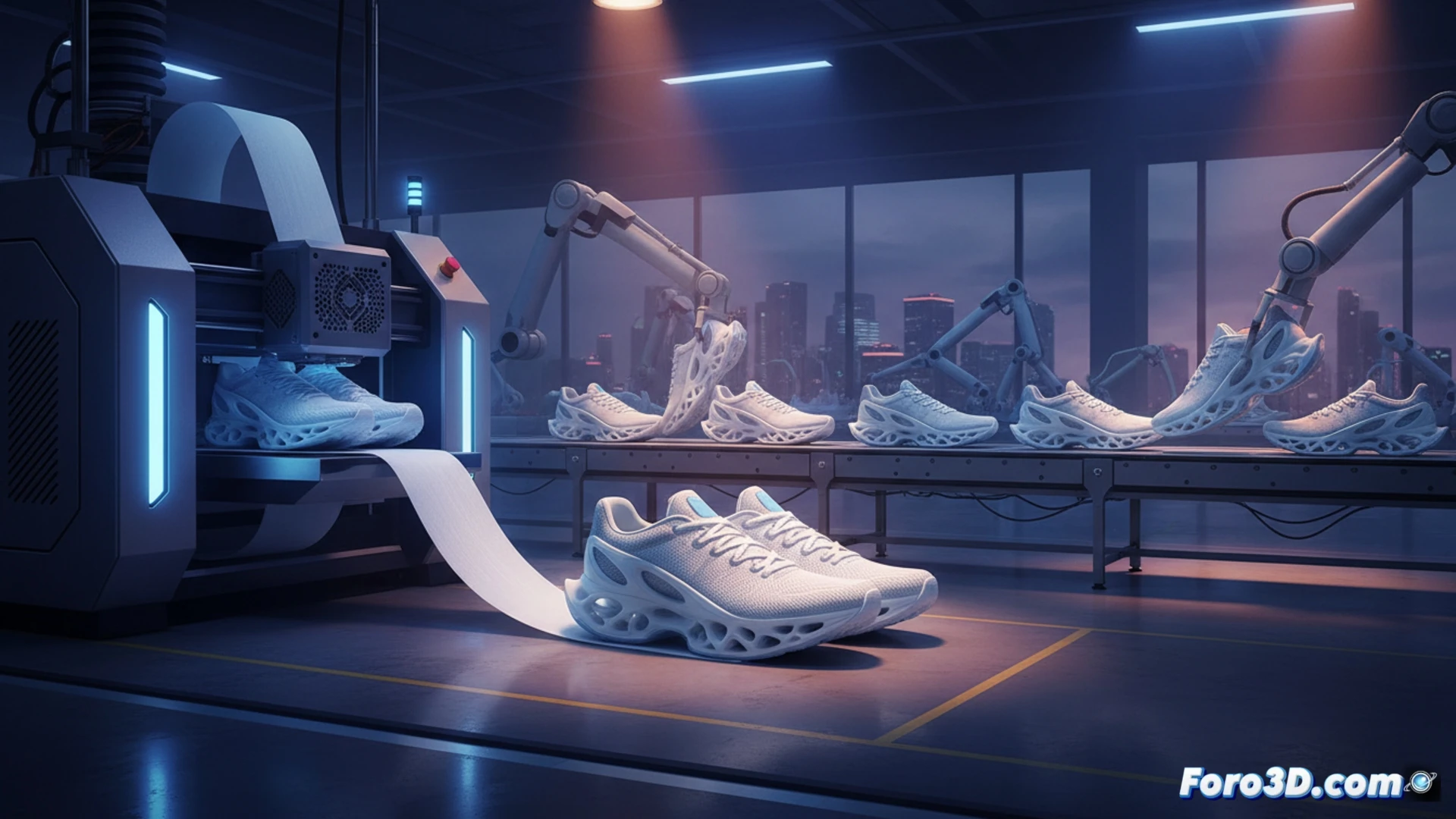
Additive manufacturing is advancing toward full-scale production. The combination of Selective Laser Sintering (SLS) with the elastomeric polymer PEBA enables the creation of custom footwear without molds, reducing weight and improving cushioning. A solid alternative to traditional processes for brands seeking flexibility and performance.
Technical properties that make the difference 🚀
PEBA stands out for its high tear resistance and elastic recovery capacity after deformation. When processed via SLS, reticulated structures are obtained that optimize impact absorption without adding weight. This allows designing soles with zones of different stiffness in a single piece, something impossible in conventional injection molding. The material's durability ensures that the sneakers withstand intensive training without losing properties.
Elite shoes that haven't run the marathon yet 🏃
Sure, the technology promises sneakers that adapt to the foot like a glove, but we still have to wait for the price to drop a category. Today, SLS-PEBA footwear costs as much as a plane ticket to another continent. The good news: at least, if you get injured while running, you can boast of having sneakers more technologically advanced than your neighbor's car.