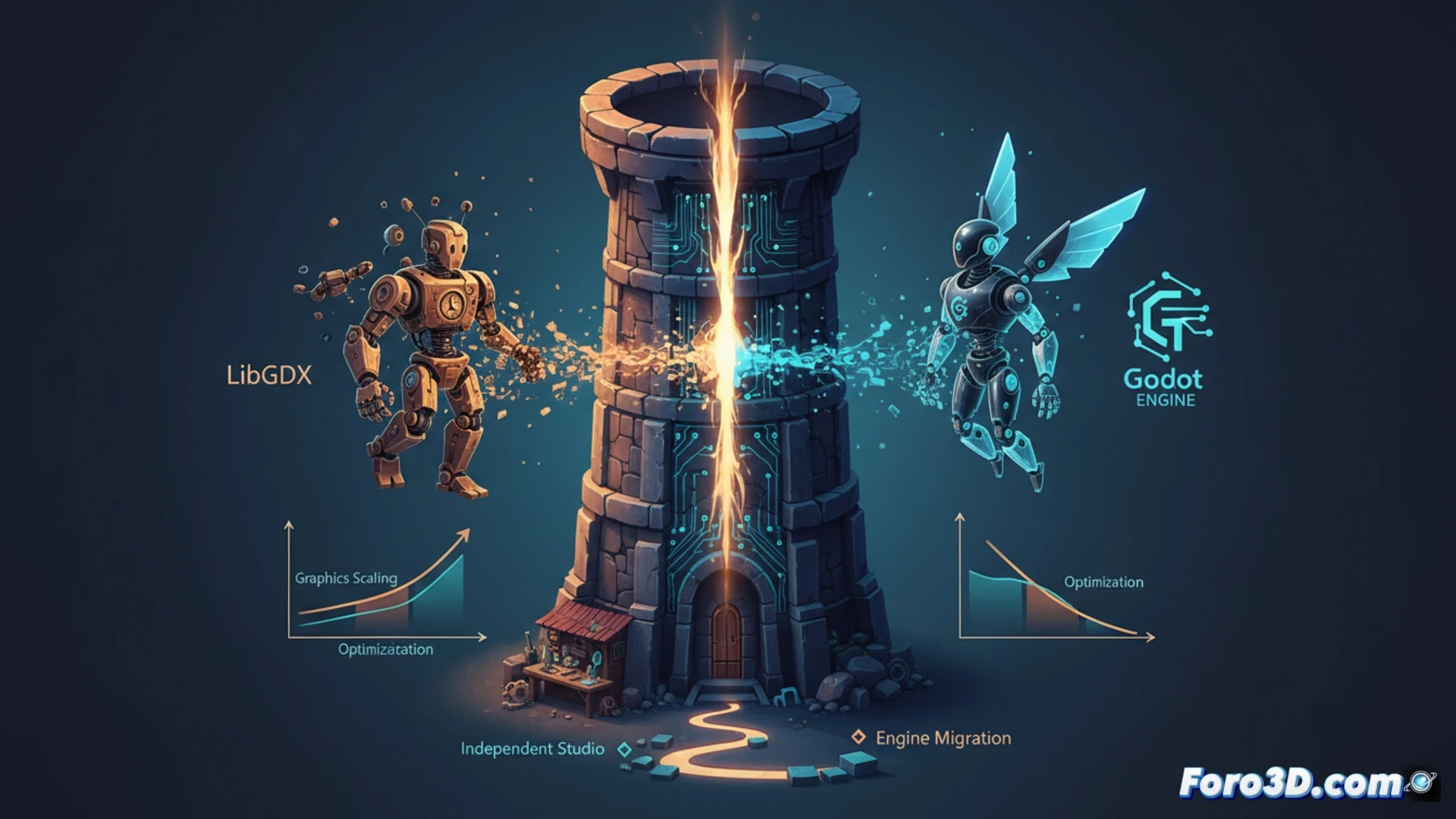
The announcement of Slay the Spire 2 has shaken the independent development sector, not only because of the sequel to a genre-defining game, but due to its fundamental technical decision: abandoning LibGDX/Java in favor of the Godot Engine. This strategic move offers us a unique opportunity to analyze how an established studio justifies an engine migration, prioritizing graphical scalability and pipeline efficiency over accumulated technical debt.
2D Pipeline: from Java to a Modern Ecosystem 🎮
The original architecture of Slay the Spire, based on LibGDX, offered granular control over rendering, but limited the integration of modern tools without considerable engineering effort. With Godot, the team can leverage its node system to manage skeletal animations imported directly from Spine, achieving smoother transitions. The engine natively handles layer composition from Krita/Photoshop, allowing for complex particle effects without resorting to custom shaders. Additionally, Godot's resolution control system facilitates creating a user interface that cleanly adapts to 4K screens, a weak point of the previous engine that required manual solutions for texture scaling.
Why a Successful Studio is Betting on Godot 🚀
Mega Crit's decision is not a trend, but a response to the need for a more agile pipeline. Godot reduces friction between art and code by unifying texture and animation management in a single environment. For a studio seeking to refine its visual style without rewriting the engine from scratch, this change offers predictable performance and a short learning curve for artists familiar with 2D tools. The migration demonstrates that Godot is no longer just an engine for prototypes, but a viable platform for commercial titles demanding high visual fidelity and rapid iteration.
What technical and workflow implications does migrating from a proprietary engine to Godot entail for a card game like Slay the Spire 2, considering state management, combat logic, and real-time performance?
(PS: optimizing for mobile is like trying to fit an elephant into a Mini Cooper)