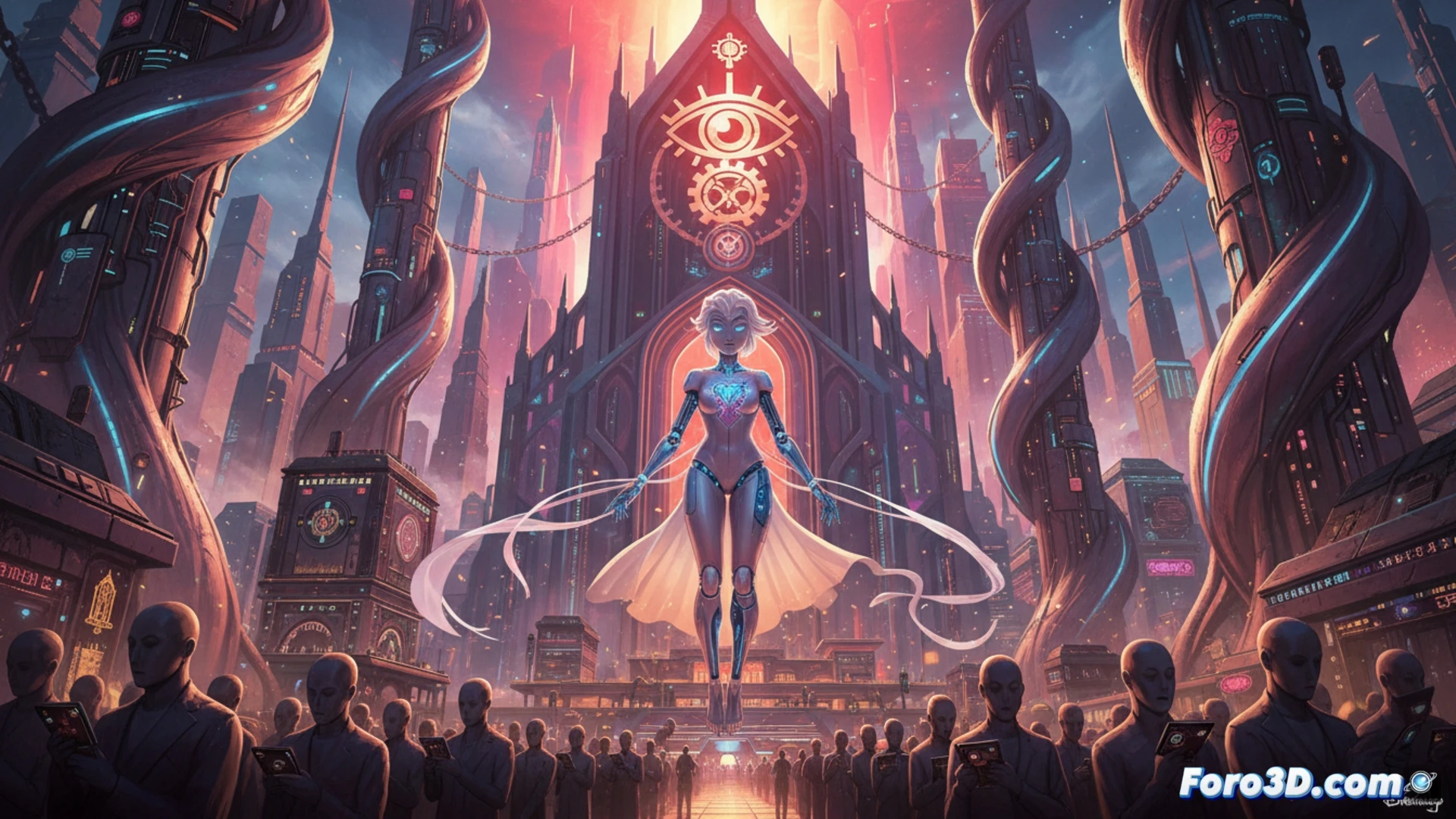
The work of Alessandro Barbucci and Barbara Canepa proposes a universe where Disney aesthetics merge with manga and futuristic pop to narrate the story of Noa, an android designed for pleasure on a planet divided by two opposing religions. This visual clash is not mere ornamentation; it is the perfect vehicle for a critique of dogmatic control and the technological objectification of human beings. In the niche of digital art and activism, Sky Doll stands as a benchmark for how science fiction can be a distorting mirror of our current societies.
Rendering and character design in the digital era 🎨
From a technical perspective, Sky Doll's style anticipates current trends in 3D modeling and non-photorealistic rendering (NPR). Barbucci's clear line, combined with cluttered architectural backgrounds and saturated color palettes, offers a manual of inspiration for digital artists seeking a polished finish without losing expressiveness. The volumetric lighting techniques and smooth gradients employed in the comic are directly exportable to engines like Blender or Unreal Engine, where character design can adopt that same duality between the adorable (Disney heritage) and the unsettling (adult themes). For a digital activist, mastering these resources allows for generating powerful images that communicate social messages without falling into cold realism or documentary style.
Androids, gods, and the art of visual resistance 🤖
Noa's escape not only reveals the secrets of her creation but also exposes how futuristic pop art can dismantle power narratives. By dressing a technological slave in a glamorous, almost advertising-like design, the authors subvert the iconography of control. For digital activism, this strategy is key: using the beauty and shine of commercial rendering to infiltrate a radical critique against exploitation and religious dogma. Sky Doll demonstrates that the most effective digital art does not need to be raw; it can be dazzlingly beautiful and, at the same time, deeply subversive.
As digital art creators, how can we use Sky Doll's pop futurism to question the beauty standards imposed by the entertainment industry without falling into the aesthetic we criticize?
(PS: if your virtual reality installation doesn't change the world, at least make sure it doesn't lag)