We analyze Skurge the Executioner, the Asgardian warrior created by Stan Lee and Jack Kirby, as a perfect asset for action video game development. His iconic dimensional magic axe, battle armor, and redemption narrative offer exceptional material for 3D modeling, combat mechanics creation, and cinematic mission building. This article explores how to translate his essence into a modern game engine.
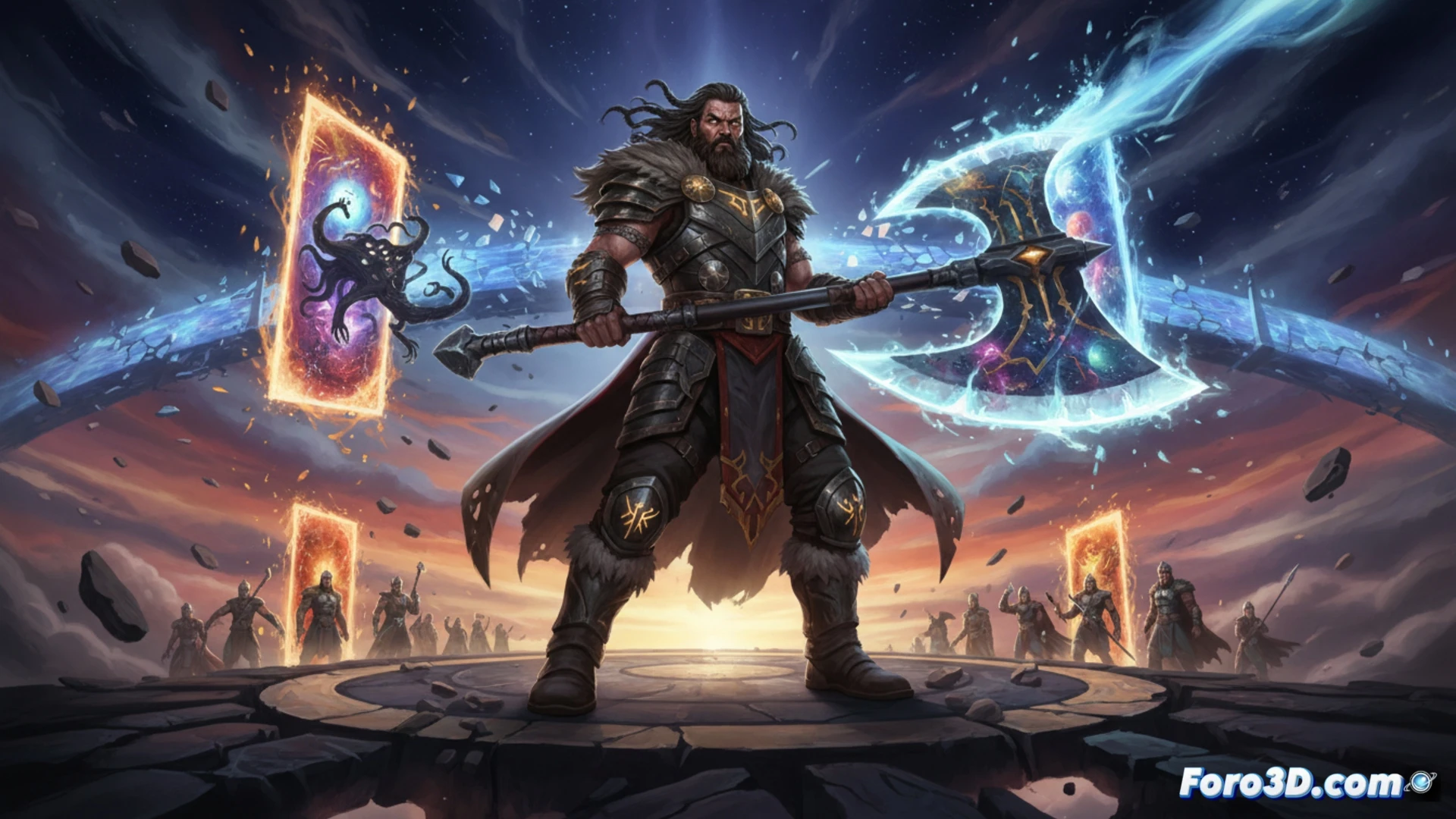
Modeling the Dimensional Axe and Asgardian Armor ⚔️
Skurge's primary weapon, the Dimensional Axe, requires special treatment in the asset pipeline. For a game like Marvel's Avengers or God of War, modeling should prioritize high polygons on the blade and handle, with a texture reflecting the metallic sheen of Uru and a particle effect at the impact point simulating portal openings. The armor, Viking-style with chainmail and leather details, should be optimized with normal maps to maintain visual quality without sacrificing combat performance. Rigging must allow wide sweeping animations for area attacks, differentiating from the subtlety of Thor's hammer.
Redemption at Gjallerbru as a Narrative Mechanic 🛡️
Skurge's sacrifice on the Gjallerbru bridge, where he single-handedly faces a horde of demons, is a peak moment for a playable cinematic. In a video game, this scene could function as a survival wave defense mission where the player controls Skurge, using the axe to break enemy waves as the bridge collapses. The redemption narrative, from villain to hero, offers a perfect arc for a DLC or side quest exploring guilt and courage, similar to how God of War treats Kratos's past.
How would you implement the mechanic of a dimensional axe that, when thrown, can cut between planes of existence in an action video game, and how would you balance the sacrifice of an Asgardian character as a narrative and gameplay resource without breaking the player's experience?
(PS: game jams are like weddings: everyone is happy, nobody sleeps, and you end up crying)