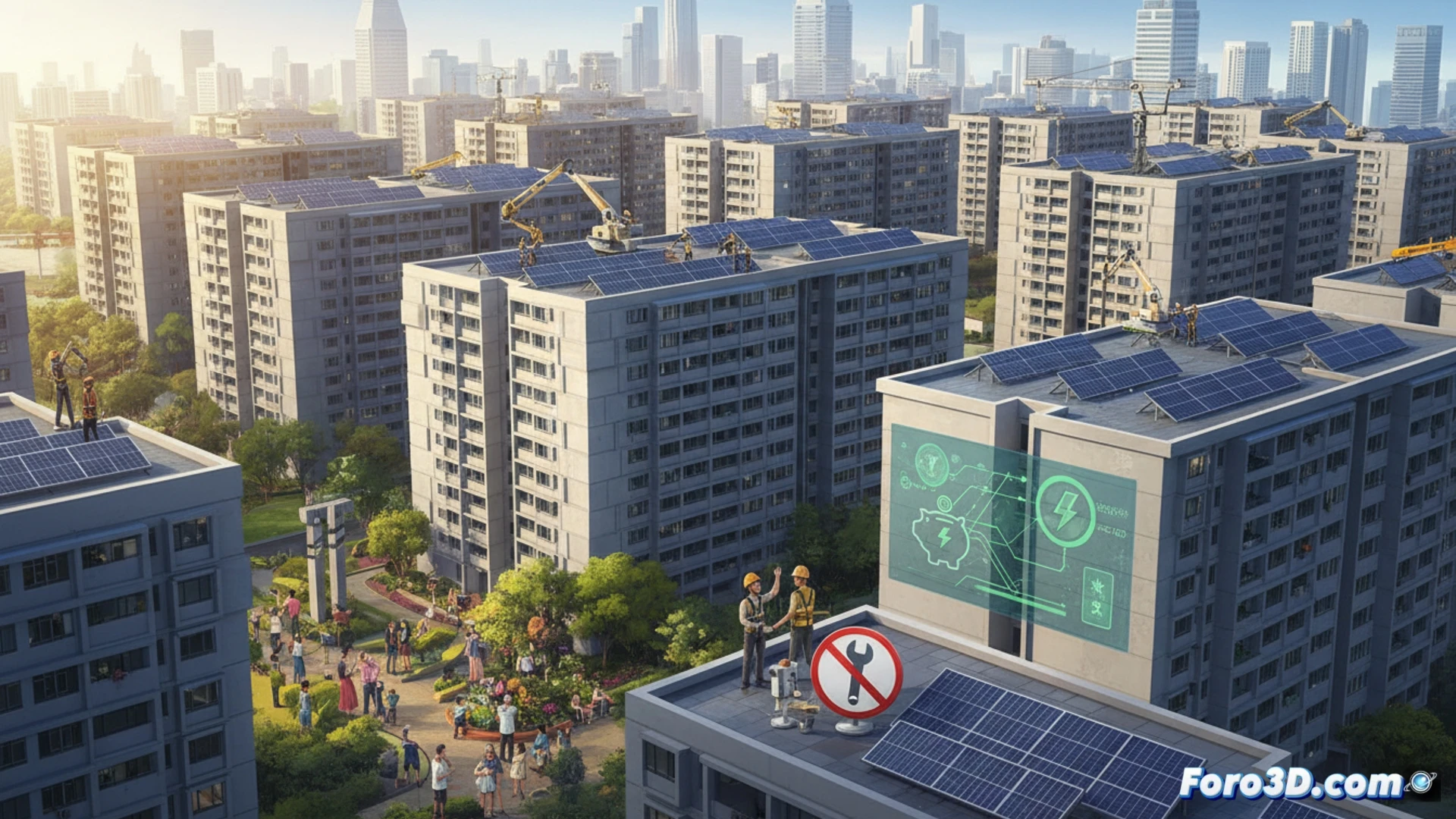
Condominiums in Singapore are adopting solar energy at an accelerated pace. From 1,400 buildings with panels in 2020, it is projected to reach 6,900 by 2025, representing 8% of the total. This measure allows for a 20% to 40% reduction in electricity costs for common areas, providing relief for maintenance funds. However, viability is not universal: construction restrictions and regulatory limits prevent many properties from joining the change.
Solar technology and its technical restrictions ☀️
Installing panels in condominiums is not simple: it requires a structural analysis of the rooftop, proper orientation, and minimal shade. Modern photovoltaic systems integrate inverters and performance monitors, but their efficiency depends on the available surface area. Small roofs or those with obstacles like water tanks and antennas reduce generation capacity. Additionally, fire safety regulations and facade conservation rules limit options, leaving many buildings out of the plan.
The sun does not shine equally for all condominiums 🌇
While some neighbors celebrate their lighter bills, others look at the sky with envy. It turns out that having a large, clear roof is like winning the maintenance lottery. Buildings with rooftops full of equipment or with maze-like shapes are left wanting and with their electricity bill intact. In the end, the sun is generous, but bureaucracy and architecture sometimes put clouds where there are none.