The Surada, or Crazy Wind of Cantabria, is an extreme meteorological phenomenon characterized by warm, dry winds from the south that trigger wildfires and alter the mood of the population. From the perspective of visual effects, recreating this wind involves not only animating particles but understanding its real dynamics through CFD with ANSYS Fluent and then translating that data into Houdini for a striking and documentary-style visualization.
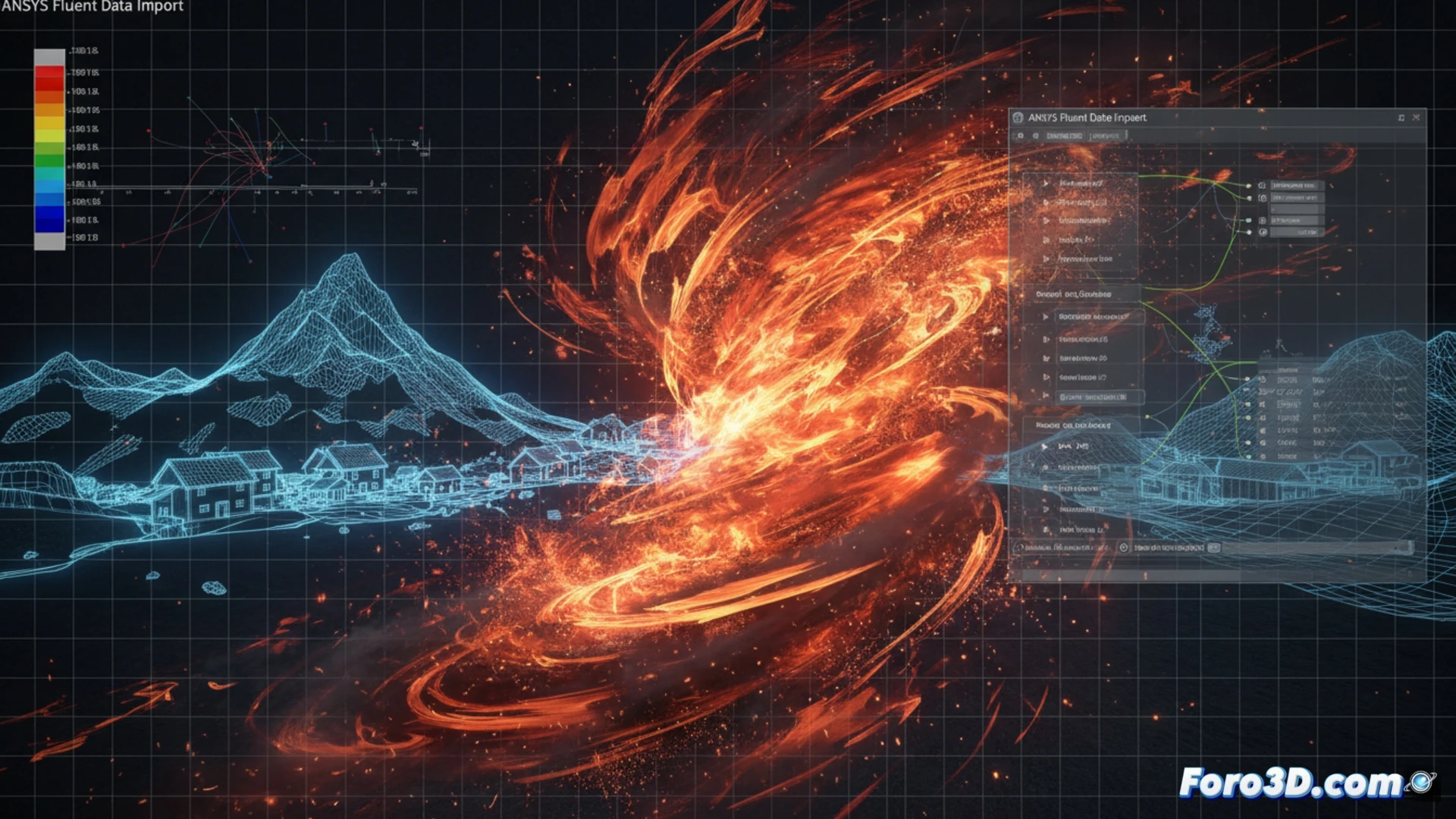
Integration of CFD and VFX for the Surada 🌬️
The technical workflow begins in ANSYS Fluent, where the orography of Cantabria and the descending air currents that characterize the Surada are modeled. The temperature, pressure, and velocity parameters are exported as vector fields. In Houdini, this data is imported using VDB volumes or .bgeo files to feed the Pyro solver or the particle system. The turbulence generated by the wind hitting the valleys translates into swirls of dust and leaves, while the dryness of the air is represented with a yellowish color and low humidity density, replicating the thermal stress that precedes wildfires.
Visualizing the psychological impact 🧠
The Crazy Wind not only moves objects; it alters human behavior. To document its psychological effect, simulations in Houdini must include a visual narrative component. By procedurally animating trees and flags with an abnormally high oscillation frequency, and adding a low-pitched sound generated from Fluent's pressure data, the viewer can feel the anxiety and unease described by the Cantabrian population during these episodes, turning scientific data into a complete sensory experience.
How would you model in Houdini the chaotic behavior and unpredictable gusts of the Surada to then integrate it into Fluent and simulate its effect on the spread of a wildfire? 🔥
(PS: VFX are like magic: when they work, no one asks how; when they fail, everyone sees it.)