The collapse of a vertical farm in the attic of a residential building has jeopardized the safety of urban agriculture infrastructures. The installation, designed for vertical cultivation, collapsed, causing a massive flood in the lower floors. The failure was not instantaneous, but the result of a critical miscalculation: the dynamic weight of irrigation water combined with saturated plant biomass exceeded the structural capacity of the racks. To understand how it happened, a forensic team has reconstructed the disaster using a 3D pipeline that integrates BIM modeling, parametric simulation, and fluid dynamics.
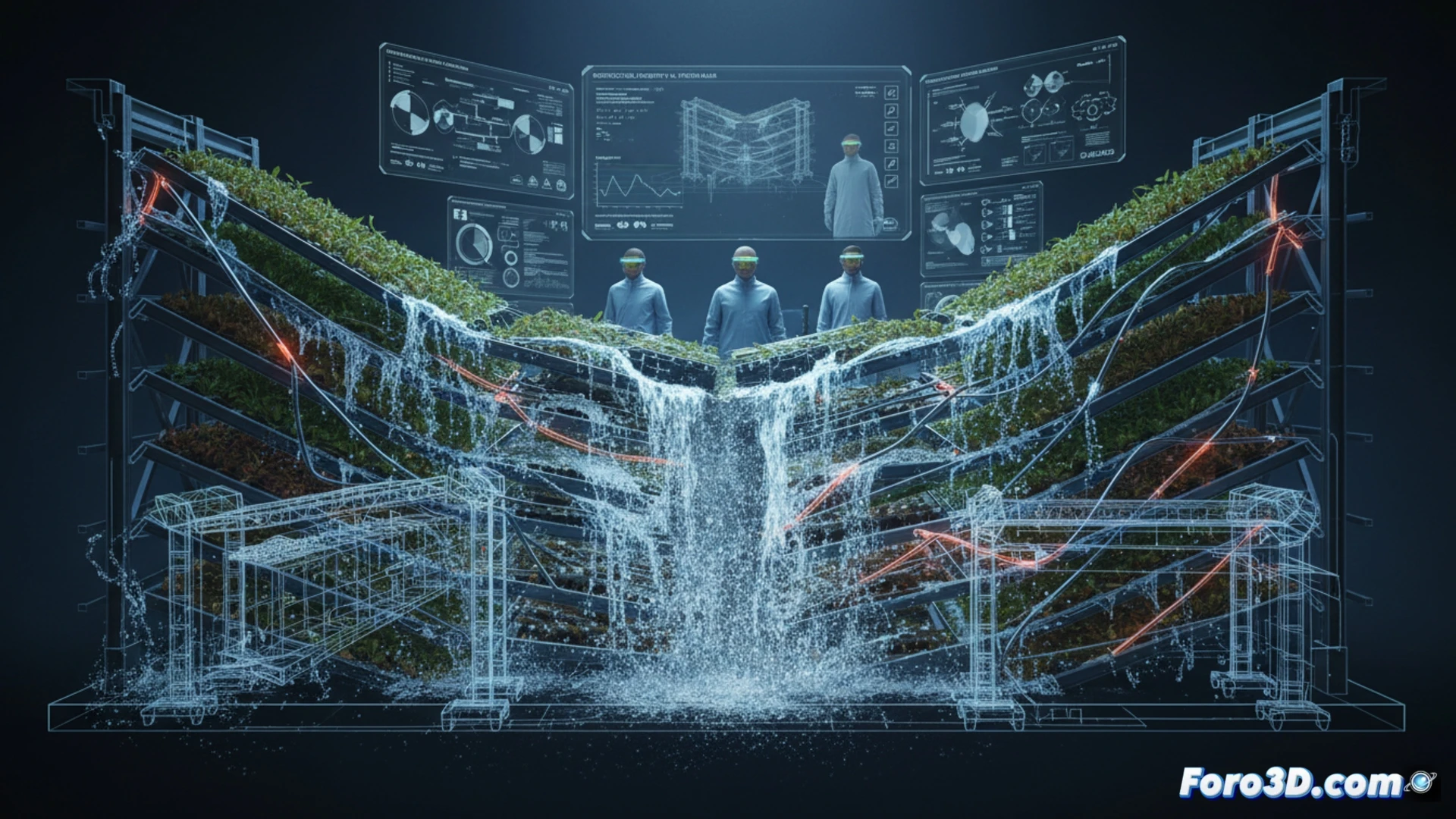
Forensic pipeline: From Revit to Unreal Engine for failure reconstruction 🛠️
The investigation began in Revit, where the original BIM structure of the metal racks and the drip irrigation system was modeled. This model served as a basis for exporting the geometry to Rhino and Grasshopper, where the progressive growth of plant biomass and the saturation of hydroponic substrates were parameterized. The next step was crucial: the assembly was imported into Ansys Fluent to simulate fluid dynamics. Here, the variable hydrostatic pressure throughout the irrigation cycle was calculated, revealing that the weight of water retained in the substrates increased by 40% over the dry weight estimated in the original plans. Finally, the collapse animation was rendered in Unreal Engine, showing in real-time how the progressive deformation of the supports led to catastrophic failure.
Structural lessons for urban vertical agriculture 🌱
This case demonstrates that vertical agriculture is not only an agronomic challenge but also a structural engineering problem. The forensic simulation has shown that designers underestimated the live weight of water and biomass in a saturated state, a common mistake when treating hydroponic systems as static loads. The use of tools like Ansys and Grasshopper not only allows for reconstructing disasters but must be integrated into the design phase to validate safety coefficients. In the future, any vertical farm at height must undergo a dynamic load analysis to prevent the dream of urban agriculture from turning into a water catastrophe.
How can forensic simulation of collapse due to water overload in a vertical farm reveal hidden failures in the structural design and drainage systems of urban agricultural infrastructures?
(PS: Simulating catastrophes is fun until the computer melts down and you are the catastrophe.)