The collapse of an ammonia storage dome has brought hydrogen embrittlement in cryogenic environments to the center of the debate. Thanks to the combination of 3D laser scanning and nCode fatigue software, engineers can now digitally reconstruct the actual geometry of the failure and simulate crack propagation with millimeter precision, revealing the critical stress points that led to the catastrophe.
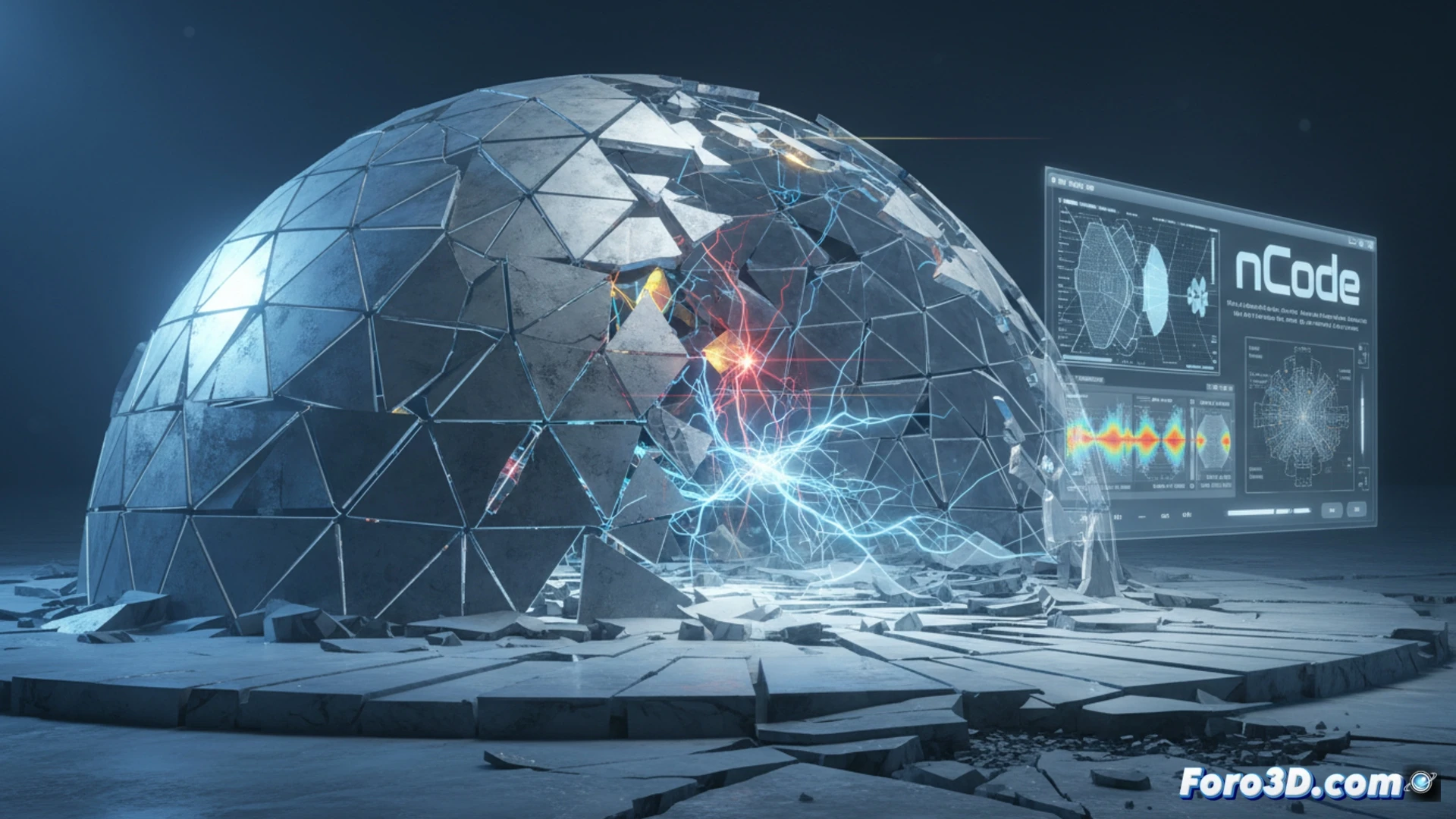
Workflow: from laser scanning to crack simulation 🔬
The process begins with capturing the dome's surface using a Zoller & Fröhlich scanner, generating a point cloud that is processed in MeshLab to obtain a high-fidelity 3D mesh. This geometry is imported into nCode, where cryogenic loading conditions and the hydrogen embrittlement model are applied. Multichannel fatigue analysis allows tracking crack nucleation and growth, correlating fractography data with residual stresses. The simulation reveals how hydrogen diffusion at grain boundaries accelerates propagation, a phenomenon difficult to detect without this digital reconstruction.
Lessons for preventing industrial catastrophes ⚠️
The 3D reconstruction of the failure not only serves to understand the past but also to predict the future. By integrating laser scanning with fatigue analysis, petrochemical plants can establish inspection protocols based on crack simulation. This approach turns an accident into a virtual laboratory, where each fracture reveals the real limits of the material under hydrogen and extreme cold, allowing domes to be redesigned with more rigorous safety margins.
How can finite element simulation accurately predict the remaining service life of a steel cryogenic dome when hydrogen embrittlement induces a change in failure mode, from classical fatigue to subcritical hydrogen fracture?
(PS: Material fatigue is like yours after 10 hours of simulation.)