The 2023 Maui wildfires devastated the island, leaving a humanitarian crisis and a wave of post-traumatic stress disorder (PTSD) among survivors. Faced with this emergency, the use of floatation tanks has been proposed as sensory isolation therapy to reduce anxiety. 3D technology becomes a key ally for modeling fire spread and planning the distribution of these resources in the most impacted areas.
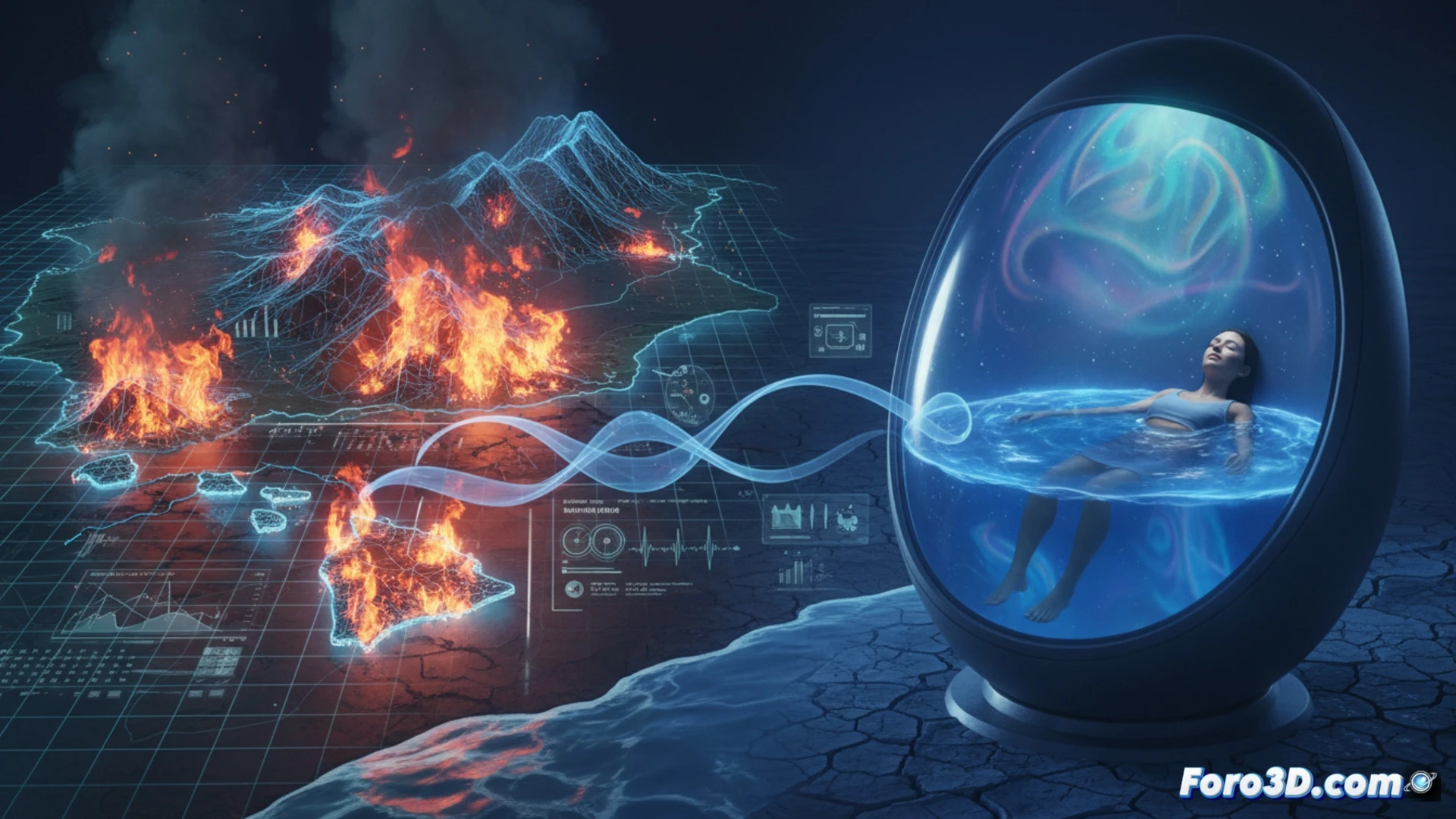
Modeling psychological impact and resource logistics 🌲
3D simulation allows recreating the fire dynamics, identifying the most affected areas and evacuation patterns. By overlaying demographic and post-traumatic stress data, managers can optimize the location of floatation tanks. These devices, which offer a sensory deprivation environment, help regulate the nervous system. Three-dimensional visualization of the crisis facilitates the allocation of funds and personnel, ensuring that psychological interventions reach the most vulnerable communities before the PTSD epidemic becomes entrenched.
Sensory isolation as a tool for collective resilience 🧠
Floating in saltwater not only calms the mind but also represents a non-invasive method for processing trauma. By simulating the before and after of the disaster in 3D, professionals can evaluate the effectiveness of these therapies on the social fabric. The combination of geospatial analysis and mental health demonstrates that technology not only predicts catastrophes but also helps heal the invisible wounds they leave behind. Maui becomes a laboratory of hope where 3D design and neuroscience come together.
As a 3D modeler, what key technical parameters of fluid and particle simulation are crucial for realistically recreating the movement and sensation of weightlessness in a floatation tank, and how could they be applied to design therapeutic virtual reality experiences for victims of post-traumatic stress from fires like those in Maui?
(PS: Simulating catastrophes is fun until the computer crashes and you are the catastrophe.)