The job of an excavator operator exposes the worker to critical risks such as machine rollovers, pedestrian runovers, entrapments, and impacts from falling objects. Added to these are ergonomic and environmental hazards like noise, vibrations, forced postures, exposure to fumes and dust, and falls when climbing on or off. Industrial process simulation offers an effective solution to address these dangers without exposing operators to real hazardous situations.
Modeling risk scenarios in virtual environments 🚧
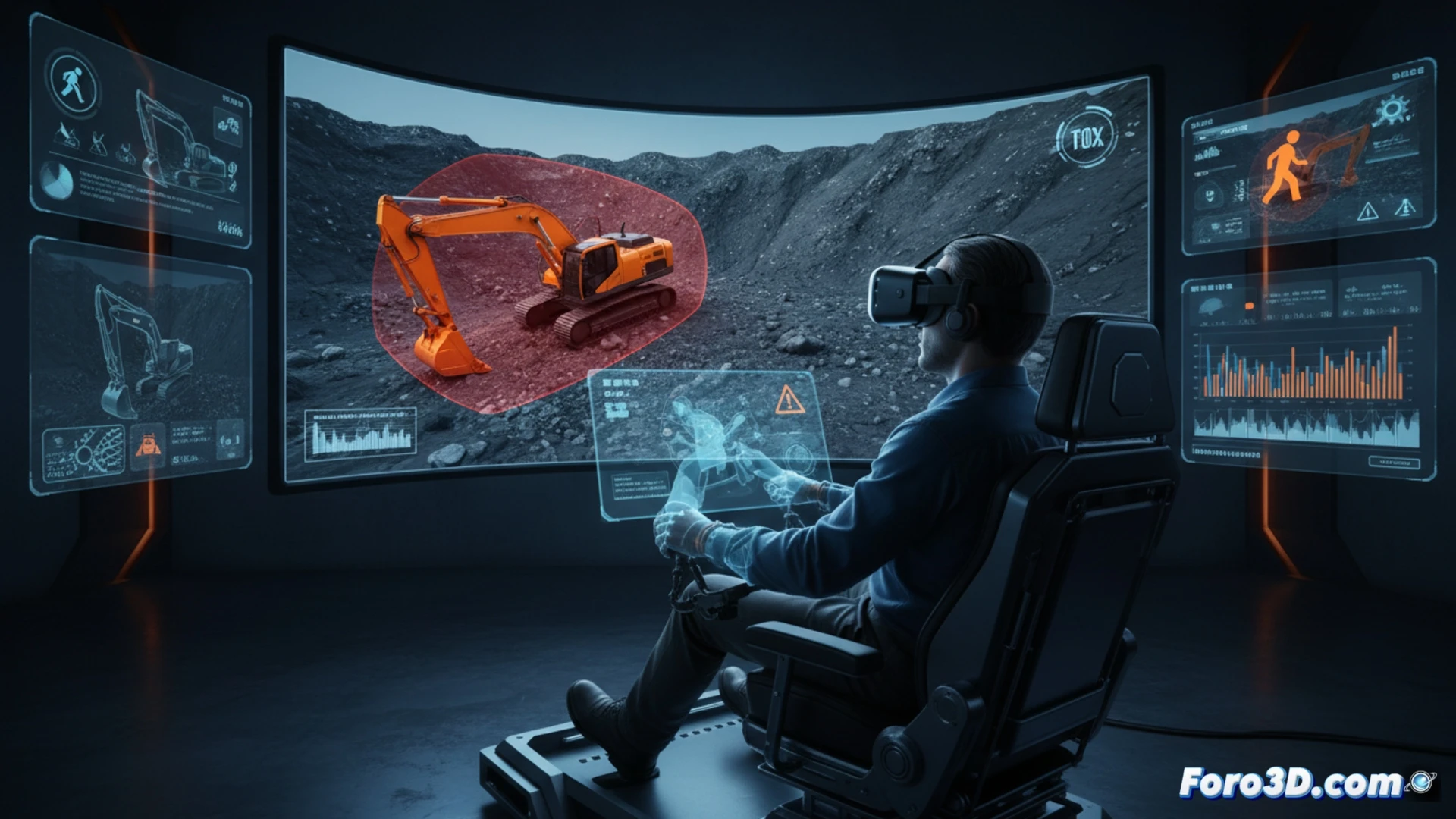
3D simulation platforms allow for high-fidelity recreation of complex construction site conditions, including unstable terrain that causes rollovers, blind spots that lead to runovers, and mechanical failures that result in entrapments. Modeling adverse weather conditions, such as heavy rain or fog, adds realism to training. Additionally, integrated virtual reality allows the operator to practice emergency maneuvers and evacuation routes, while material fatigue sensors provide warnings about wear on critical components before an accident occurs.
Towards a culture of prevention without real risks 🛡️
Simulation technology not only reduces accident rates but transforms training into a continuous and measurable process. By allowing unlimited repetition of high-risk situations, operators develop automatic reflexes and situational awareness without suffering the consequences of a mistake. This approach raises the standard of workplace safety, demonstrating that active prevention is more effective than post-accident correction.
How can 3D excavator simulation integrate dynamic terrain variables, such as unstable slopes or loose materials, to predict and prevent rollovers with greater precision than traditional training methods?
(PS: Simulating industrial processes is like watching an ant in a maze, but more expensive.)