The figure of the store manager concentrates multiple occupational risks that often go unnoticed: chronic stress from personnel management and customer service, forced postures from long hours standing, overexertion when handling boxes, falls, and the latent threat of attacks from difficult customers. Added to this are rotating shifts and continuous work with screens that aggravate physical and mental fatigue. Addressing this vulnerability requires going beyond traditional protocols.
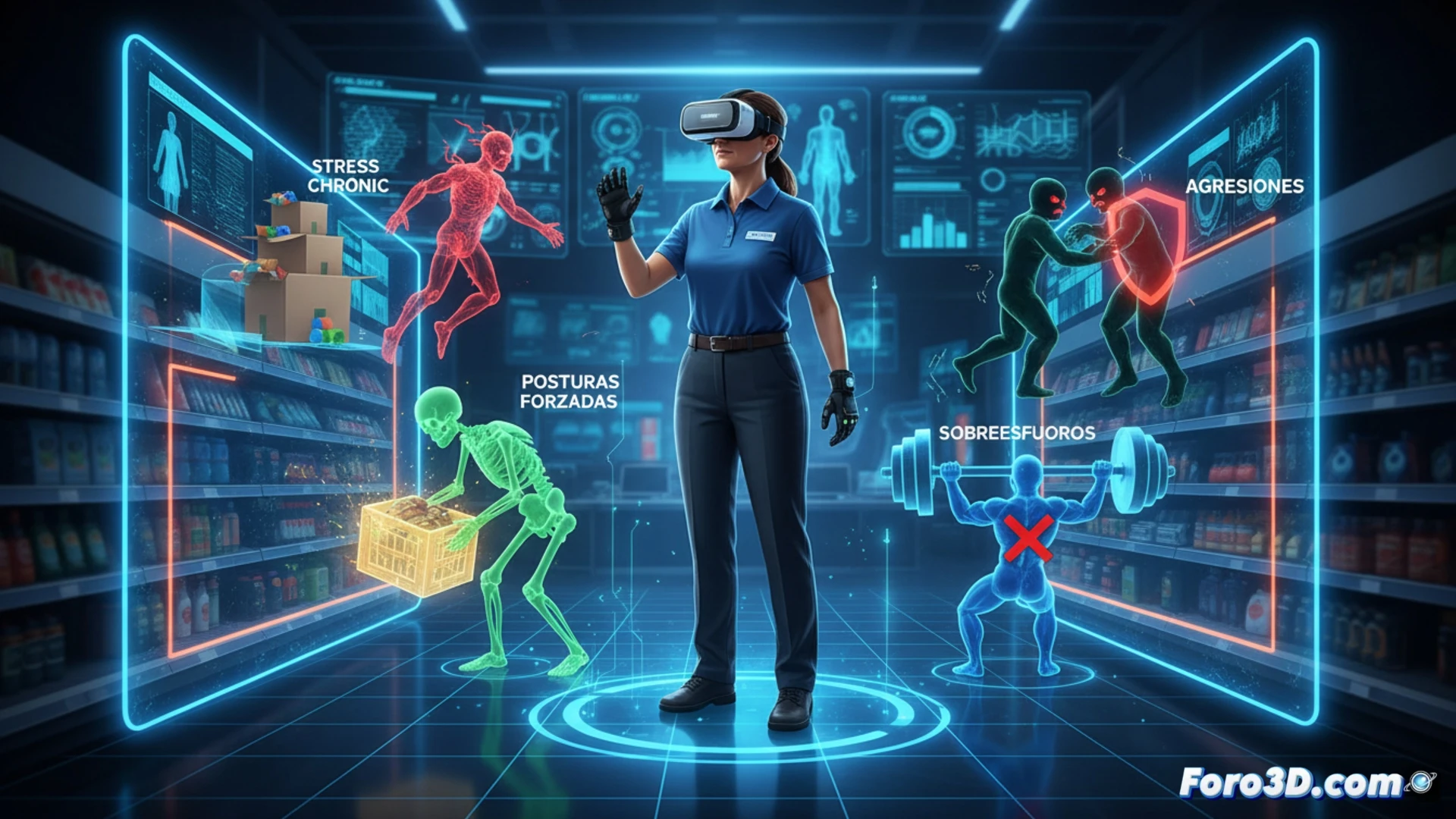
3D modeling of risk scenarios and ergonomic alerts 🛡️
3D simulation allows digitally recreating the store environment to visualize each dangerous situation. We can model the exact position of the manager behind the counter, analyzing the height of the screens and the frequency of repetitive movements to design personalized ergonomic alerts. Scenarios of load handling in cramped warehouses are also simulated, calculating the spine's torsion angles and the actual weight supported. By incorporating rotating shift variables, the system predicts fatigue peaks and suggests mandatory active breaks, all viewable in a digital twin that facilitates regulatory compliance auditing.
Protection of the vulnerable group through early verification ⚠️
The store manager is a vulnerable group because their role exposes them to external attacks and constant internal pressure. 3D technology not only identifies blind spots where incidents with customers can occur, but also allows rehearsing de-escalation and evacuation protocols in a safe environment. By integrating virtual posture and stress sensors, we can certify that the workstation design meets protection standards before a real accident occurs. Preventing is anticipating, and simulation is the most precise tool to achieve this.
How can 3D simulation of high-pressure store scenarios, such as managing massive queues or conflicts with customers, train managers in the early detection of signs of chronic stress and thus prevent psychosocial risks before they manifest?
(PS: the 28 affected soldiers are like 28 polygons with inverted normals: they shouldn't be like that)