Secondary school teachers face a lethal combination of psychosocial and physical risks: chronic stress from discipline, vocal strain, forced postures, and assaults. Although the law protects this group as vulnerable, real prevention remains reactive. 3D simulation of school environments allows these risk scenarios to be modeled with pinpoint accuracy, transforming occupational safety into a proactive and verifiable system.
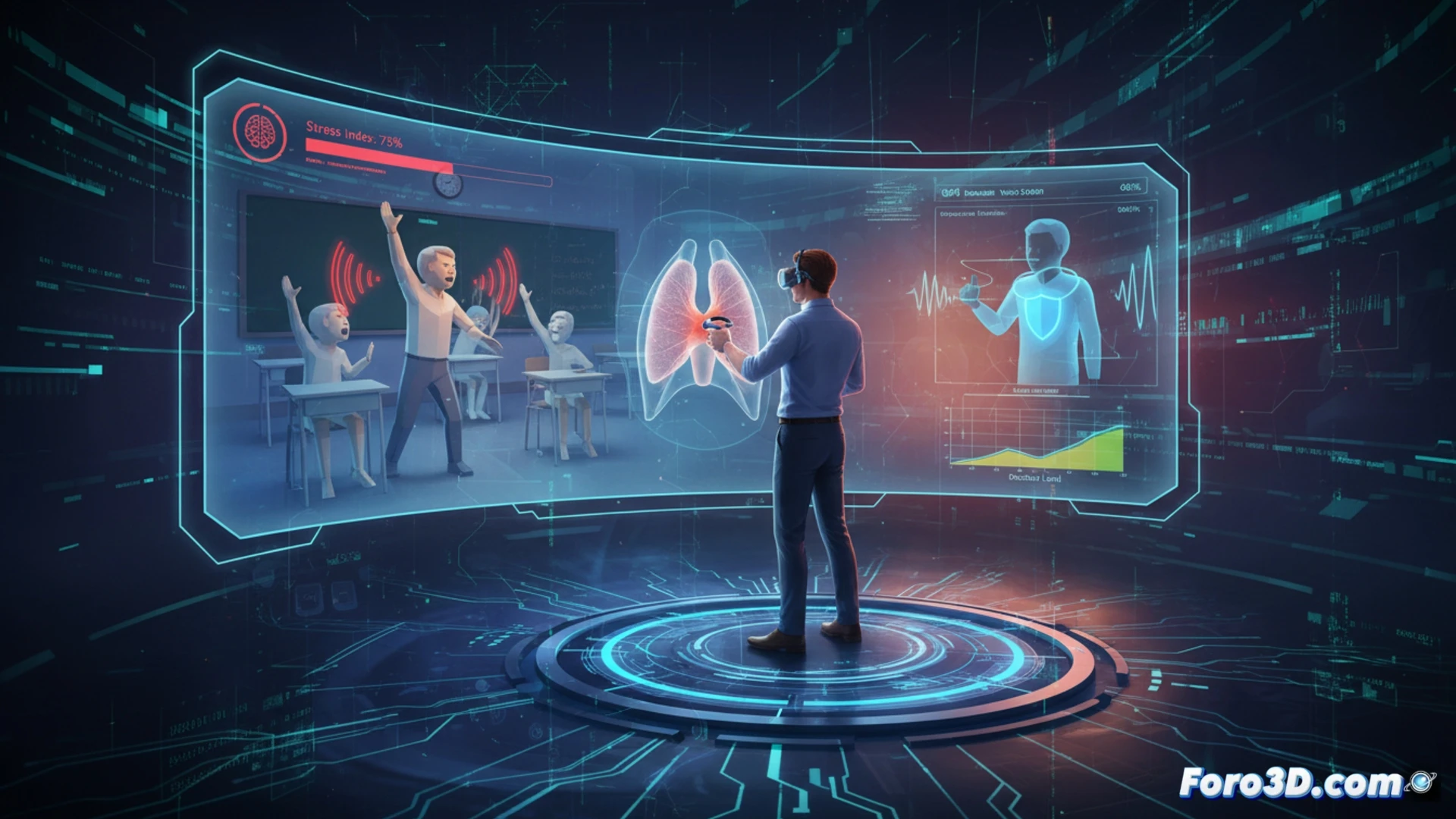
3D Modeling of Blind Spots and Response Protocols 🛡️
Using digital twins of the classroom, we can identify non-obvious risk areas, such as hallways with poor visibility or desk areas that strain the spine during long hours of grading. The simulation allows recreating situations of harassment or verbal and physical aggression, training the teacher in de-escalation protocols without exposing them to real danger. Furthermore, by integrating virtual sensors for mental fatigue and vocal strain, the system generates personalized early warnings. This approach allows auditing compliance with occupational risk prevention (ORP) regulations using objective data, avoiding the subjectivity of traditional reports.
From the Virtual Classroom to Real Educator Protection 🎓
3D technology does not just visualize the problem; it quantifies it. By mapping the incidence of stress and burnout onto a three-dimensional model of the school, ORP teams can redesign schedules, distribute acoustic rest areas, and adjust the grading workload. The result is a continuous verification system that protects the teacher's mental and physical health, demonstrating that prevention for vulnerable groups can be as precise as the engineering that supports it.
How 3D simulation can anticipate and mitigate the triggering factors of stress and violence in the classroom to protect the mental and physical health of secondary school teachers
(PS: protecting teachers is like protecting your Blender file: back it up or cry later)