The trade of fitter, essential in the manufacturing industry, exposes the worker to multiple hazards such as cuts from hand tools, entrapments, flying chips, and forced postures. 3D process simulation emerges as a key tool for modeling these work environments, allowing the identification of critical points and the design of safety protocols without exposing the operator to real risks during the analysis.
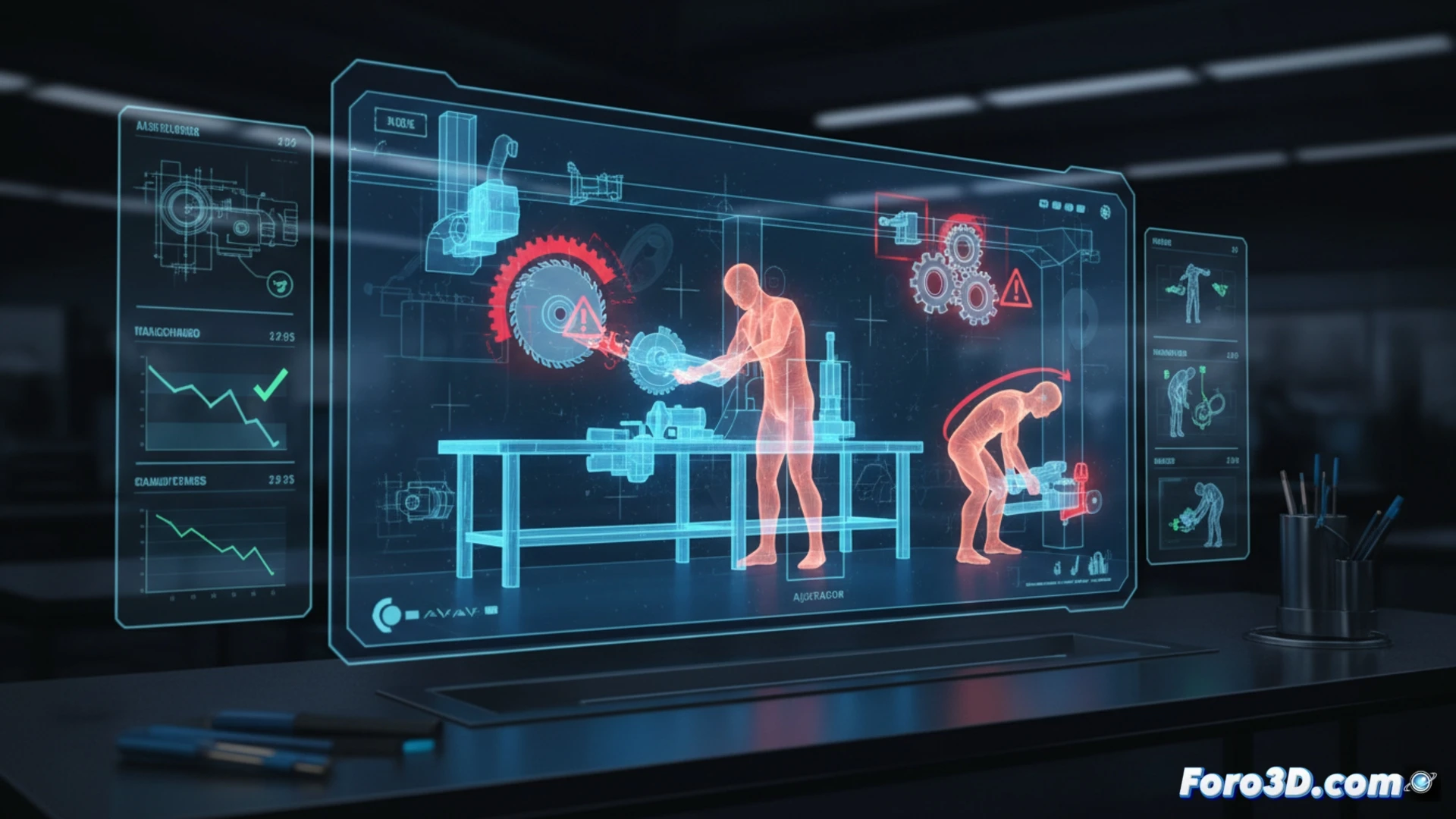
Virtual modeling of tools and movements for prevention 🛠️
The digital recreation of the fitter's workstation allows for precise analysis of each technical gesture. By modeling metal parts, hand tools, and cutting fluids, engineers can simulate scenarios of entrapment or component fall. This approach facilitates the detection of overexertion and poor postures, optimizing the ergonomics of the workspace. Additionally, chip projection and contact with fluids can be visualized to adjust extraction systems and physical barriers, reducing operator exposure.
Immersive training and design of safe protocols 🎯
Beyond analysis, 3D simulation transforms occupational training. Fitters can practice complex maneuvers in an immersive virtual environment, learning to avoid cuts and impacts without real consequences. This methodology allows for iterating on safety protocols, validating solutions before implementing them on the shop floor. Thus, technology not only prevents accidents but also raises the prevention standard in critical trades such as mechanical fitting.
How could a 3D simulation of industrial fitting processes model the risks of cuts from hand tools to train operators in safe gripping techniques without the need for physical prototypes?
(PS: Simulating industrial processes is like watching an ant in a maze, but more expensive.)